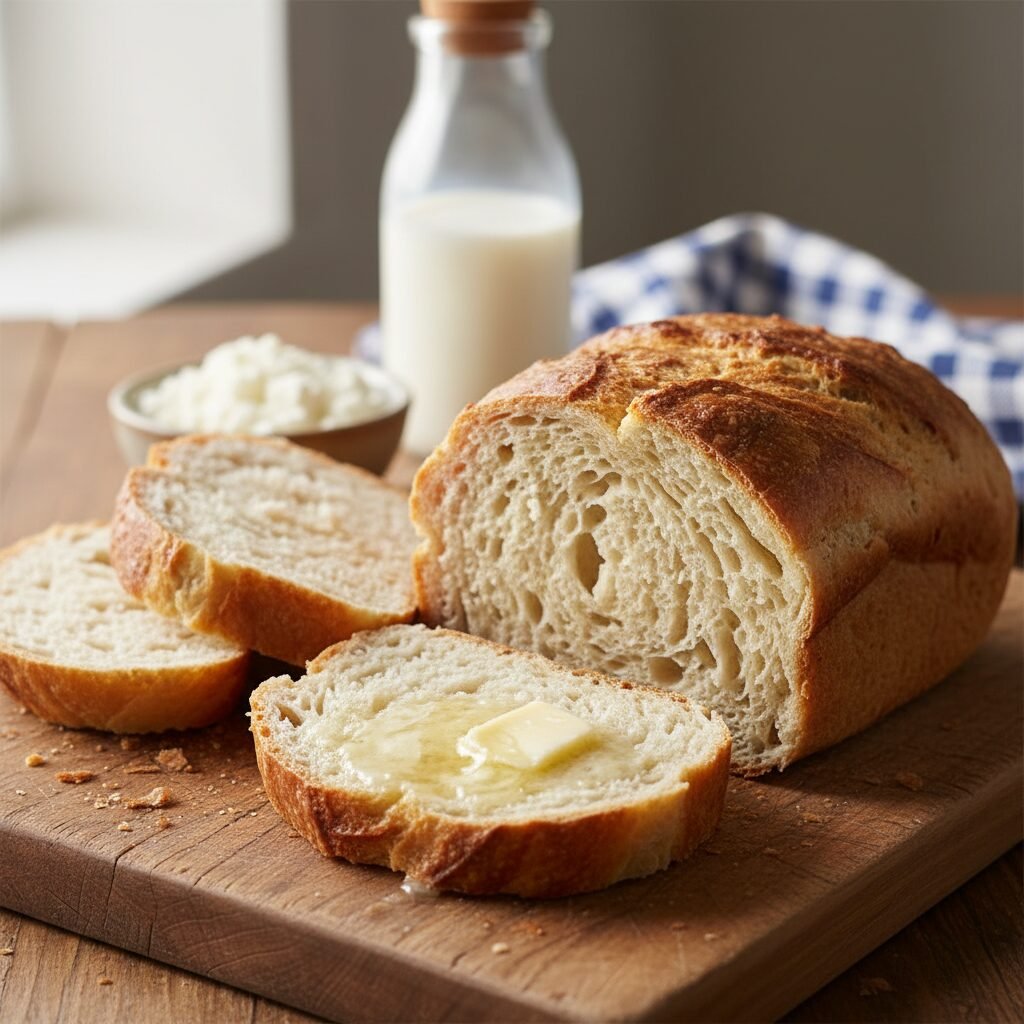
Soft Cottage Cheese Bread Recipe
If you are looking for a way to sneak extra protein into your family’s diet without sacrificing flavor, this is it! This Soft Cottage Cheese Bread is pillowy, moist, and stays fresh for days—making it the ultimate mom-hack for school lunches.
20 minutes
35 minutes
2 hours 55 minutes (includes rising)
1 Loaf (12 Slices)
Bread
Baking
American
Vegetarian
Hey friends! If you have been hanging around Pinterest or TikTok lately, you have probably noticed that cottage cheese is having a major moment. And honestly? I am here for it! Gone are the days when cottage cheese was just a sad diet food from the 80s served inside a cantaloupe. Today, it is the secret weapon for creamy pastas, high-protein pancakes, and now, the softest bread you will ever bake.
I know what you are thinking: “Does it taste like cheese?” The answer is a resounding no! This bread tastes like a classic, slightly sweet, and incredibly rich white sandwich loaf. The cottage cheese melts into the dough, adding hydration and fat that creates a texture similar to brioche or Japanese milk bread, but with a massive protein boost.
As a mom, I am always trying to find ways to make our staples a little more nutritious. This recipe is a total game-changer for picky eaters. The curds disappear completely during the mixing and baking process (especially if you blend it first, which I recommend!), so the kids will never know they are eating something packed with calcium and protein. It makes the most incredible toast, French toast, and grilled cheese sandwiches. Let’s get baking!
History & Origins
While putting dairy in bread isn’t a new concept—bakers have been using milk, buttermilk, and yogurt for centuries to tenderize dough—using cottage cheese specifically has roots in early American home cooking and Eastern European traditions. In the mid-20th century, particularly during the health-conscious shifts of the 1970s, cottage cheese bread recipes popped up in community cookbooks as a way to make bread heartier and more substantial.
Historically, “cheese breads” often referred to savory loaves with chunks of cheddar. However, this specific style of incorporating fresh curd cheese into the dough base is more about texture than flavor. The modern resurgence of this recipe is largely due to the current high-protein trend sweeping social media. Home bakers realized that cottage cheese acts similarly to a tangzhong (a cooked flour paste used in Asian breads), locking in moisture and ensuring the loaf stays soft for days without preservatives.
Why This Recipe Works
This recipe works like magic because of the unique composition of cottage cheese. Cottage cheese is acidic, and that slight acidity helps to strengthen the gluten network while simultaneously tenderizing it. This results in a loaf that rises high but has a delicate, feathery crumb.
Furthermore, the fat and protein content in the cheese and the egg enriches the dough. Fat coats the flour proteins, preventing them from bonding too strongly, which creates that “shreddable” softness we all love in a good loaf of bread. By blending the cottage cheese with the liquid ingredients, we ensure an even distribution of moisture, preventing dense pockets and ensuring a uniform, golden rise. It is basically science making your sandwich better!
Why You’ll Love This Recipe
- ✓Packed with hidden protein perfect for kids
- ✓Incredibly soft texture similar to brioche
- ✓Stays fresh longer than standard homemade bread
- ✓No cheesy taste—just buttery and rich
- ✓Easy to make with a stand mixer or by hand
- ✓Makes the best French Toast you will ever have
Equipment You’ll Need
- ✓Stand mixer with dough hook (optional but recommended)
- ✓Blender or food processor
- ✓9×5 inch Loaf Pan
- ✓Kitchen scale or measuring cups
- ✓Instant-read thermometer
- ✓Wire cooling rack
- ✓Clean kitchen towel or plastic wrap
Ingredients
- ✓0.5 cup warm water (110°F/45°C)
- ✓2.25 tsp Instant Yeast (1 packet)
- ✓2 tbsp granulated sugar (or honey)
- ✓1 cup small curd cottage cheese (full fat recommended)
- ✓1 large egg, room temperature
- ✓2 tbsp unsalted butter, melted and slightly cooled
- ✓3.5 to 4 cups Bread Flour (can use All-Purpose, but Bread Flour is better)
- ✓1.5 tsp salt
- ✓Optional: 1 tbsp melted butter for brushing the top
Instructions
- Activate the Yeast: In the bowl of your stand mixer, combine the warm water, 1 tablespoon of the sugar, and the yeast. Stir gently and let it sit for 5-10 minutes until it becomes foamy and bubbly. This wakes up the yeast!
- Blend the Wet Ingredients: While the yeast is blooming, place the cottage cheese, egg, melted butter, and the remaining tablespoon of sugar into a blender or food processor. Blend until completely smooth and creamy. This step ensures there are no visible white specks in your finished bread.
- Combine: Pour the blended cottage cheese mixture into the mixer bowl with the activated yeast mixture. Stir briefly to combine.
- Add Dry Ingredients: Add about 3 cups of the flour and the salt to the wet mixture. Using the dough hook attachment, mix on low speed until a shaggy dough begins to form.
- Knead the Dough: Increase the speed to medium-low. Gradually add the remaining flour, 1/4 cup at a time, until the dough pulls away from the sides of the bowl but is still slightly tacky to the touch. You may not need all 4 cups. Knead for about 6-8 minutes until the dough is smooth and elastic.
- First Rise: Lightly grease a large bowl with oil or cooking spray. Place the dough inside, turning it once to coat it in oil. Cover with plastic wrap or a warm, damp towel. Place in a warm, draft-free spot and let it rise for about 1 to 1.5 hours, or until doubled in size.
- Shape the Loaf: Once doubled, punch the dough down gently to release air bubbles. Turn it out onto a lightly floured surface. Press it into a rectangle roughly the width of your loaf pan. Roll it up tightly into a log, pinching the seams closed at the bottom and sides.
- Second Rise: Place the shaped log seam-side down into a greased 9×5 inch loaf pan. Cover loosely with greased plastic wrap. Let it rise again for about 45-60 minutes. The dough should rise about 1 inch above the rim of the pan.
- Bake: Preheat your oven to 350°F (175°C). Remove the plastic wrap and bake the bread for 30-35 minutes. The top should be golden brown, and the internal temperature should read roughly 190°F (88°C).
- Cool: Remove from the oven. If desired, brush the top with a little melted butter for a soft crust. Let the bread cool in the pan for 10 minutes, then transfer to a wire rack to cool completely before slicing.
Expert Cooking Tips
- ✓Room Temperature Ingredients: Make sure your egg and cottage cheese are not ice cold. Room temperature ingredients mix better and don’t shock the yeast.
- ✓Don’t Over-Flour: The dough should be tacky (sticky like the back of a post-it note), not dry. If you add too much flour, the bread will be dense.
- ✓Blend the Cheese: If you are baking for kids who are texture-sensitive, blending the cottage cheese is mandatory. If you don’t mind specks of curd, you can skip the blender.
- ✓Tent with Foil: If the top of the bread is browning too quickly before the center is cooked, lightly cover the loaf with aluminum foil for the last 10 minutes of baking.
Substitutions and Variations
If you don’t have bread flour, high-quality all-purpose flour works well, though the loaf might be slightly less chewy. For a healthier twist, you can swap up to 50% of the flour for white whole wheat flour, but you may need an extra splash of water. If you are out of butter, olive oil or vegetable oil is a perfect swap. You can also use honey or maple syrup instead of granulated sugar for a more floral sweetness.
Common Mistakes to Avoid
The biggest mistake people make is adding too much flour. It is tempting to keep adding flour until the dough isn’t sticky at all, but this leads to a heavy brick of bread. Trust the kneading process! Another common issue is using water that is too hot; anything over 120°F can kill your yeast, preventing the rise. Lastly, slicing the bread while hot allows steam to escape too fast, which can make the bread gummy. Patience is key!
Serving Suggestions
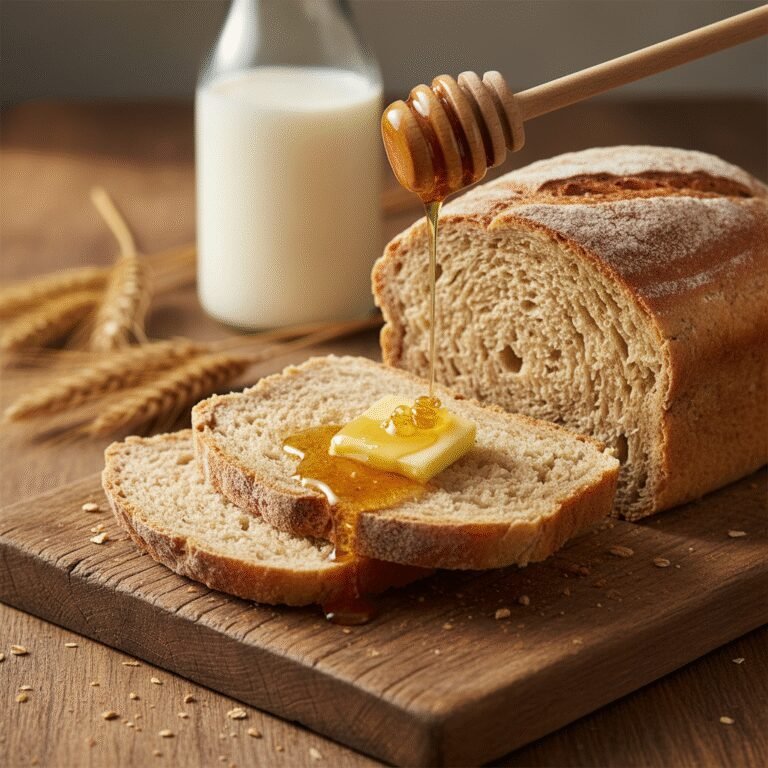
This bread is incredibly versatile! It is sturdy enough for loaded turkey clubs but soft enough for a classic PB&J. My personal favorite way to eat it is toasted with a generous smear of salted butter and a drizzle of honey. It also makes absolutely phenomenal French Toast because the high protein content gives it a custard-like interior when soaked.
Storage and Reheating Tips
Store the cooled bread in an airtight bag or bread box at room temperature for up to 4 days. Because of the dairy content, it stays moist longer than water-based breads. For longer storage, slice the entire loaf, place parchment paper between slices, and freeze in a freezer-safe bag for up to 3 months. You can toast slices straight from frozen!
Nutrition Facts (Estimated)
| Serving Size | 1 Slice |
| Calories | 165 kcal |
| Fat | 4g |
| Saturated Fat | 2g |
| Unsaturated Fat | 1.5g |
| Trans Fat | 0g |
| Cholesterol | 25mg |
| Sodium | 280mg |
| Carbohydrates | 26g |
| Fiber | 1g |
| Sugar | 3g |
| Protein | 7g |
Frequently Asked Questions
Can I taste the cottage cheese in the bread?
Not at all! The cottage cheese blends in completely, leaving you with a rich, buttery flavor similar to a brioche or milk bread. It does not taste tangy or cheesy.
Do I have to blend the cottage cheese?
It is not strictly necessary, but highly recommended for the best texture. If you don’t blend it, you will see small white specks of curd in the bread, which some kids might not like.
Can I make this in a bread machine?
Yes! Add ingredients to the bread machine pan in the order recommended by your manufacturer (usually liquids first, then flour, then yeast). Use the ‘Basic White’ or ‘Sandwich’ setting.
Is this bread gluten-free?
No, this recipe uses wheat flour. I have not tested this specific recipe with gluten-free flour blends, as yeast breads rely heavily on gluten for structure.
Can I use low-fat cottage cheese?
You can, but full-fat (4%) cottage cheese yields the softest, richest crumb. Non-fat versions might result in a slightly drier loaf.
Why did my bread collapse?
This usually happens if the dough rose too much during the second rise (over-proofing). If the yeast exhausts itself before hitting the oven, the structure fails. Watch the size, not just the clock!
Can I add mix-ins?
Absolutely. Cinnamon swirl, raisins, or even savory herbs like rosemary and garlic powder work wonderfully with this base dough.
How do I know when the bread is done?
The most accurate way is to use a digital thermometer. The center of the loaf should reach 190°F. Alternatively, tap the bottom of the loaf; it should sound hollow.
Conclusion
I hope you love this Soft Cottage Cheese Bread as much as my family does! It is truly one of those recipes that makes you feel like a domestic goddess without requiring hours of complicated techniques. Whether you are making school lunches or just want a warm slice of comfort on a Saturday morning, this loaf delivers every time. Don’t forget to pin this recipe for later and tag me in your photos—I love seeing your fluffy creations!