Sheet Pan Oven Baked Chicken Fajitas Dinner Recipe
Transform your chaotic weeknight into a festive culinary event with this effortless sheet pan dinner. Perfectly seasoned chicken and caramelized vegetables roast together on a single tray, delivering restaurant-quality fajitas with zero fuss and minimal cleanup.
15 minutes
20 minutes
35 minutes
4-6 Servings
Dinner
Baking
Tex-Mex
Gluten Free
In the bustling rhythm of modern family life, the ‘what’s for dinner’ question often looms large as the clock ticks toward evening. For busy mothers and professionals juggling endless to-do lists, the holy grail of cooking is a meal that delivers maximum flavor with minimum effort—and perhaps most importantly, minimal cleanup. Enter the Sheet Pan Oven Baked Chicken Fajitas, a recipe that has rightfully earned its status as a weeknight warrior in kitchens across the country. This dish is not merely a shortcut; it is a culinary technique that utilizes the high, dry heat of the oven to mimic the searing capabilities of a cast-iron skillet, all while allowing you to step away from the stove.
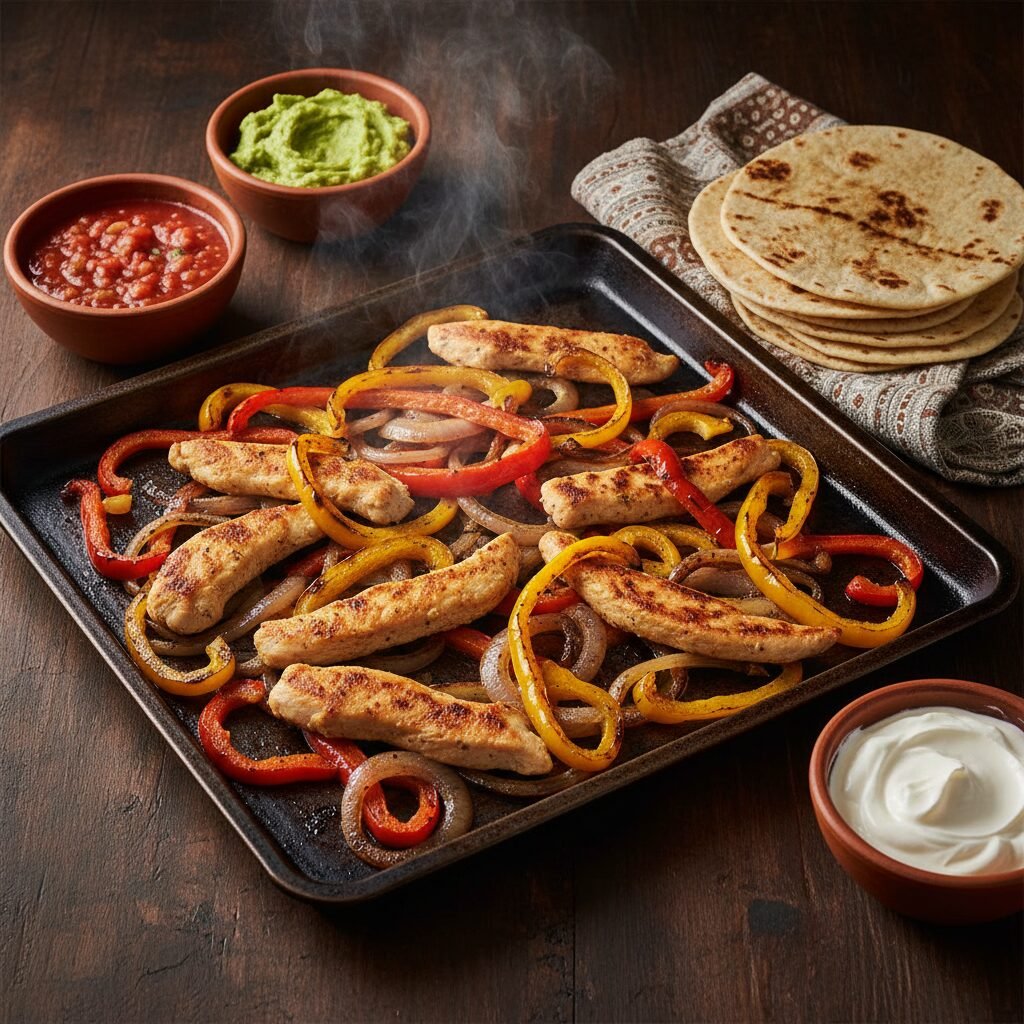
The beauty of this recipe lies in its vibrant simplicity. We are taking the beloved, sizzling platter experience of a favorite Tex-Mex restaurant and translating it into a home-cooked masterpiece that fits on a single rimmed baking sheet. By roasting the protein and vegetables together, the juices from the spiced chicken mingle with the sweet, roasting peppers and onions, creating a self-basting ecosystem of flavor. The result is tender, juicy chicken strips and vegetables that retain a delightful bite, all coated in a smoky, aromatic seasoning blend that far surpasses anything you might pour from a pre-packaged envelope.
Furthermore, this meal is a visual feast. The riot of colors—red, yellow, and green bell peppers contrasted against the golden-hued chicken and charred onions—makes for a stunning presentation that appeals to both adults and children. It is a ‘build-your-own’ adventure that encourages family interaction at the dinner table, allowing each member to customize their tortilla with their preferred toppings, from creamy guacamole to sharp cheddar cheese. Whether you are meal-prepping for the week ahead or needing a sanity-saving dinner solution for a frantic Wednesday, these sheet pan fajitas are guaranteed to become a permanent fixture in your culinary rotation.
History & Origins
The history of the fajita is a fascinating tale of culinary evolution, rooted deeply in the ranching culture of South and West Texas. The term ‘fajita’ is derived from the Spanish word faja, meaning ‘strip’ or ‘belt,’ referring to the diaphragm muscle of a steer, known as skirt steak. In the 1930s and 1940s, Mexican vaqueros (cowboys) working on Texas cattle ranches were often given the less desirable cuts of meat as part of their pay. These resourceful cooks discovered that marinating this tough cut in lime juice and grilling it over mesquite wood transformed it into a tender, flavorful delicacy.
For decades, fajitas remained a regional secret, a backyard staple of the Rio Grande Valley. It wasn’t until the late 1960s and early 1970s that the dish began to appear on commercial restaurant menus. The sizzling platter presentation, now iconic in Tex-Mex cuisine, was popularized by restaurateurs who realized the sensory appeal of the sound and smell of searing meat traveling through a dining room. As the dish gained national popularity in the 1980s, variations began to emerge. While purists maintained that only skirt steak could technically be called a fajita, the culinary world expanded the definition to include shrimp, pork, and, of course, chicken.
The transition from the outdoor grill to the sheet pan is a more modern innovation, born of the internet age and the increasing demand for convenient home cooking. Food bloggers and home cooks realized that while they might not fire up a charcoal grill on a Tuesday night, they could achieve similar results using a standard oven and a baking sheet. This adaptation democratized the dish, making it accessible to anyone with an oven, regardless of the weather outside or their access to a grill.
Why This Recipe Works
The success of this Sheet Pan Chicken Fajitas recipe relies on the principles of thermodynamics and flavor chemistry, specifically the Maillard reaction and heat convection. Traditionally, fajitas are cooked over a direct flame or on a screaming hot griddle to achieve a char. To replicate this in an oven, we utilize a high temperature—typically 400°F to 425°F (200°C to 220°C). This intense ambient heat ensures that the moisture on the surface of the chicken and vegetables evaporates quickly, allowing the sugars and proteins to brown rather than steam. Steaming would result in soggy, bland vegetables and rubbery chicken, whereas roasting concentrates the flavors.
Another technical aspect of this recipe is the uniform cutting of ingredients. By slicing the chicken breast, bell peppers, and onions into strips of similar width, we ensure that they cook at the same rate. This prevents the common sheet pan pitfall where one ingredient is burnt while another remains raw. The marinade or spice rub also plays a dual role; the oil acts as a conductor of heat, ensuring even browning, while the spices bloom in the heat, releasing their essential oils. The inclusion of an acid, typically lime juice added at the end, brightens the heavy, savory flavors and cuts through the richness, providing a balanced palate experience.
Finally, the sheet pan method works because it allows for air circulation. Overcrowding the pan is the enemy of roasting. When ingredients are spread out in a single layer, the hot air of the oven can circulate around each piece of food, roasting it from all sides. If the pan is too crowded, the moisture released by the vegetables gets trapped, creating a steam bath. Therefore, using a large enough sheet pan—or two if necessary—is a critical component of the culinary science behind this dish.
Why You’ll Love This Recipe
- ✓Ready in under 35 minutes
- ✓High protein and nutrient-dense
- ✓Minimal cleanup required
- ✓Customizable for picky eaters
- ✓Perfect for meal prep
- ✓Restaurant-quality flavor at home
Equipment You’ll Need
- ✓Large rimmed baking sheet (18×13 inches)
- ✓Chef’s knife
- ✓Cutting board
- ✓Small mixing bowl
- ✓Whisk
- ✓Tongs or spatula
- ✓Measuring spoons
Ingredients
- ✓1.5 lbs boneless, skinless chicken breasts, sliced into 1/2-inch strips
- ✓3 large bell peppers (red, yellow, and green), seeded and sliced into strips
- ✓1 large red onion, sliced into wedges or strips
- ✓3 tablespoons extra virgin olive oil or avocado oil
- ✓1 tablespoon chili powder
- ✓1 teaspoon ground cumin
- ✓1 teaspoon smoked paprika
- ✓1 teaspoon garlic powder
- ✓1 teaspoon onion powder
- ✓1/2 teaspoon dried oregano
- ✓1 teaspoon kosher salt
- ✓1/2 teaspoon freshly ground black pepper
- ✓12 small flour or corn tortillas
- ✓1 fresh lime, cut into wedges for serving
- ✓1/4 cup fresh cilantro, chopped (garnish)
Instructions
- Preheat your oven to 425°F (220°C). Ensure the oven rack is positioned in the center. If you plan to warm tortillas in the oven, you may want to prepare a foil packet for them now.
- In a small bowl, combine the chili powder, cumin, smoked paprika, garlic powder, onion powder, dried oregano, salt, and black pepper. Whisk together to create your homemade fajita seasoning blend.
- Place the sliced chicken strips, bell peppers, and red onion directly onto the large rimmed baking sheet. Drizzle the olive oil over the ingredients.
- Sprinkle the seasoning blend evenly over the chicken and vegetables. Using clean hands or tongs, toss everything together directly on the pan until the meat and veggies are thoroughly coated in oil and spices.
- Spread the mixture out into a single, even layer. Do not overcrowd the ingredients; if the pan is too full, use a second baking sheet to ensure roasting rather than steaming.
- Bake for 18-20 minutes, or until the chicken is cooked through (internal temperature of 165°F) and the vegetables are tender-crisp.
- OPTIONAL: For a char that mimics the grill, switch the oven to Broil (high) for the last 2-3 minutes of cooking. Watch closely to prevent burning.
- While the fajitas are baking, wrap the tortillas in aluminum foil and place them in the oven for the last 5 minutes of cooking time to warm through.
- Remove the sheet pan from the oven. Squeeze fresh lime juice over the hot chicken and vegetables. Garnish immediately with chopped fresh cilantro.
- Serve family-style directly from the baking sheet or transfer to a platter. Allow everyone to assemble their own fajitas with the warmed tortillas and desired toppings.
Expert Cooking Tips
- ✓Dry the Chicken: Pat the chicken breasts dry with paper towels before slicing. Removing surface moisture helps the spices adhere better and promotes browning.
- ✓Uniform Slicing: Try to slice your peppers and onions to the same width as the chicken strips. This ensures everything cooks at the same rate.
- ✓Don’t Skimp on Oil: The oil is essential for conducting heat and preventing the spices from burning. Ensure every piece is glossy and coated.
- ✓Room Temperature: If time permits, let the chicken sit at room temperature for 15 minutes before baking. Cold meat hitting a hot oven can seize up and become tough.
- ✓Dark vs. Light Pans: Dark metal sheet pans absorb more heat and will result in better caramelization than shiny aluminum pans.
Substitutions and Variations
This recipe is incredibly versatile. If you prefer red meat, flank steak or skirt steak can be used in place of chicken; simply slice against the grain. For a seafood twist, add shrimp during the last 5-7 minutes of cooking, as they cook much faster than poultry. Vegetarians can substitute the chicken with thick slices of portobello mushrooms or firm tofu strips. If you don’t have all the individual spices, a high-quality store-bought taco or fajita seasoning packet works well—just watch the sodium content. You can also swap the red onion for yellow or white onion, though red provides a sweeter flavor when roasted.
Common Mistakes to Avoid
The most common mistake when making sheet pan fajitas is overcrowding the pan. When ingredients are piled on top of one another, they release moisture that gets trapped, effectively steaming the food instead of roasting it. This results in pale chicken and soggy vegetables. Always use the largest sheet pan you have, or divide the batch between two pans. Another error is cutting the chicken too thin, which can lead to it drying out before the vegetables are tender. Aim for strips that are about half an inch thick. Finally, do not skip the acid; forgetting the squeeze of fresh lime juice at the end leaves the dish feeling heavy and lacking that signature ‘pop’ of flavor.
Serving Suggestions
Serve these fajitas with a variety of toppings to create a complete fiesta experience. Essential accompaniments include fresh guacamole or sliced avocados, pico de gallo or salsa, and sour cream or Mexican crema. For a heartier meal, serve alongside Mexican rice and refried beans or black beans. A side of elote (Mexican street corn) makes for a fantastic vegetable pairing. Beverage-wise, these pair perfectly with a cold margarita, a Mexican lager with lime, or a refreshing glass of horchata.
Storage and Reheating Tips
Leftovers store beautifully and make for excellent lunches. Place any remaining chicken and vegetables in an airtight container and refrigerate for up to 3-4 days. To reheat, you can use the microwave, but for best results, briefly sauté them in a skillet over medium heat to revive the texture. You can also freeze the cooked chicken and vegetable mixture for up to 2 months. Thaw overnight in the refrigerator before reheating. Note that the peppers may be slightly softer after freezing and reheating.
Nutrition Facts (Estimated)
| Serving Size | 2 Fajitas (without toppings) |
| Calories | 380 kcal |
| Fat | 14g |
| Saturated Fat | 3g |
| Unsaturated Fat | 9g |
| Trans Fat | 0g |
| Cholesterol | 95mg |
| Sodium | 650mg |
| Carbohydrates | 22g |
| Fiber | 3g |
| Sugar | 4g |
| Protein | 38g |
Frequently Asked Questions
Can I prep this meal ahead of time?
Absolutely. You can slice the chicken and vegetables and mix them with the oil and spices up to 24 hours in advance. Store the mixture in a sealed bag or container in the refrigerator. When you’re ready to eat, simply dump it onto the sheet pan and bake.
Should I use chicken breast or chicken thighs?
Both work well. Chicken breast is leaner and traditional for many, but boneless, skinless chicken thighs are more forgiving and remain juicier under high heat. If you prefer moist dark meat, thighs are the better option.
Is this recipe spicy?
As written, the recipe is mild to moderately spiced, suitable for most families. The heat comes primarily from the chili powder. To make it milder for children, reduce the chili powder. To add heat, add a pinch of cayenne pepper or sliced jalapeños to the pan.
How do I warm the tortillas without them drying out?
Wrap a stack of tortillas tightly in aluminum foil. Place the foil packet in the oven during the last 5-10 minutes of the baking time. The steam generated inside the foil keeps them soft and pliable.
Why are my fajitas watery?
Watery fajitas usually result from overcrowding the pan or using frozen chicken that wasn’t fully thawed and drained. Ensure ingredients are in a single layer and pat fresh chicken dry before seasoning.
Can I use a glass baking dish instead of a metal sheet pan?
It is not recommended. Glass conducts heat differently and often doesn’t get hot enough to sear the meat and veggies properly. A metal rimmed baking sheet is essential for that roasted texture.
Is this recipe Keto-friendly?
The filling (chicken and vegetables) is low-carb and keto-friendly. To keep the entire meal keto, serve the fajita mixture in lettuce cups or use low-carb almond flour tortillas.
Can I add other vegetables?
Yes! Zucchini rounds, sliced mushrooms, or even broccoli florets can be added. Just be mindful of cooking times; softer veggies like zucchini may need to be added halfway through cooking.
Conclusion
Sheet Pan Oven Baked Chicken Fajitas are the ultimate proof that delicious, nutritious, and exciting meals do not require hours of labor or a sink full of dirty dishes. By harnessing the power of your oven and a few simple spices, you can bring the vibrant flavors of Tex-Mex cuisine right to your dining table. This recipe balances the needs of a busy household with the desire for quality, homemade food. It is a dish that invites connection, sharing, and the simple joy of building the perfect taco. Give this recipe a spot in your weekly lineup, and watch it become a family favorite that you turn to again and again.