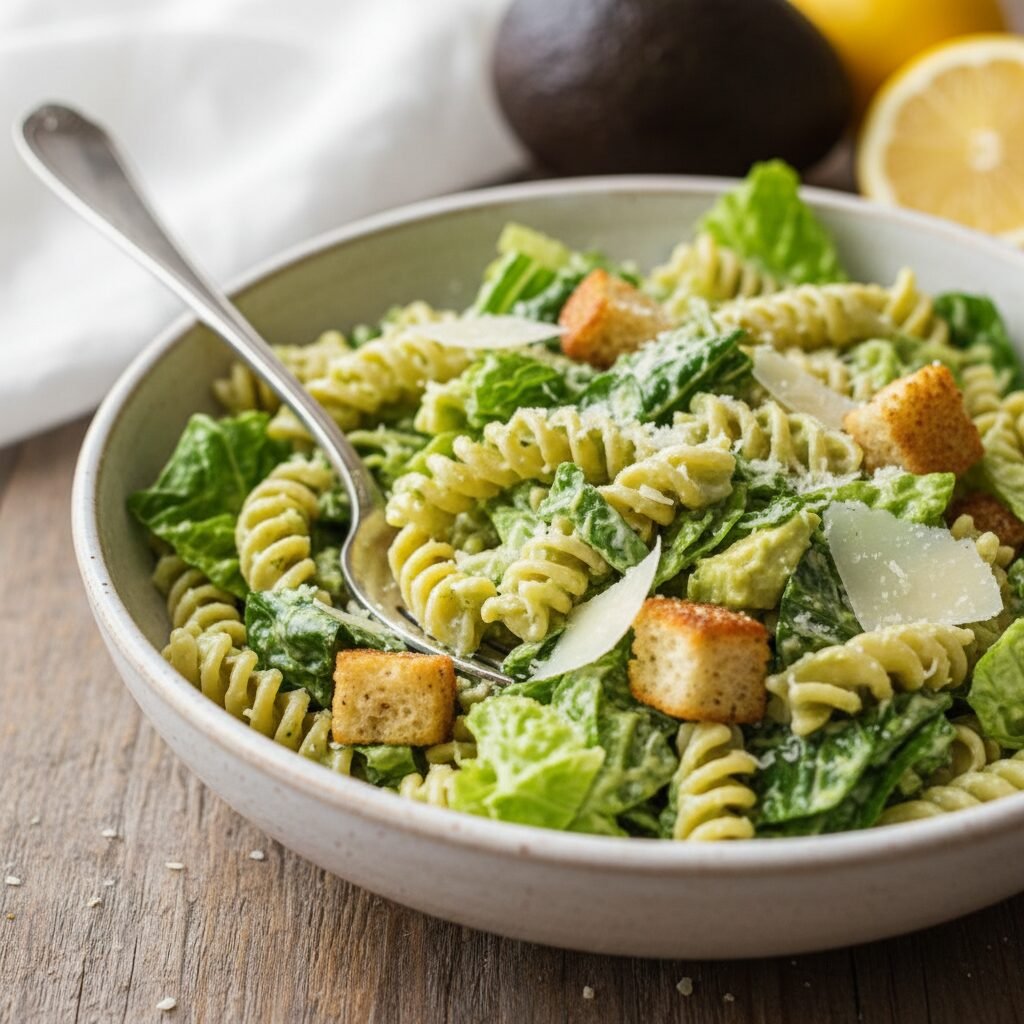
Pasta Avocado Caesar Salad
Elevate your lunch routine with this vibrant fusion of a classic Caesar salad and comforting pasta. By swapping traditional heavy oils for ripe avocados, we create a luxuriously creamy dressing that coats every bite of pasta and crisp romaine without the guilt.
15 minutes
10 minutes
25 minutes
6 Servings
Main Course / Salad
Boiling and Blending
American-Italian Fusion
Vegetarian
In the world of culinary hybrids, few dishes bridge the gap between comfort food and nutritious eating as effectively as the Pasta Avocado Caesar Salad. For many busy mothers and professionals, the lunch hour presents a recurring dilemma: choose a light, leafy salad that may leave you hungry by mid-afternoon, or opt for a satiating pasta dish that might feel too heavy. This recipe is the elegant solution to that conundrum, offering the best of both worlds in a single bowl.
The traditional Caesar salad, with its sharp garlic notes, savory parmesan, and crunchy croutons, is a staple on American dining tables. However, this interpretation reimagines the classic emulsion. Instead of relying heavily on raw egg yolks and copious amounts of vegetable oil, we utilize the natural, buttery texture of ripe Hass avocados. This not only significantly boosts the nutrient profile—adding heart-healthy monounsaturated fats and fiber—but also achieves a velvet-like consistency that clings beautifully to the ridges of fusilli or penne pasta.
This dish is designed for the modern lifestyle. It is robust enough to serve as a standalone dinner yet holds up remarkably well for meal prep lunches throughout the week. The interplay of textures—the soft chew of al dente pasta, the crisp snap of fresh romaine hearts, the crunch of artisanal croutons, and the smooth, bright dressing—creates a sensory experience that feels indulgent while remaining entirely wholesome. Whether you are hosting a summer barbecue or looking for a reliable weeknight staple, this pasta salad delivers on flavor, nutrition, and ease.
History & Origins
The origins of the Caesar salad are steeped in culinary lore, famously attributed to Italian-American restaurateur Caesar Cardini. As the story goes, Cardini invented the salad in 1924 at his restaurant in Tijuana, Mexico, during a busy Fourth of July weekend when kitchen supplies were running low. Using what was available—romaine, garlic, croutons, parmesan, boiled eggs, olive oil, and Worcestershire sauce—he created a tableside sensation that would conquer the globe.
The evolution of the Pasta Caesar is a more modern phenomenon, emerging in the late 20th century as pasta salads became a ubiquitous fixture at American potlucks and delis. It represented a desire to turn a side dish into a main course by adding carbohydrates for satiety. The introduction of avocado into the dressing is the most recent innovation, aligning with the clean-eating movements of the 2010s. As home cooks sought to reduce saturated fats and incorporate superfoods, the avocado emerged as the perfect culinary vehicle to mimic the creaminess of traditional dairy or oil-based dressings, effectively modernizing Cardini’s original creation for the health-conscious generation.
Why This Recipe Works
From a food science perspective, this recipe succeeds due to the principle of emulsion. Traditional Caesar dressing relies on egg yolks and oil to create a stable, creamy mixture. In this version, the avocado acts as the primary emulsifying agent. Avocados are rich in fat and fiber, which, when high-speed blended with lemon juice and water, fracture into microscopic droplets that suspend in the liquid, creating a thick, stable sauce that mimics heavy cream or mayonnaise without containing either.
Furthermore, the success of this dish lies in textural contrast. Pasta salads often suffer from becoming monotonous in texture—soft pasta coated in soft dressing. By incorporating fresh, raw romaine lettuce and crunchy croutons just before serving, we introduce necessary crispness that cuts through the richness of the avocado and the starch of the pasta. The lemon juice in the dressing serves a dual purpose: it provides the necessary acid to balance the fat of the cheese and avocado, and it acts as an antioxidant, retarding the enzymatic browning of the avocado, ensuring the dressing stays vibrant green.
Why You’ll Love This Recipe
- ✓Replaces heavy oils with heart-healthy avocado fats
- ✓Ready in under 25 minutes for quick weeknight dining
- ✓High in fiber and protein for sustained energy
- ✓Kid-friendly creamy texture without raw eggs
- ✓Versatile base that pairs well with grilled chicken or shrimp
- ✓Perfect for meal prep and make-ahead lunches
Equipment You’ll Need
- ✓Large Stockpot
- ✓Colander
- ✓High-Speed Blender or Food Processor
- ✓Large Mixing Bowl
- ✓Chef’s Knife
- ✓Cutting Board
- ✓Whisk
- ✓Salad Tongs
Ingredients
- ✓12 oz Fusilli or Penne pasta (whole wheat or regular)
- ✓2 large ripe Hass Avocados, pitted and peeled
- ✓2 cloves Garlic, peeled
- ✓1/4 cup fresh Lemon Juice (approx. 1 large lemon)
- ✓1 tbsp Dijon Mustard
- ✓1/2 cup grated Parmesan Cheese, plus extra for garnish
- ✓1/4 cup Extra Virgin Olive Oil
- ✓1/2 cup Water (plus more to adjust consistency)
- ✓1 tsp Worcestershire Sauce (use vegetarian version if needed)
- ✓1 large head Romaine Lettuce, washed and chopped
- ✓1 cup Cherry Tomatoes, halved
- ✓1 cup Garlic Croutons
- ✓Salt and Freshly Cracked Black Pepper to taste
Instructions
- Boil the Pasta: Bring a large pot of salted water to a rolling boil. Add the pasta and cook according to package instructions until al dente. Do not overcook, as the pasta will soften further when dressed.
- Cool the Pasta: Drain the pasta in a colander and immediately rinse under cold running water to stop the cooking process and wash away excess surface starch. This prevents the pasta from becoming gummy. Set aside to drain completely.
- Prepare the Dressing: While the pasta cooks, combine the avocado flesh, garlic cloves, lemon juice, Dijon mustard, parmesan cheese, olive oil, Worcestershire sauce, and 1/2 cup of water in a blender or food processor.
- Blend: Process on high speed until the mixture is completely smooth and creamy. If the dressing is too thick (resembling guacamole), add more water, one tablespoon at a time, until it reaches a pourable salad dressing consistency. Season with salt and pepper to taste.
- Assemble the Base: In a large mixing bowl, combine the cooled pasta and half of the dressing. Toss gently until the pasta is evenly coated. (Tip: Doing this before adding the greens ensures the pasta absorbs the flavor).
- Add Fresh Ingredients: Add the chopped romaine lettuce and cherry tomatoes to the bowl. Pour the remaining dressing over the top and toss again to coat the vegetables.
- Finish and Serve: Just before serving, fold in the croutons (adding them last keeps them crunchy). Garnish with extra shaved parmesan cheese and a crack of black pepper. Serve immediately.
Expert Cooking Tips
- ✓Avocado Ripeness: Ensure your avocados are perfectly ripe—yielding slightly to gentle pressure. If they are too hard, the dressing will be grainy; if too brown, the flavor will be off.
- ✓Pasta Shape Matters: Use short pasta shapes with nooks and crannies like fusilli, rotini, or penne rigate. These shapes hold the thick avocado dressing much better than smooth pasta.
- ✓Salting the Water: Heavily salt your pasta water. It should taste like the ocean. This is your only chance to season the pasta itself from the inside out.
- ✓Drying the Greens: Ensure your romaine lettuce is thoroughly dried after washing. Excess water on the leaves will dilute the creamy dressing and make the salad soggy.
Substitutions and Variations
This recipe is highly adaptable to various dietary needs. For a Gluten-Free version, simply swap the wheat pasta for a chickpea or brown rice pasta and ensure your croutons are gluten-free. To make this Vegan, omit the parmesan cheese (or use nutritional yeast/vegan parmesan) and ensure your Worcestershire sauce is anchovy-free. If you do not have Romaine lettuce, kale makes a robust alternative, though you should massage the kale with a little oil first to soften it. For added protein, grilled chicken breast, salmon, or chickpeas are excellent additions.
Common Mistakes to Avoid
The most common mistake is overcooking the pasta. Mushy pasta will break apart when tossed with the heavy dressing and vegetables. Always aim for al dente. Another pitfall is dressing the salad too early. The acid in the dressing will eventually wilt the lettuce and soften the croutons. If preparing for a party, keep the components (pasta, dressing, greens) separate and toss them together right before serving. Lastly, failing to add enough acid (lemon juice) can result in a bland dressing; the acidity is needed to cut through the fat of the avocado.
Serving Suggestions
This salad is substantial enough to be a main course, especially for lunch. However, for a rounded dinner, serve it alongside grilled proteins such as lemon-herb chicken breast, garlic butter shrimp, or a flank steak. It also pairs beautifully with a side of warm, crusty garlic bread or focaccia to mop up any leftover dressing. For a beverage pairing, a crisp, acidic white wine like a Sauvignon Blanc or a Pinot Grigio complements the creamy richness of the avocado perfectly.
Storage and Reheating Tips
Due to the avocado, this salad is best enjoyed fresh. However, leftovers can be stored in an airtight container in the refrigerator for up to 2 days. The lemon juice in the dressing helps prevent browning, but some oxidation may occur. To maximize freshness, press a piece of plastic wrap directly onto the surface of the salad before sealing the container. Note that the croutons will lose their crunch upon storage; if you anticipate leftovers, store the croutons separately and add them only when you are ready to eat.
Nutrition Facts (Estimated)
| Serving Size | 1.5 cups |
| Calories | 420 kcal |
| Fat | 18g |
| Saturated Fat | 4g |
| Unsaturated Fat | 12g |
| Trans Fat | 0g |
| Cholesterol | 10mg |
| Sodium | 480mg |
| Carbohydrates | 52g |
| Fiber | 9g |
| Sugar | 3g |
| Protein | 14g |
Frequently Asked Questions
Will the avocado dressing turn brown?
The lemon juice in the recipe acts as an antioxidant and significantly delays browning. The dressing should stay vibrant green for at least 24 hours if stored properly in an airtight container.
Can I make this recipe ahead of time?
Yes, but for best results, store the dressing, pasta, and fresh vegetables in separate containers. Combine them just before serving to maintain the crisp texture of the lettuce and the creaminess of the sauce.
Is this salad healthy?
Yes, it is a nutrient-dense meal. Avocados provide healthy monounsaturated fats, fiber, and potassium. By using avocado instead of mayonnaise or heavy cream, you reduce saturated fats while increasing the vitamin content.
What if my dressing is too thick?
Avocados vary in size and water content. If your dressing is too thick, simply add cold water, one tablespoon at a time, while the blender is running until you reach your desired consistency.
Can I use store-bought Caesar dressing?
You can, but you will lose the nutritional benefits and the unique creaminess of the avocado base. If you must use store-bought, consider blending half an avocado into it to get a similar texture.
Can I freeze this pasta salad?
No, this dish does not freeze well. The emulsion of the avocado dressing will break, and the lettuce and pasta will become mushy upon thawing.
Is this recipe kid-friendly?
Absolutely. The avocado creates a very creamy, mild sauce that children usually love, similar to mac and cheese texture but with the flavor profile of a Caesar salad.
Can I add meat to this recipe?
Yes, this salad works as a fantastic base for proteins. Grilled chicken strips, bacon bits, or even canned tuna are popular additions that complement the flavors well.
Conclusion
The Pasta Avocado Caesar Salad is more than just a recipe; it is a testament to how simple, fresh ingredients can be transformed into a meal that is both comforting and revitalizing. By swapping traditional heavy fats for the wholesome richness of avocado, you create a dish that satisfies the craving for creamy pasta while nourishing the body with essential nutrients. It is a versatile, crowd-pleasing addition to your culinary repertoire that proves healthy eating does not require sacrificing flavor or satisfaction. We hope this becomes a new favorite in your kitchen rotation!