Homemade Chicken Noodle Soup Holiday
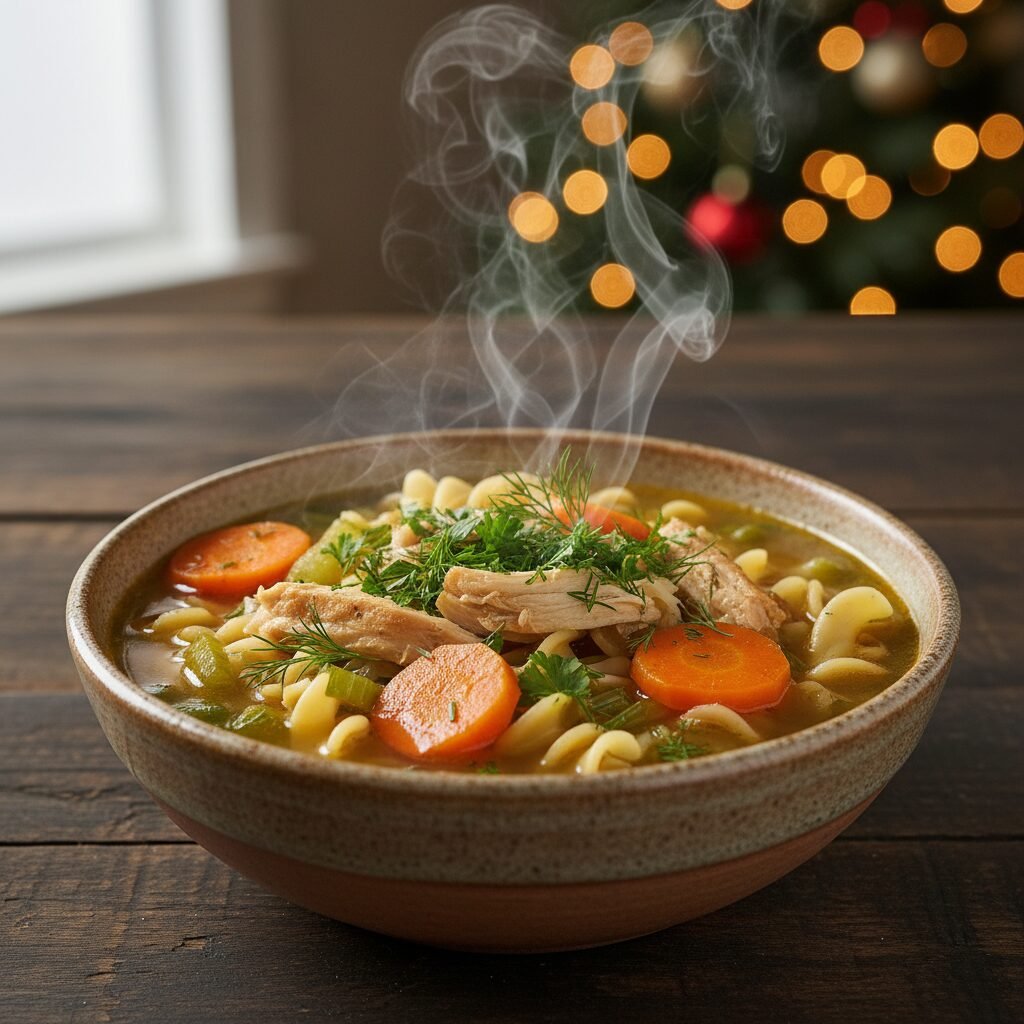
There is nothing quite as restorative as a bowl of homemade chicken noodle soup, especially during the bustling holiday season. This recipe elevates the classic staple with a deep, collagen-rich broth and fresh herbs, ensuring every spoonful is pure comfort.
25 minutes
2 hours
2 hours 25 minutes
8 servings
Soup
Simmering
American
Dairy Free
When the temperature drops and the holiday lights begin to twinkle, the kitchen calls for something truly nourishing. While the holidays are often associated with roast turkeys and heavy casseroles, the unsung hero of the season is a pot of simmering, homemade chicken noodle soup. It is the meal we turn to when we need a break from rich party food, when a loved one is feeling under the weather, or simply when we crave the culinary equivalent of a warm embrace.
This is not a recipe that relies on bouillon cubes or boxed broth. This is a professional-grade approach to building flavor from the ground up, designed for the home cook who wants to master the art of the stockpot. We begin with bone-in chicken to extract maximum gelatin, resulting in a broth with a luxurious mouthfeel that coats the palate. We layer in aromatics—onions, celery, carrots, and garlic—sweating them gently to release their sweetness before the long simmer begins.
For the Pinterest-savvy mom or the busy host, this soup is a secret weapon. It feeds a crowd, freezes beautifully (provided you store the noodles separately), and fills the home with an aroma that is arguably better than any scented candle. Whether you are using a whole chicken purchased specifically for this meal or repurposing the carcass from a holiday roast, this guide will walk you through creating a soup that is vibrant, healing, and undeniably delicious.
History & Origins
Chicken soup has been a global culinary staple for centuries, transcending borders and cultures. Often referred to as "Jewish Penicillin," its reputation as a healing food dates back to at least the 12th century, when the physician and philosopher Maimonides recommended chicken broth to treat respiratory tract symptoms. He believed in its ability to neutralize body constitution, and modern science has since offered some support to these ancient claims, suggesting that chicken soup may indeed have mild anti-inflammatory effects.
Historically, the concept of boiling a fowl with water and vegetables was born out of necessity and frugality. It was a way to stretch a single bird to feed a large family and to extract every ounce of nutrition from the bones. As noodles migrated from Asia to Europe, they found a natural home in this broth. In America, the dish became an icon of domestic comfort in the 20th century, cemented by the rise of canned soups. However, the return to slow food and scratch cooking has revived the appreciation for the traditional, slow-simmered version, which offers a depth of flavor that industrial versions simply cannot replicate.
Why This Recipe Works
The success of this recipe lies in the science of extraction and the balance of texture. By using bone-in chicken parts (or a whole bird) and starting with cold water, we encourage the slow release of collagen from the connective tissues. As the water heats, this collagen transforms into gelatin, giving the broth a rich body and a silky texture that water-based soups lack.
Furthermore, we employ a two-step cooking method for the vegetables. The aromatics used to flavor the stock are often discarded because they give up all their flavor and structure during the long simmer. We introduce fresh carrots, celery, and onions later in the process to ensure they remain tender-crisp and vibrant in the final bowl. Finally, cooking the egg noodles separately is a non-negotiable professional technique. Starchy noodles cooked directly in the soup will thicken the broth excessively and become mushy upon reheating. By combining them only at the moment of service, we maintain a pristine, clear broth and perfectly distinct noodle texture.
Why You’ll Love This Recipe
- ✓Rich, collagen-filled homemade stock
- ✓Tender-crisp vegetables, never mushy
- ✓Bright finish with fresh dill and lemon
- ✓Freezer-friendly instructions included
- ✓Perfect for holiday meal prep
- ✓Uses whole food ingredients
Equipment You’ll Need
- ✓Large Stockpot or Dutch Oven (6-8 quart)
- ✓Fine Mesh Sieve or Colander
- ✓Large Mixing Bowl
- ✓Tongs
- ✓Chef’s Knife
- ✓Cutting Board
- ✓Separate pot for boiling noodles
Ingredients
- ✓1 whole chicken (approx. 4 lbs) or 4 lbs bone-in chicken thighs and legs
- ✓4 quarts cold filtered water
- ✓4 large carrots, peeled (2 for stock, 2 sliced for soup)
- ✓4 stalks celery (2 for stock, 2 sliced for soup)
- ✓2 large yellow onions (1 quartered for stock, 1 diced for soup)
- ✓1 head of garlic, halved horizontally
- ✓1 bunch fresh thyme
- ✓2 bay leaves
- ✓1 tablespoon whole black peppercorns
- ✓1 tablespoon Kosher salt (plus more to taste)
- ✓12 oz wide egg noodles
- ✓1/4 cup fresh dill, chopped
- ✓1/4 cup fresh flat-leaf parsley, chopped
- ✓1 tablespoon fresh lemon juice
- ✓1 tablespoon olive oil
Instructions
- Prepare the Stock Base: Place the whole chicken (or chicken pieces) into your large stockpot. Add the quartered onion, 2 whole carrots, 2 stalks of celery, the halved garlic head, fresh thyme, bay leaves, and peppercorns. Cover with 4 quarts of cold water. The water should cover the chicken by at least an inch; add more if necessary.
- Simmer the Stock: Place the pot over medium-high heat and bring it just to a boil. Immediately reduce the heat to low so the liquid is barely simmering. You want small bubbles breaking the surface, not a rolling boil. Skim off any gray foam (scum) that rises to the top during the first 15 minutes. Simmer uncovered for approximately 1.5 to 2 hours, or until the chicken is falling off the bone.
- Strain and Shred: Carefully remove the chicken from the pot using tongs and set it aside on a cutting board to cool. Strain the broth through a fine-mesh sieve into a large clean bowl or another pot. Discard the boiled vegetables and aromatics—they have done their job. You should be left with a beautiful, golden broth.
- Prepare the Final Soup: Wipe out the stockpot and return it to medium heat with 1 tablespoon of olive oil. Add the remaining diced onion, sliced carrots, and sliced celery. Sauté for 5-7 minutes until the onions are translucent and the vegetables are slightly softened.
- Combine: Pour the strained chicken broth back into the pot with the sautéed vegetables. Bring to a simmer and cook for 10-15 minutes, or until the carrots are tender.
- Process the Chicken: While the vegetables simmer, shred the cooled chicken meat. Discard the skin and bones. Tear the meat into bite-sized rustic chunks rather than cutting it for a better texture.
- Cook Noodles Separately: While the soup simmers, bring a separate pot of salted water to a boil. Cook the egg noodles according to package directions until al dente. Drain and rinse briefly with cool water to stop the cooking process.
- Final Assembly: Add the shredded chicken back into the simmering broth. Stir in the fresh dill, parsley, and lemon juice. Taste the soup and season generously with Kosher salt and black pepper. The lemon juice will not make it sour, but will brighten the savory flavors.
- Serve: Place a portion of the cooked noodles into serving bowls. Ladle the hot soup over the noodles. This keeps the noodles from becoming soggy if you have leftovers.
Expert Cooking Tips
- ✓Start Cold: Always start your stock with cold water. This allows the proteins and fats to release slowly, resulting in a clearer broth.
- ✓Don’t Boil Vigorously: A rolling boil emulsifies the fat into the liquid, making the stock cloudy and greasy. A gentle simmer is key.
- ✓Season at the End: Stock reduces as it cooks, concentrating flavors. If you salt too heavily at the beginning, the final soup may be too salty. Adjust seasoning right before serving.
- ✓The Acid Hack: The addition of lemon juice is a chef’s secret. It cuts through the richness of the chicken fat and wakes up the palate.
Substitutions and Variations
If you are short on time, you can use a high-quality store-bought low-sodium chicken broth and a rotisserie chicken, skipping the stock-making step, though the flavor will be lighter. For a gluten-free version, substitute the egg noodles with gluten-free pasta or rice; if using rice, you can cook it directly in the broth. If you prefer white meat only, use bone-in split chicken breasts, but reduce the simmering time to 45 minutes to prevent drying out. Parsnips can be substituted for or added to the carrots for a sweeter, earthier winter flavor.
Common Mistakes to Avoid
The most common mistake is cooking the noodles directly in the big pot of soup if you plan on having leftovers. The noodles will act like sponges, absorbing the broth and turning into a bloated, mushy mess by the next day. Another error is over-skimming the fat; while you want to remove the gray scum, a little layer of golden chicken fat on top adds immense flavor and satisfaction. Finally, under-salting is a frequent issue; homemade stock has no sodium, so you will need to add more salt than you think to bring out the flavors.
Serving Suggestions
Serve this soup with a side of crusty sourdough bread or homemade garlic knots to soak up the broth. For a lighter pairing, a crisp green salad with a vinaigrette dressing provides a nice temperature and texture contrast. A sprinkle of freshly cracked black pepper and a drizzle of high-quality extra virgin olive oil right before serving adds a gourmet touch.
Storage and Reheating Tips
Refrigerator: Store the soup (broth, chicken, and vegetables) in an airtight container for up to 4 days. Store the cooked noodles in a separate container or Ziploc bag with a little oil to prevent sticking. Combine when reheating.
Freezer: Freeze the soup base (without noodles) in souper cubes or freezer-safe bags for up to 3 months. Do not freeze the noodles as they will disintegrate upon thawing. Thaw the soup in the fridge overnight and boil fresh noodles when ready to serve.
Nutrition Facts (Estimated)
| Serving Size | 1.5 cups |
| Calories | 340 |
| Fat | 12g |
| Saturated Fat | 3g |
| Unsaturated Fat | 8g |
| Trans Fat | 0g |
| Cholesterol | 85mg |
| Sodium | 850mg |
| Carbohydrates | 28g |
| Fiber | 3g |
| Sugar | 4g |
| Protein | 29g |
Frequently Asked Questions
Can I use a leftover turkey carcass for this recipe?
Absolutely. This recipe is the perfect post-holiday solution for a turkey carcass. Simply substitute the turkey frame for the whole chicken in the stock-making step. The simmer time remains the same.
Why is my soup bland?
Bland soup is almost always a result of insufficient salt or lack of acidity. Add Kosher salt in half-teaspoon increments, tasting as you go. If it still tastes ‘flat,’ add another squeeze of lemon juice.
Can I make this in a Slow Cooker?
Yes. Add the chicken, stock vegetables, and water to the slow cooker. Cook on Low for 6-8 hours. Remove chicken, strain broth, and then proceed with cooking the fresh vegetables in the broth on the High setting until tender.
Can I make this in an Instant Pot?
Yes. Pressure cook the chicken, water, and aromatics on High Pressure for 25 minutes with a natural release. Strain, then use the Sauté function to cook the fresh vegetables before combining.
How do I get the broth to be perfectly clear?
Never let the soup come to a rolling boil; keep it at a gentle simmer. Strain it through a fine-mesh sieve lined with cheesecloth to catch even the smallest particles.
Is it better to use chicken breast or thighs?
For the stock, you need bones and connective tissue, so neither boneless option is ideal. For the meat itself, thighs (dark meat) remain more tender and flavorful in soup, whereas breast meat can dry out if overcooked.
Can I add other vegetables?
Certainly. Peas, corn, green beans, or chopped spinach are excellent additions. Add delicate vegetables like spinach or frozen peas only in the last 2 minutes of cooking to maintain their color.
How do I reheat the leftovers?
Heat the soup base on the stove until simmering. If you have cold, precooked noodles, drop them into the hot soup for just 30-60 seconds to warm through before serving.
Conclusion
Homemade Chicken Noodle Soup is more than just a recipe; it is a ritual of care and nourishment. By taking the time to create a proper stock and treating each ingredient with respect, you transform humble components into a holiday meal that resonates with warmth and tradition. Whether you are fueling up for holiday shopping or winding down after a long family gathering, this bowl of gold is sure to become a cherished seasonal favorite in your home.