Goumi Berry Pie
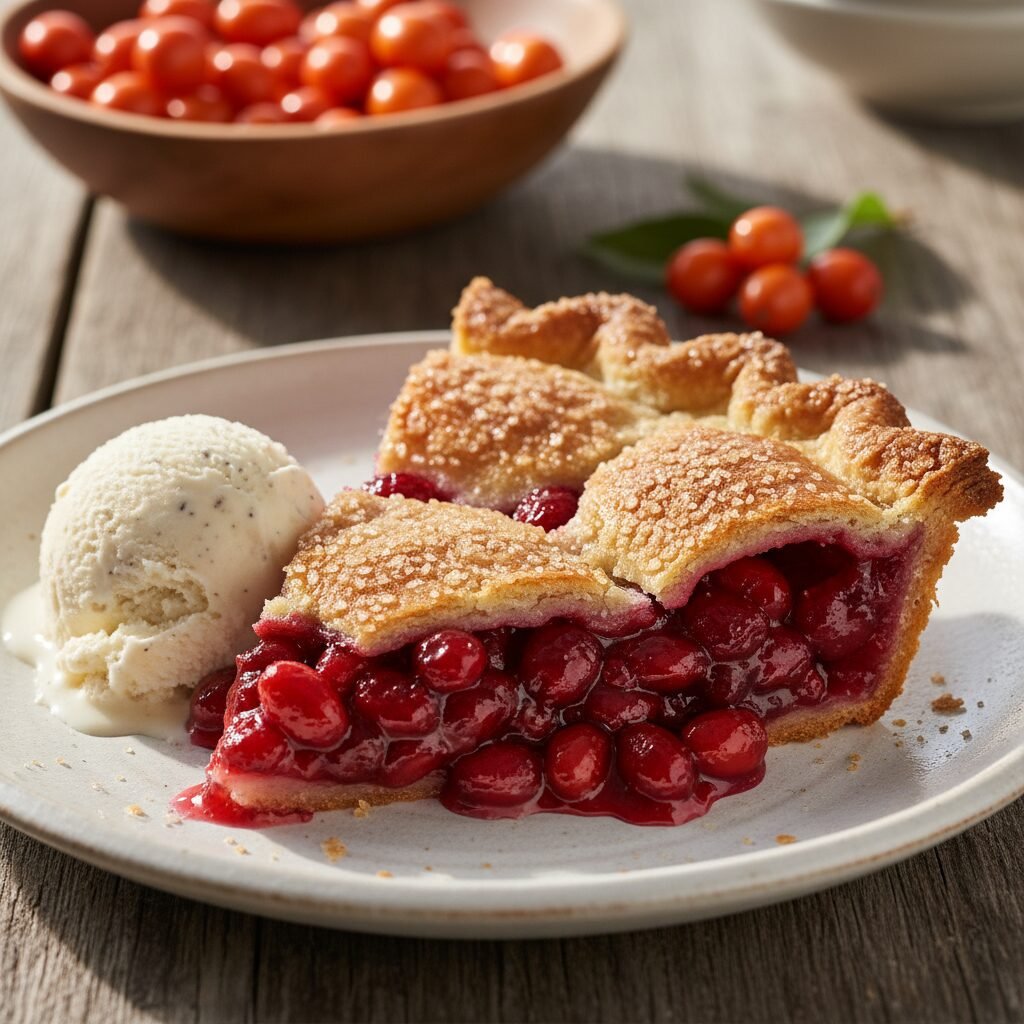
If you are lucky enough to have a Goumi bush in your garden or find these speckled red gems at a market, you are in for a treat! This pie balances the unique tartness of goumi berries with a sweet, jammy filling inside a golden, flaky crust.
30 minutes
50 minutes
1 hour 20 minutes
8 slices
Dessert
Baking
American Fusion
Vegetarian
Let’s talk about the unsung hero of the summer garden: the Goumi berry. If you haven’t heard of them, don’t worry—you aren’t alone! But once you try them, they might just become your new obsession. These little red berries, speckled with silver and gold, look like jewels and taste like a sophisticated mix of rhubarb, sour cherry, and grape. They are the perfect candidate for a pie because they hold their shape well but break down into a luscious, jammy filling when baked.
As a mom who loves finding unique ways to get more fruit onto the dessert table, this pie has become a conversation starter at every potluck. It’s rustic, it’s vibrant bright red, and it offers a flavor profile that is far more interesting than your standard apple or blueberry pie. Plus, goumi berries are packed with lycopene and vitamins, so we can technically say this pie is good for us, right? Grab your rolling pin, because we are about to make the most beautiful pie of the season!
History & Origins
The Goumi berry (Elaeagnus multiflora) hails originally from East Asia, specifically China, Korea, and Japan. While it has been consumed for centuries in its native lands for both culinary and medicinal purposes, it was introduced to the West and the United States fairly recently, primarily by permaculture enthusiasts.
Gardeners fell in love with the Goumi plant not just for the fruit, but because it is a nitrogen-fixer—meaning it improves the soil around it. For a long time, it was treated more as a functional landscape shrub than a food source. However, as the ‘food forest’ movement grew, people rediscovered the culinary delight of the berries. They were historically used to make jams, jellies, and wines due to their high acidity and pectin content, making them a natural ancestor to the modern fruit pie.
Why This Recipe Works
Goumi berries are naturally astringent when under-ripe and tart even when fully ripe. This acidity is actually the secret weapon for a perfect pie. Much like rhubarb or cranberries, goumi berries need a generous amount of sugar to become palatable, but once that balance is struck, the result is a complex, deep flavor that doesn’t feel cloying or overly sweet.
Texturally, goumi berries contain a single soft seed (which is edible and full of healthy fats) and a skin that softens beautifully under heat. When tossed with cornstarch and sugar, the natural juices release to create a thick, glossy sauce that suspends the fruit. The butter in the crust contrasts with the sharp brightness of the berry, creating that classic ‘peaches and cream’ effect on your palate.
Why You’ll Love This Recipe
- ✓Unique sweet-tart flavor profile similar to rhubarb and cherry
- ✓High antioxidant content including lycopene
- ✓Beautiful bright red filling that looks stunning
- ✓Rustic, flaky all-butter crust
- ✓Great way to use a permaculture garden harvest
Equipment You’ll Need
- ✓9-inch Pie Dish
- ✓Large Mixing Bowl
- ✓Rolling Pin
- ✓Pastry Blender or Food Processor
- ✓Plastic Wrap
- ✓Baking Sheet (to catch drips)
- ✓Pastry Brush
Ingredients
- ✓For the Crust:
- ✓2 1/2 cups all-purpose flour
- ✓1 cup (2 sticks) unsalted butter, cold and cubed
- ✓1 teaspoon salt
- ✓1 tablespoon sugar
- ✓6-8 tablespoons ice water
- ✓For the Filling:
- ✓4 to 5 cups fresh Goumi berries, washed and stemmed
- ✓1 1/4 cups granulated sugar (adjust based on berry tartness)
- ✓1/4 cup cornstarch
- ✓1 tablespoon lemon juice
- ✓1/2 teaspoon ground cinnamon
- ✓1/4 teaspoon almond extract (optional)
- ✓1 tablespoon unsalted butter, cut into small dots
- ✓For the Wash:
- ✓1 egg beaten with 1 tablespoon water
- ✓Coarse sugar for sprinkling
Instructions
- Step 1: Make the Crust
In a large bowl or food processor, mix the flour, salt, and sugar. Cut in the cold butter until the mixture resembles coarse crumbs with some pea-sized pieces of butter remaining. Slowly add ice water, one tablespoon at a time, mixing gently until the dough just starts to come together. Divide into two disks, wrap in plastic, and chill for at least 1 hour. - Step 2: Prep the Oven
Preheat your oven to 400°F (200°C). Place a baking sheet on the bottom rack to catch any potential fruit juice drips. - Step 3: Prepare the Filling
In a large mixing bowl, combine the washed Goumi berries, granulated sugar, cornstarch, cinnamon, lemon juice, and almond extract. Toss gently until the berries are evenly coated. Let this sit for about 10 minutes so the juices start to release. - Step 4: Roll the Dough
On a lightly floured surface, roll out the first disk of dough to fit your 9-inch pie dish. Gently lift and place it into the dish. Pour the berry mixture into the crust, mounding it slightly in the center. Dot the top of the filling with the small pieces of butter. - Step 5: Top the Pie
Roll out the second disk of dough. You can place it whole over the top (cutting slits for steam vents) or cut it into strips to create a lattice pattern. Crimp the edges to seal the top and bottom crusts together. - Step 6: Egg Wash
Brush the top crust with the egg wash and sprinkle generously with coarse sugar for that bakery-style crunch. - Step 7: Bake
Bake at 400°F for 20 minutes. Then, reduce the temperature to 375°F (190°C) and bake for an additional 30-40 minutes, or until the crust is golden brown and the filling is bubbling thick juices through the vents. If the edges brown too quickly, cover them with a pie shield or foil strips. - Step 8: Cool
Allow the pie to cool on a wire rack for at least 3 hours before slicing. This is crucial to let the filling set; otherwise, it will be runny.
Expert Cooking Tips
- ✓Taste your berries first! Goumi berries vary wildly in tartness. If they make your lips pucker instantly, add an extra 1/4 cup of sugar.
- ✓Keep it cold. The secret to flaky crust is cold butter. If your kitchen is warm, put the dough back in the fridge for 10 minutes before rolling.
- ✓Don’t fear the seed. Goumi berries have a small, fibrous seed. It is edible (soft like a pomegranate seed but smaller), but if you are very picky about texture, you can cook the berries down and pass them through a food mill first—though this changes it to a custard-style pie.
- ✓Thickener choice. If you prefer tapioca, substitute the cornstarch for 1/3 cup of quick-cooking tapioca.
Substitutions and Variations
If you don’t have enough Goumi berries to fill the pie, they mix wonderfully with apples, strawberries, or rhubarb. If you cannot find Goumi berries at all, the closest flavor substitute would be a mix of sour cherries and cranberries, though the texture will differ slightly. For a gluten-free version, use a 1:1 gluten-free baking flour blend for the crust.
Common Mistakes to Avoid
The biggest mistake with Goumi berries is using them when they are under-ripe. An under-ripe goumi is extremely astringent (it dries out your mouth). Ensure your berries are deep red and slightly soft to the touch. Another common error is cutting into the pie too soon. Because these berries have a high water content, the pectin needs time to cool and gel. Slicing it hot will result in a delicious but messy soup!
Serving Suggestions
This pie screams for a creamy element to cut through the tartness. Serve warm with a big scoop of vanilla bean ice cream or a dollop of sweetened whipped cream. For a brunch twist, serve a slice cold with a side of greek yogurt and honey.
Storage and Reheating Tips
The pie can be stored at room temperature, loosely covered with foil or a tea towel, for up to 2 days. After that, move it to the refrigerator for up to 5 days. To reheat, pop a slice in the microwave for 20 seconds or in a toaster oven to crisp up the crust.
Nutrition Facts (Estimated)
| Serving Size | 1 slice |
| Calories | 380 |
| Fat | 18g |
| Saturated Fat | 10g |
| Unsaturated Fat | 7g |
| Trans Fat | 0g |
| Cholesterol | 45mg |
| Sodium | 210mg |
| Carbohydrates | 52g |
| Fiber | 4g |
| Sugar | 22g |
| Protein | 4g |
Frequently Asked Questions
Do I need to remove the seeds from Goumi berries?
No, you don’t have to. The seeds are edible and contain healthy fatty acids. They are somewhat fibrous, similar to a tomato seed but larger, or a very soft pomegranate seed. Most people bake them whole, but you can mill them if you prefer a smooth texture.
What do Goumi berries taste like?
They have a unique flavor profile often described as a mix between rhubarb, sour cherry, and red currant. They are quite tart until fully ripe.
Where can I buy Goumi berries?
They are rarely sold in supermarkets due to their delicate skin. Your best bet is local farmers markets, specialty foraging groups, or growing them yourself!
Can I use frozen berries?
Absolutely. If using frozen goumi berries, do not thaw them before baking. You may need to add an extra teaspoon of cornstarch to account for the extra liquid.
Is this pie safe for kids?
Yes! Just be aware of the tartness. Kids who love sour candy usually love this pie. The seeds are safe to eat.
Can I make the dough ahead of time?
Yes, the pie dough can be made and kept in the fridge for up to 3 days or frozen for up to 3 months.
Why is my filling runny?
This usually happens if the pie wasn’t baked long enough for the cornstarch to activate (it needs to bubble) or if the pie wasn’t cooled completely before slicing.
Can I make a crumble topping instead?
Definitely. A brown sugar and oat crumble works fantastic with the tart berries.
Conclusion
Making a Goumi Berry Pie is more than just baking; it’s an adventure in flavor. Whether you foraged these berries yourself or found them at a market, transforming them into a bubbling, golden pie is deeply satisfying. The balance of the buttery crust with the electric tang of the fruit makes for a dessert that stands out from the crowd. I hope this recipe encourages you to try something new and enjoy the unique bounties of nature. Happy baking!