Easy Baked Feta Pasta Dinner Recipe
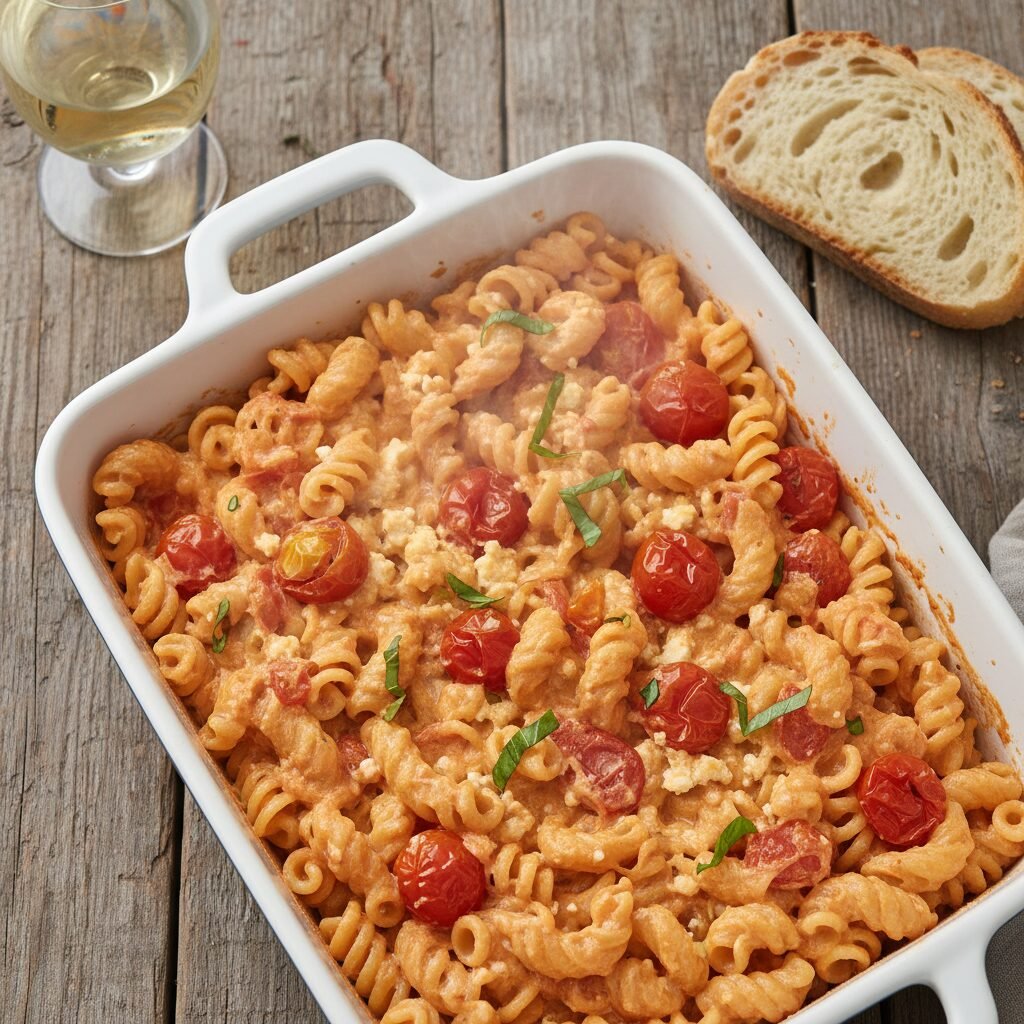
Transform a simple block of feta and fresh cherry tomatoes into a luxurious, creamy pasta sauce with almost zero active effort. This recipe took the world by storm for a reason: it is undeniably delicious, foolproof, and ready in under 45 minutes.
5 minutes
35 minutes
40 minutes
4 servings
Main Course
Baking
Mediterranean
Vegetarian
In the world of culinary trends, few recipes have made as significant an impact as the Baked Feta Pasta. Often referred to simply as the "TikTok Pasta," this dish transcends mere internet fame to offer a genuinely practical solution for busy families and professionals alike. The premise is disarmingly simple: placing a block of feta cheese amidst a sea of cherry tomatoes, bathing them in olive oil, and roasting until the tomatoes burst and the cheese softens into a spreadable delight. When tossed with al dente pasta, these roasted components emulsify into a rich, tangy, and creamy sauce that rivals complex preparations requiring far more skill and time.
For the busy parent or the home cook seeking comfort without the chaos of a multi-pot cleanup, this recipe is a revelation. It relies on the high heat of the oven to do the heavy lifting, concentrating the sugars in the tomatoes and breaking down the proteins in the cheese. The result is a dinner that feels sophisticated enough for a weekend gathering yet remains accessible enough for a Tuesday night after soccer practice. The balance of acidity from the tomatoes, saltiness from the feta, and the aromatic punch of fresh garlic and basil creates a flavor profile that is universally appealing.
Beyond its taste, the beauty of this dish lies in its adaptability. While the core recipe is perfection in its simplicity, it serves as a robust canvas for proteins like grilled chicken or shrimp, and additional vegetables like spinach or asparagus. It is a testament to the power of quality ingredients coming together with minimal intervention to create something truly greater than the sum of its parts.
History & Origins
While the Baked Feta Pasta exploded in popularity globally via TikTok in early 2021, its origins are rooted in the Finnish food blogosphere. The original concept is largely credited to Finnish food artist Tiiu Piret, who posted a similar pasta dish in 2018. However, it was another Finnish food blogger, Jenni Häyrinen, who refined and popularized the recipe under the name "Uunifetapasta" in 2019. Her version was so incredibly popular in Finland that it reportedly caused a temporary shortage of feta cheese across the country.
The recipe eventually crossed the Atlantic, finding a massive audience in the United States when it was translated and shared on social media platforms. It resonated deeply during a time when people were cooking at home more frequently and searching for comfort foods that required minimal effort. Today, it stands as a modern classic, a rare viral trend that has earned a permanent spot in recipe rotations worldwide due to its undeniable merit and reliability.
Why This Recipe Works
The success of the Baked Feta Pasta is grounded in the science of roasting and emulsification. Roasting cherry tomatoes at a high temperature (400°F/200°C) causes their cell walls to break down rapidly while evaporating excess water. This concentrates the natural sugars (glutamates) and acidity, creating a robust, umami-rich base sauce. Simultaneously, feta cheese, which is a sheep’s milk cheese cured in brine, has a unique structure that does not melt entirely like mozzarella or cheddar. Instead, it softens and becomes creamy without separating into a greasy mess, thanks to its high moisture and acid content.
When the roasted tomatoes and soft feta are stirred together, the olive oil acts as a lipid bridge. Adding the starchy pasta—and crucially, a splash of the pasta cooking water—allows the oil, cheese fats, and tomato juices to emulsify. This creates a cohesive, velvety sauce that clings to the noodles rather than sliding off. The addition of fresh garlic and basil at the end ensures that the volatile aromatic compounds are preserved, providing a fresh, bright finish to cut through the richness of the cheese.
Why You’ll Love This Recipe
- ✓Requires only 5 minutes of active preparation time
- ✓Creates a creamy sauce without heavy cream or a roux
- ✓Uses minimal equipment for easy cleanup
- ✓Easily customizable with proteins or gluten-free pasta
- ✓Perfect balance of tangy, salty, and savory flavors
- ✓Kid-friendly and visually stunning
Equipment You’ll Need
- ✓9×13 inch Baking Dish or Oven-Safe Skillet
- ✓Large Pot (for boiling pasta)
- ✓Colander
- ✓Chef’s Knife
- ✓Cutting Board
- ✓Wooden Spoon or Silicon Spatula
Ingredients
- ✓2 pints (approx 20 oz) cherry or grape tomatoes
- ✓1 block (8 oz) Greek feta cheese (do not use crumbles)
- ✓1/2 cup extra virgin olive oil
- ✓4 cloves garlic, peeled and smashed
- ✓10 oz dried pasta (cavatappi, penne, or rotini work best)
- ✓1/4 teaspoon red pepper flakes (optional, for heat)
- ✓1/4 teaspoon cracked black pepper
- ✓1 large handful fresh basil leaves, thinly sliced
- ✓Sea salt (for pasta water only)
Instructions
- Preheat your oven to 400°F (200°C). Position a rack in the center of the oven.
- In a 9×13 inch baking dish, combine the cherry tomatoes, smashed garlic cloves, and 1/2 cup of olive oil. Toss well to coat the tomatoes evenly. Season with the black pepper and red pepper flakes if using. Do not add extra salt yet, as the feta is naturally salty.
- Place the block of feta cheese directly in the center of the baking dish, nesting it among the tomatoes. Turn the block over once to coat it in the olive oil from the dish.
- Place the dish in the oven and bake for 35 minutes. You are looking for the tomatoes to burst and release their juices, and for the feta to look soft and slightly golden on top. If you prefer more color, you can broil it for the last 2 minutes, but watch closely to prevent burning the garlic.
- While the feta is baking, bring a large pot of salted water to a boil. Cook the pasta according to package directions until al dente. Before draining, reserve 1/2 cup of the starchy pasta cooking water.
- Remove the baking dish from the oven. Immediately smash the feta and tomatoes together using a wooden spoon. Stir vigorously until the cheese and tomato juices combine into a creamy, pink-orange sauce.
- Add the drained pasta to the baking dish. Toss well to coat every noodle in the sauce. If the sauce feels too thick or dry, add the reserved pasta water a tablespoon at a time until the desired consistency is reached.
- Stir in the fresh basil leaves last to prevent them from wilting too much. Taste and add a pinch of salt if absolutely necessary, though the cheese usually provides enough seasoning.
- Serve immediately, garnished with extra fresh basil or a drizzle of high-quality olive oil.
Expert Cooking Tips
- ✓Use Full-Fat Block Feta: Do not use crumbled feta or fat-free versions. Pre-crumbled feta contains anti-caking agents that prevent it from melting properly, resulting in a gritty sauce. The block variety yields the creamiest texture.
- ✓Crowd the Pan: Use a baking dish that fits the tomatoes snugly around the cheese. If the pan is too large, the juices will evaporate too quickly, and the sauce may dry out.
- ✓Save the Pasta Water: This is liquid gold. The starch in the water helps emulsify the oil and cheese, creating a glossy sauce that clings to the pasta.
- ✓Garlic Management: Leave the garlic cloves whole or smashed rather than minced. Minced garlic will burn at 400°F for 35 minutes, turning bitter. Smashed cloves roast beautifully and become soft enough to mash into the sauce.
- ✓Pasta Shape Matters: Short pasta shapes with ridges or holes, such as cavatappi, penne, rigatoni, or fusilli, are ideal for catching chunks of tomato and thick sauce.
Substitutions and Variations
This recipe is highly versatile and accommodates various dietary needs and pantry staples. If you are not a fan of feta, goat cheese is a popular alternative that melts into a tangy, creamy sauce, though the flavor profile will be distinct. For a milder taste, a block of cream cheese or high-moisture mozzarella can work, though you may need to add salt and acid (lemon juice) to balance the flavors.
For a gluten-free version, simply substitute the wheat pasta with your favorite gluten-free pasta variety, such as chickpea or brown rice pasta. Just be mindful that gluten-free pasta can be more delicate, so toss gently. To boost the vegetable content, you can add chopped zucchini, bell peppers, or asparagus to the roasting pan, or stir in fresh baby spinach right when the dish comes out of the oven—the residual heat will wilt the greens perfectly.
Common Mistakes to Avoid
The most frequent error is using the wrong type of cheese. Avoid dry, crumbled feta; it will not melt into a sauce but rather remain as distinct, rubbery pebbles. Another common mistake is undercooking the tomatoes. They must burst and release their liquid to create the sauce base. If they are still firm after 35 minutes, keep them in longer. Finally, discarding the pasta water is a missed opportunity. Without that starchy liquid, the sauce can sometimes be too oily or separated. Always keep a cup aside just in case.
Serving Suggestions
While this pasta is rich enough to stand on its own, it pairs beautifully with a side of crusty garlic bread or focaccia to mop up any remaining sauce. To cut through the richness of the cheese, serve it alongside a crisp green salad with a sharp vinaigrette or a simple cucumber and onion salad. If you wish to add more protein, grilled chicken breast, sautéed shrimp, or even spicy Italian sausage links make excellent accompaniments. For a wine pairing, a high-acid white wine like Sauvignon Blanc or a light red like Pinot Noir complements the acidity of the tomatoes and the saltiness of the feta.
Storage and Reheating Tips
Leftovers can be stored in an airtight container in the refrigerator for up to 3 to 4 days. Note that the creamy sauce will thicken significantly as it cools. To reheat, place the pasta in a saucepan over low heat or in the microwave. Crucially, add a splash of water or milk before reheating to help loosen the sauce and restore its creamy consistency. Stir frequently while reheating to ensure the oils re-emulsify properly. Freezing is not recommended for this dish, as the texture of the feta and the gluten structure of the pasta tend to degrade, becoming grainy and mushy upon thawing.
Nutrition Facts (Estimated)
| Serving Size | 1 bowl (approx 250g) |
| Calories | 580 |
| Fat | 32g |
| Saturated Fat | 12g |
| Unsaturated Fat | 18g |
| Trans Fat | 0g |
| Cholesterol | 45mg |
| Sodium | 890mg |
| Carbohydrates | 55g |
| Fiber | 4g |
| Sugar | 6g |
| Protein | 18g |
Frequently Asked Questions
Can I use cherry tomatoes that aren’t very sweet?
Yes. The roasting process concentrates the sugars in even lackluster winter tomatoes. However, if they are very tart, you can add a teaspoon of sugar or honey to the mixture before baking to balance the acidity.
My sauce came out dry. What went wrong?
This usually happens if the baking dish was too large (causing evaporation) or if the pasta absorbed all the liquid. The fix is simple: add more reserved pasta water or a splash of hot water until it reaches the desired creaminess.
Can I make this low carb?
Absolutely. Instead of traditional pasta, serve the baked feta and tomato mixture over zucchini noodles (zoodles), spaghetti squash, or even roasted cauliflower florets.
Do I have to peel the garlic?
Yes, peel the garlic before roasting so it can be smashed directly into the sauce. If you roast it in the skin, you will have to fish the cloves out, squeeze them, and put them back in, which is messy.
Is it possible to make this vegan?
Yes, there are several high-quality vegan feta alternatives on the market that melt relatively well. Alternatively, some cooks use a block of firm tofu with lemon juice, nutritional yeast, and extra salt, though the texture will differ.
Can I add meat directly to the baking dish?
It is not recommended to roast raw meat in the same dish as the cook times vary significantly. It is better to cook chicken, sausage, or shrimp separately and stir them in at the end.
Why is my sauce grainy?
Graininess usually results from using low-fat cheese or pre-crumbled feta containing cellulose. Always use a full-fat block of sheep’s milk feta for the smoothest result.
Can I use large tomatoes instead of cherry tomatoes?
Technically yes, but you must chop them into small chunks. Cherry and grape tomatoes are preferred because their skins add texture and they contain the right ratio of juice to flesh for the sauce.
Conclusion
The Viral Baked Feta Pasta is more than just a fleeting internet trend; it is a testament to the beauty of simple, high-quality ingredients coming together to create comfort food with ease. Whether you are a seasoned home cook or a novice in the kitchen, this recipe promises a gourmet-tasting result with minimal effort and cleanup. It is the perfect ace up your sleeve for busy weeknights, impromptu dinner parties, or whenever you crave a warm, comforting bowl of pasta. Give it a try, and you will understand exactly why the world fell in love with this dish.