Creamy Cajun Chicken Pasta
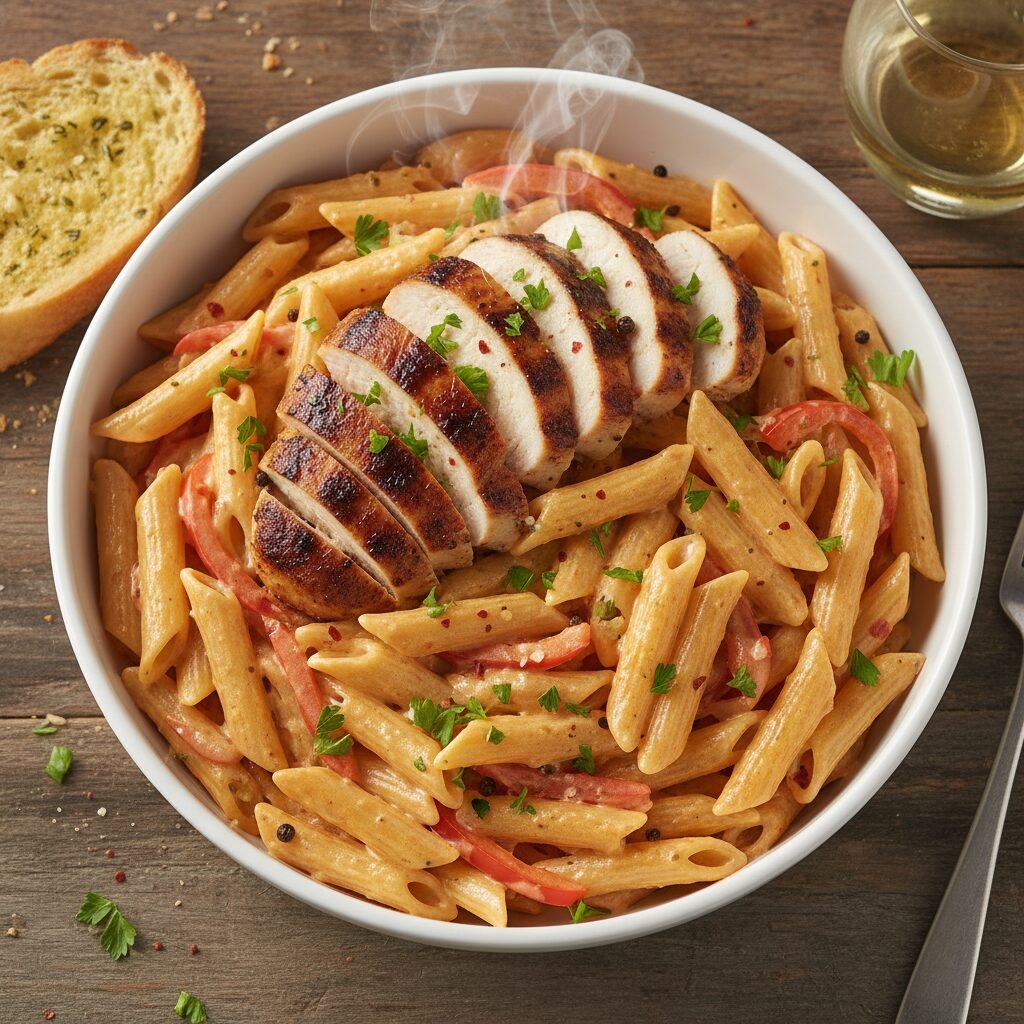
This Creamy Cajun Chicken Pasta brings the bold, rustic flavors of New Orleans right to your kitchen table in under 30 minutes. It features tender, spice-rubbed chicken breast and colorful vegetables smothered in a luxurious, spicy parmesan cream sauce that rivals any high-end bistro.
15 minutes
20 minutes
35 minutes
4-6 servings
Main Course
Stovetop
American / Cajun Fusion
Gluten Free
There is something undeniably comforting about a large bowl of pasta, especially when it is coated in a sauce that balances rich creaminess with a distinct, smoky heat. This Creamy Cajun Chicken Pasta is designed to break the monotony of standard weeknight dinners, offering a flavor profile that is both sophisticated and accessible. For busy mothers and home cooks looking to replicate that distinct "restaurant-style" experience without the price tag or the wait times, this dish is a revelation. It combines the heartiness of protein-packed chicken with the soul-soothing texture of perfectly cooked pasta.
The beauty of this recipe lies in its versatility and speed. While it tastes like it has been simmering for hours, the entire meal comes together in the time it takes to boil the water and cook the pasta. The sauce relies on the reduction of heavy cream and the melting of fresh parmesan, creating an emulsion that clings effortlessly to every noodle. Unlike jarred sauces which can often taste flat or overly preserved, this homemade Cajun alfredo sauce bursts with fresh garlic, vibrant bell peppers, and a custom blend of spices that you can adjust to your family’s heat tolerance.
Furthermore, this dish is a visual feast. The vibrant oranges and reds from the paprika and cayenne, contrasted against the fresh green parsley and the creamy white sauce, make it instantly Pinterest-worthy. It is the kind of meal that invites everyone to the table, promising a satisfying fullness and a lingering warmth from the spices. Whether you are hosting a casual dinner party or simply need a reliable go-to for a Tuesday night, this pasta delivers on all fronts: flavor, texture, and ease of preparation.
History & Origins
To understand the roots of this dish, one must look at the culinary traditions of Louisiana, specifically the distinction between Cajun and Creole cuisines. Cajun cuisine originates from the Acadians, French colonists deported by the British from Canada to the Acadiana region of Louisiana in the 18th century. It is rustic, country-style cooking that relies heavily on locally available ingredients and the "holy trinity" of vegetables: onions, bell peppers, and celery. It is known for its robust, spicy, and smoky flavor profiles, often utilizing cayenne pepper, paprika, and garlic powder.
However, the specific concept of "Cajun Chicken Pasta" is a more modern American invention, likely popularized in the late 20th century by casual dining chains such as TGI Fridays, Chili’s, and The Cheesecake Factory. These establishments sought to fuse the popular Italian-American Alfredo sauce with the trending bold flavors of the American South. This fusion represents a melting pot of culinary ideas: the Italian technique of tossing pasta in a cheese and cream emulsion, combined with the spice rubs and vegetable sautés characteristic of Louisiana cooking.
While a traditional Cajun grandmother might not recognize pasta alfredo as a native bayou dish, the evolution of this recipe speaks to the global nature of modern comfort food. It takes the best elements of French-Acadian seasoning—the heat and the aromatics—and marries them with the universal appeal of creamy Italian pasta. Today, it stands as a staple "New American" dish, beloved for its ability to bridge the gap between spicy excitement and creamy comfort.
Why This Recipe Works
This recipe succeeds due to the interplay of fat, acid, and heat. From a food science perspective, the heavy cream acts as a carrier for flavor. Fat molecules in the cream and butter dissolve the fat-soluble compounds found in the Cajun spices (like capsaicin in cayenne and the pigments in paprika), distributing them evenly throughout the sauce. This ensures that every bite has a consistent depth of flavor rather than isolated pockets of spice.
The technique of searing the chicken first is crucial. By applying a dry rub of spices to the chicken and cooking it in hot oil/butter, you encourage the Maillard reaction—a chemical reaction between amino acids and reducing sugars that gives browned food its distinctive flavor. This creates a fond (the browned bits stuck to the bottom of the pan). When you deglaze the pan with the vegetables and cream, those caramelized bits lift off and dissolve into the sauce, providing a savory, umami backbone that salt alone cannot achieve.
Finally, the starchy pasta water plays a hidden but vital role. The starch released by the pasta as it cooks helps to stabilize the emulsion of the cream and cheese, preventing the sauce from separating or becoming greasy. The result is a velvety, cohesive sauce that coats the pasta rather than sliding off it. The heat from the Cajun seasoning cuts through the richness of the heavy cream and parmesan, preventing the dish from feeling too heavy on the palate.
Why You’ll Love This Recipe
- ✓Ready in under 35 minutes
- ✓Restaurant-quality creamy sauce
- ✓High protein content
- ✓Adjustable spice levels for kids
- ✓Perfect for meal prep and leftovers
Equipment You’ll Need
- ✓Large deep skillet or Dutch oven
- ✓Large pot for boiling pasta
- ✓Chef’s knife
- ✓Cutting board
- ✓Tongs
- ✓Whisk
- ✓Cheese grater
Ingredients
- ✓1 lb (450g) boneless, skinless chicken breasts, pounded to even thickness
- ✓2 tablespoons Cajun seasoning (divided)
- ✓8 oz (225g) Penne or Fettuccine pasta
- ✓2 tablespoons olive oil
- ✓2 tablespoons unsalted butter
- ✓1 red bell pepper, sliced into thin strips
- ✓1 yellow bell pepper, sliced into thin strips
- ✓1/2 yellow onion, finely diced
- ✓3 cloves garlic, minced
- ✓1.5 cups heavy whipping cream
- ✓1/2 cup chicken broth (low sodium)
- ✓3/4 cup freshly grated Parmesan cheese
- ✓1 teaspoon smoked paprika
- ✓Salt and black pepper to taste
- ✓2 tablespoons fresh parsley, chopped (for garnish)
Instructions
- Prep the Chicken: Pat the chicken breasts dry with paper towels. Drizzle with a little olive oil and season liberally on both sides with 1 tablespoon of the Cajun seasoning. Ensure the spices are rubbed in well.
- Boil the Pasta: Bring a large pot of salted water to a rolling boil. Add the pasta and cook according to package directions until al dente. Reserve 1/2 cup of the starchy pasta water before draining. Set pasta aside.
- Sear the Chicken: While the pasta cooks, heat the olive oil and 1 tablespoon of butter in a large skillet over medium-high heat. Once hot, add the chicken breasts. Cook for 5-7 minutes per side, or until the internal temperature reaches 165°F (74°C) and the exterior is blackened/browned. Remove chicken from the pan and let it rest on a cutting board. Slice into strips once rested.
- Sauté Vegetables: In the same skillet (do not wipe it out), add the remaining tablespoon of butter. Add the sliced bell peppers and onions. Sauté for 4-5 minutes until softened and slightly charred. Add the minced garlic and cook for another 30 seconds until fragrant, being careful not to burn it.
- Build the Sauce: Reduce heat to medium. Pour in the chicken broth to deglaze the pan, scraping up any browned bits from the bottom with a wooden spoon. Stir in the heavy cream, the remaining 1 tablespoon of Cajun seasoning, and the smoked paprika. Bring to a gentle simmer.
- Thicken the Sauce: Let the sauce simmer for 3-4 minutes until it begins to thicken slightly. Reduce heat to low. Gradually whisk in the freshly grated Parmesan cheese until melted and smooth.
- Combine: Add the cooked pasta and the sliced chicken back into the skillet. Toss gently to coat everything in the sauce. If the sauce is too thick, splash in a little of the reserved pasta water to reach your desired consistency.
- Serve: Taste and adjust salt and pepper if needed. Garnish with fresh chopped parsley and serve immediately.
Expert Cooking Tips
- ✓Grate your own cheese: Pre-shredded cheese contains anti-caking agents (like potato starch) that prevent it from melting smoothly, leading to a grainy sauce. Always buy a block of Parmesan and grate it yourself.
- ✓Room temperature cream: Try to take your heavy cream out of the fridge 15 minutes before cooking. Adding cold cream to a hot pan can sometimes cause the fats to seize or separate.
- ✓Don’t overcook the pasta: Since you will be tossing the pasta in the hot sauce at the end, drain it when it is just barely al dente so it doesn’t become mushy.
- ✓Control the salt: Many store-bought Cajun seasoning blends are very high in salt. Taste your sauce before adding extra salt to avoid over-seasoning.
- ✓Rest the chicken: Allowing the chicken to rest for 5-10 minutes before slicing ensures the juices redistribute throughout the meat, keeping it moist.
Substitutions and Variations
Protein: This recipe works exceptionally well with shrimp or Andouille sausage. For shrimp, sear them quickly (2-3 minutes) and remove them, adding them back at the very end to avoid rubbery texture. For a vegetarian option, use portobello mushrooms or a meat substitute.
Dairy: If you need a lighter version, you can use half-and-half instead of heavy cream, though the sauce will be thinner. To thicken a lighter sauce, you may need to make a roux (butter and flour) before adding the liquid. For a dairy-free version, use full-fat canned coconut milk and nutritional yeast, though this will change the flavor profile significantly.
Pasta: While penne and fettuccine are traditional, rigatoni, bow tie (farfalle), or rotini are excellent choices because their ridges and shapes hold the creamy sauce well. Gluten-free pasta can be swapped in 1:1; just be mindful that gluten-free pasta can be more fragile.
Common Mistakes to Avoid
Breaking the Sauce: One of the most common issues with cream-based sauces is "breaking," where the oil separates from the solids. This usually happens if the heat is too high when the cheese is added. Always remove the pan from high heat or turn it down to the lowest setting before stirring in the Parmesan.
Burning the Spices: Cajun seasoning contains paprika and garlic powder, both of which can burn and turn bitter if seared at too high a temperature for too long. When searing the chicken, medium-high is safer than high heat.
Overcrowding the Pan: When cooking the chicken, ensure there is space between the pieces. If the pan is too crowded, the chicken will steam instead of sear, and you will miss out on the flavor-enhancing caramelization.
Serving Suggestions
This rich and creamy dish pairs best with sides that can cut through the heaviness of the dairy. A crisp green salad with a sharp vinaigrette (lemon or balsamic) provides a refreshing contrast. Garlic bread or crusty French baguette is almost mandatory for mopping up the leftover sauce on the plate. For beverages, a chilled glass of Chardonnay or Pinot Grigio complements the creamy sauce, while a light beer goes well with the Cajun spice.
Storage and Reheating Tips
Refrigerator: Store leftovers in an airtight container in the refrigerator for up to 3-4 days. The sauce will thicken significantly as it cools.
Reheating: Do not microwave on high power, as this will cause the butter to separate from the cream. Instead, reheat on the stovetop over low heat. Add a splash of milk, broth, or water to loosen the sauce and stir gently until heated through.
Freezing: Freezing is generally not recommended for cream-based sauces as the texture can become grainy and the emulsion often breaks upon thawing. If you must freeze it, do so without the pasta mixed in, and reheat very slowly.
Nutrition Facts (Estimated)
| Serving Size | 1 bowl (approx 350g) |
| Calories | 680 kcal |
| Fat | 38g |
| Saturated Fat | 22g |
| Unsaturated Fat | 14g |
| Trans Fat | 0.5g |
| Cholesterol | 145mg |
| Sodium | 850mg |
| Carbohydrates | 48g |
| Fiber | 3g |
| Sugar | 4g |
| Protein | 35g |
Frequently Asked Questions
Is this dish very spicy?
The spice level depends entirely on the Cajun seasoning brand you use and how much cayenne pepper it contains. You can make your own blend to control the heat or use a ‘mild’ store-bought version. The heavy cream also helps to neutralize some of the spice.
Can I use cooked rotisserie chicken?
Yes! To save time, you can use shredded rotisserie chicken. Skip the searing step, sauté the vegetables, make the sauce, and then toss the cooked chicken in at the end just to warm it through.
What is in Cajun seasoning?
A typical Cajun blend includes paprika (often smoked), cayenne pepper, garlic powder, onion powder, black pepper, white pepper, oregano, and thyme. Some blends also include salt.
How do I make the sauce thicker?
If your sauce is too thin, let it simmer for a few more minutes to reduce the liquid. Adding more Parmesan cheese will also thicken it. Avoid adding flour at the end as it will taste raw; flour must be cooked in fat at the beginning.
Can I add other vegetables?
Absolutely. Sliced mushrooms, zucchini, spinach, or broccoli florets are great additions. Add harder vegetables with the peppers, and softer ones like spinach at the very end.
Why is my sauce grainy?
A grainy sauce is usually caused by pre-shredded cheese or excessive heat. Ensure you are using freshly grated cheese and adding it only when the heat is low.
Can I make this in an Instant Pot?
Yes, but the method changes. You would sauté the chicken and veggies, add uncooked pasta and broth, pressure cook, and then stir in the cream and cheese after the pressure release.
Is this recipe keto-friendly?
The sauce and chicken are keto-friendly, but the pasta is not. You can serve this sauce and chicken over zucchini noodles (zoodles) or spaghetti squash for a low-carb alternative.
Conclusion
Creamy Cajun Chicken Pasta is more than just a meal; it is a reliable solution for the eternal question of "what’s for dinner?" It manages to be sophisticated enough to impress guests yet simple enough to throw together after a long day at work. The combination of tender chicken, crisp vegetables, and that unforgettable spicy-creamy sauce creates a symphony of flavors that hits every note. By following the tips on heat management and ingredient quality, you can create a dish that far surpasses any restaurant chain offering. We hope this recipe becomes a cherished staple in your family’s rotation. Don’t forget to pin this recipe for later and share your creations with us!