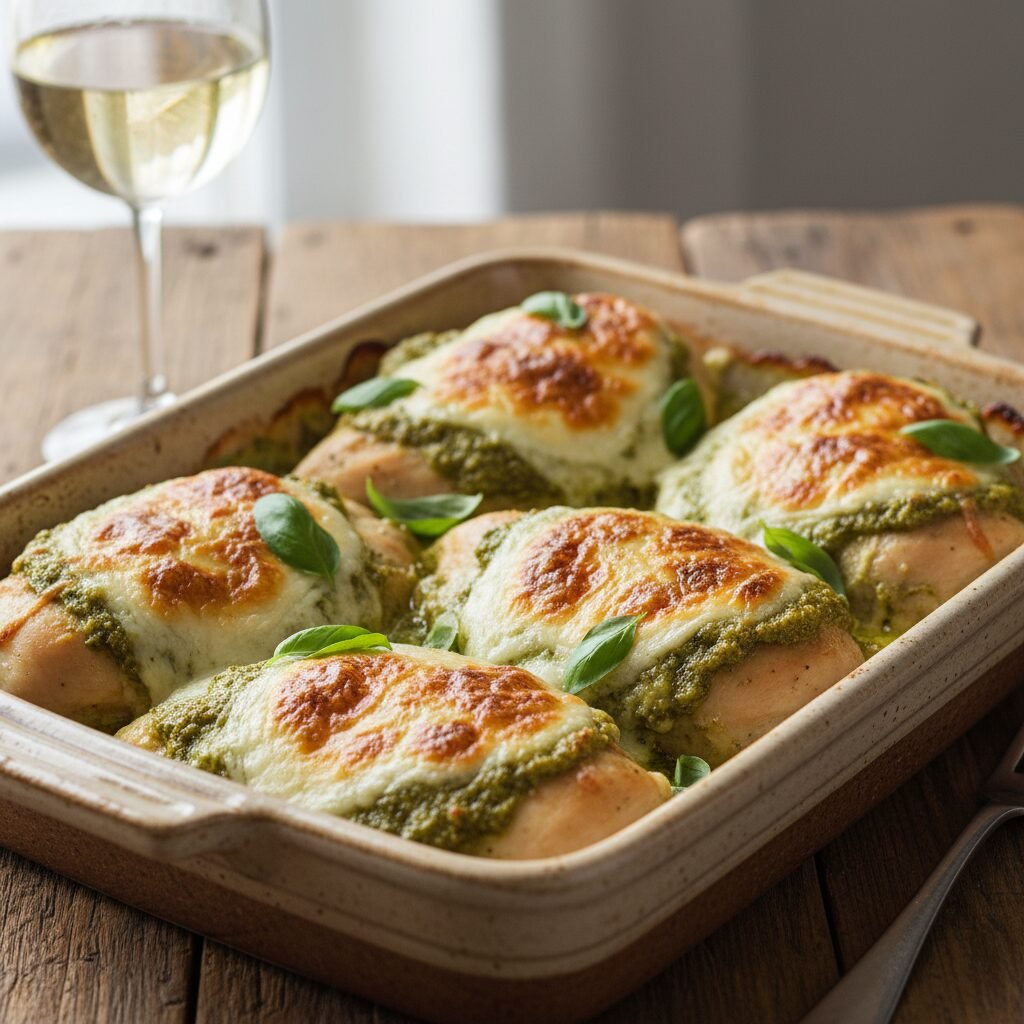
Cream Cheese Pesto Baked Chicken Breasts
Elevate your standard chicken dinner with this luxurious yet incredibly simple recipe. By combining the tangy richness of cream cheese with the herbaceous punch of basil pesto, you create a self-basting topping that ensures perfectly juicy chicken every time.
10 minutes
25 minutes
35 minutes
4 Servings
Main Course
Baking
Italian-American
Gluten Free
The dilemma of the weeknight dinner is a universal challenge for busy mothers and professionals alike. We constantly seek the intersection where culinary excellence meets practical convenience. Chicken breast is a staple protein in many households due to its versatility and lean profile, yet it often suffers from a reputation for being dry or uninspired. This recipe for Cream Cheese Pesto Baked Chicken Breasts is the definitive solution to that culinary fatigue.
Imagine a dish that requires less than ten minutes of active preparation but tastes as though it were crafted in a bistro kitchen. The magic lies in the topping. A lush layer of softened cream cheese mixed with vibrant basil pesto creates a barrier that locks in moisture while infusing the meat with robust Italian flavors. As it bakes, the oils from the pesto and the fats from the cheese melt down, basting the chicken in a savory sauce.
This dish is specifically designed for the modern lifestyle. It is naturally gluten-free and fits perfectly into ketogenic or low-carb diet plans without requiring any special modifications. Furthermore, it is a one-pan wonder, minimizing the post-dinner cleanup ritual that every parent dreads. Whether you are hosting a casual get-together or simply feeding a hungry family on a Tuesday night, this recipe delivers consistent, high-quality results.
History & Origins
The culinary lineage of this dish is a fascinating study in Italian-American fusion. To understand its roots, one must look at the two primary components: Pesto Genovese and American cream cheese.
Pesto originated in Genoa, the capital city of Liguria, Italy. The traditional preparation involves crushing garlic, European pine nuts, coarse salt, basil leaves, and hard cheese like Parmigiano-Reggiano or Pecorino Sardo, all blended with olive oil. Its history dates back to the Roman age, specifically a spread called moretum, but the basil-heavy version we know today was formalized in the mid-19th century.
Cream cheese, on the other hand, is a distinctly American invention. In 1872, William Lawrence, a dairyman from Chester, New York, accidentally created a richer, unripened cheese while attempting to reproduce the French cheese Neufchâtel. This product eventually became the Philadelphia Cream Cheese brand. The marriage of these two ingredients—the ancient, herbaceous Italian sauce and the modern, tangy American spread—gained popularity in the late 20th century as home cooks sought ways to add creaminess to sauces without the instability of heavy cream. This baked chicken variation represents the evolution of comfort food, prioritizing flavor density and ease of preparation.
Why This Recipe Works
From a technical culinary perspective, this recipe succeeds because it addresses the primary flaw of boneless, skinless chicken breasts: the lack of fat. Chicken breast is incredibly lean, which means it has a very narrow window of doneness before the muscle fibers contract and expel moisture, resulting in a tough, dry texture.
By coating the chicken in a mixture of cream cheese and oil-based pesto, you are introducing an external fat source. During the baking process, this topping acts as a thermal buffer. It insulates the top of the chicken, preventing direct dry heat from scorching the protein. Simultaneously, as the fats render, they baste the meat, permeating the outer layers with moisture and flavor. The acidity in the cream cheese also helps to tenderize the meat slightly, while the basil and garlic provide aromatics that penetrate the surface. The final layer of mozzarella cheese creates a Maillard reaction (browning) on top, adding texture and a savory depth that contrasts with the creamy sauce underneath.
Why You’ll Love This Recipe
- ✓Keto and Low-Carb Friendly
- ✓Ready in under 40 minutes
- ✓High protein with zero sugar
- ✓Requires only one baking dish
- ✓Perfect for meal prepping
- ✓Kid-friendly flavors
Equipment You’ll Need
- ✓9×13 Baking Dish
- ✓Small Mixing Bowl
- ✓Rubber Spatula
- ✓Meat Mallet (optional)
- ✓Instant Read Thermometer
Ingredients
- ✓4 large boneless, skinless chicken breasts (approx. 6-7 oz each)
- ✓4 oz cream cheese, softened to room temperature
- ✓1/3 cup basil pesto (homemade or high-quality store-bought)
- ✓1 cup shredded mozzarella cheese
- ✓1/4 cup grated Parmesan cheese
- ✓1 tbsp olive oil
- ✓1 tsp garlic powder
- ✓1/2 tsp salt
- ✓1/2 tsp black pepper
- ✓Fresh basil leaves for garnish (optional)
Instructions
- Preheat your oven to 375°F (190°C). Lightly grease a 9×13 inch baking dish with olive oil or non-stick spray.
- Prepare the chicken. If the breasts are uneven in thickness, place them between sheets of plastic wrap and pound the thicker ends with a meat mallet until they are uniform. This ensures even cooking.
- Pat the chicken breasts dry with paper towels. Rub them all over with the olive oil, salt, pepper, and garlic powder. Place them in the prepared baking dish in a single layer, ensuring they do not overlap significantly.
- In a small mixing bowl, combine the softened cream cheese and the basil pesto. Stir vigorously until the mixture is smooth and uniform in color.
- Using a rubber spatula or spoon, spread the cream cheese pesto mixture generously over the top of each chicken breast. Try to cover the surface of the meat entirely to lock in moisture.
- Sprinkle the shredded mozzarella cheese evenly over the pesto layer. Follow this with a dusting of the grated Parmesan cheese.
- Bake in the preheated oven for 20-25 minutes. The exact time will depend on the thickness of your chicken. Cook until the internal temperature reaches 165°F (74°C) at the thickest part.
- Optional: For a golden-brown crust, switch the oven to ‘Broil’ for the final 2-3 minutes. Watch closely to prevent burning.
- Remove from the oven and let the chicken rest for 5 minutes before serving. This allows the juices to redistribute throughout the meat. Garnish with fresh basil leaves if desired.
Expert Cooking Tips
- ✓Room Temperature Cream Cheese: Ensure your cream cheese is truly soft before mixing. If it is cold, it will be lumpy and difficult to spread evenly over the chicken.
- ✓Pesto Quality: Since pesto is a primary flavor driver, use a high-quality brand found in the refrigerated section, or make your own. Shelf-stable jarred pestos often lack the vibrant basil flavor.
- ✓Don’t Overcook: Chicken breast dries out instantly past 165°F. Use a meat thermometer to pull it from the oven the moment it hits temperature.
- ✓Resting is Key: Cutting into the chicken immediately will cause the juices to run out, leaving the meat dry. The 5-minute rest is crucial for texture.
Substitutions and Variations
This recipe is highly adaptable to your pantry or dietary needs. If you do not have mozzarella, Provolone or Monterey Jack are excellent melting cheeses that work well here. For a lighter version, you can substitute the full-fat cream cheese with Neufchâtel cheese or even a thick Greek yogurt, though the yogurt may separate slightly during baking.
If you are avoiding nuts due to allergies, look for a nut-free pesto or a pistou (a French version typically made without pine nuts). For those who do not consume dairy, vegan cream cheese and vegan mozzarella can be used, provided they are brands known for melting well. You can also swap the protein; this topping works beautifully on turkey cutlets or hearty white fish like cod or halibut, though cooking times will vary.
Common Mistakes to Avoid
The most frequent error with this dish is using chicken breasts that are too thick. Giant, thick breasts take a long time to cook through, often resulting in the cheese burning before the center is safe to eat, or the outer layers becoming tough. Always pound the chicken to an even thickness of about 3/4 inch.
Another common mistake is using watery pesto. Some brands have a lot of excess oil. If your pesto seems very runny, try to drain a little of the oil before mixing it with the cream cheese, otherwise, the topping may slide off the chicken during the baking process.
Serving Suggestions
To keep this meal low-carb or keto, serve the chicken alongside roasted asparagus, zucchini noodles (zoodles), or a crisp Caesar salad without croutons. The rich sauce from the chicken acts as a dressing for the vegetables.
For a more traditional family meal, this pairs wonderfully with garlic butter pasta, or mashed potatoes to soak up the delicious pan juices. A side of crusty garlic bread is also excellent for scooping up any remaining cheese and pesto sauce from the baking dish.
Storage and Reheating Tips
Store any leftovers in an airtight container in the refrigerator for up to 3 to 4 days. To reheat, place the chicken in a baking dish, cover with foil to prevent the cheese from burning and the meat from drying out, and warm in a 350°F oven until heated through. Microwave reheating is possible but may result in a rubbery texture; if you must microwave, do so in 30-second intervals.
Freezing is possible but not ideal, as the cream cheese texture may become slightly grainy upon thawing. If you do freeze it, thaw completely in the refrigerator overnight before reheating.
Nutrition Facts (Estimated)
| Serving Size | 1 Chicken Breast |
| Calories | 485 kcal |
| Fat | 28g |
| Saturated Fat | 12g |
| Unsaturated Fat | 14g |
| Trans Fat | 0g |
| Cholesterol | 145mg |
| Sodium | 680mg |
| Carbohydrates | 4g |
| Fiber | 1g |
| Sugar | 2g |
| Protein | 42g |
Frequently Asked Questions
Can I use chicken thighs instead of breasts?
Absolutely. Boneless, skinless chicken thighs are a great alternative. They are naturally juicier and more forgiving if slightly overcooked. You may need to increase the cooking time by 5-10 minutes depending on their size.
Is this recipe suitable for a Keto diet?
Yes, this is an excellent Keto recipe. It is high in healthy fats and protein while being very low in carbohydrates (approximately 4g net carbs per serving).
Can I prepare this ahead of time?
Yes, you can assemble the dish up to the point of baking. Cover the baking dish tightly with plastic wrap and refrigerate for up to 24 hours. When ready to cook, remove the plastic and add about 5-10 minutes to the baking time since the dish is starting from cold.
My chicken released a lot of water, is that normal?
Some commercial chicken is injected with saline solution which releases during cooking. To minimize this, look for ‘air-chilled’ chicken. If there is excess liquid, you can simply drain it carefully before serving.
Can I add vegetables to the baking dish?
Yes, cherry tomatoes or spinach can be placed around the chicken before baking. They will roast in the juices and add great flavor and color.
What kind of pesto works best?
Traditional Basil Pesto (Pesto alla Genovese) is best. Sun-dried tomato pesto (Pesto Rosso) is a delicious variation if you want a different flavor profile.
Do I have to pound the chicken?
It is highly recommended. Pounding ensures the chicken cooks evenly so you don’t end up with a dry thin end and a raw thick end.
Can I use frozen chicken?
No, you must thaw the chicken completely before baking. Baking frozen chicken with this topping will result in uneven cooking and a watery sauce.
Conclusion
Cream Cheese Pesto Baked Chicken Breasts prove that you do not need a long list of ingredients or hours in the kitchen to create a meal that feels special. This recipe perfectly balances the practicality required for a weeknight dinner with the indulgent flavors we all crave. It transforms humble ingredients into a restaurant-quality experience that is sure to become a requested favorite in your home.
Whether you are sticking to a low-carb lifestyle or simply looking for a way to make chicken breast exciting again, this dish delivers on all fronts. Gather your ingredients, preheat your oven, and prepare to enjoy one of the most effortless and delicious meals in your repertoire.