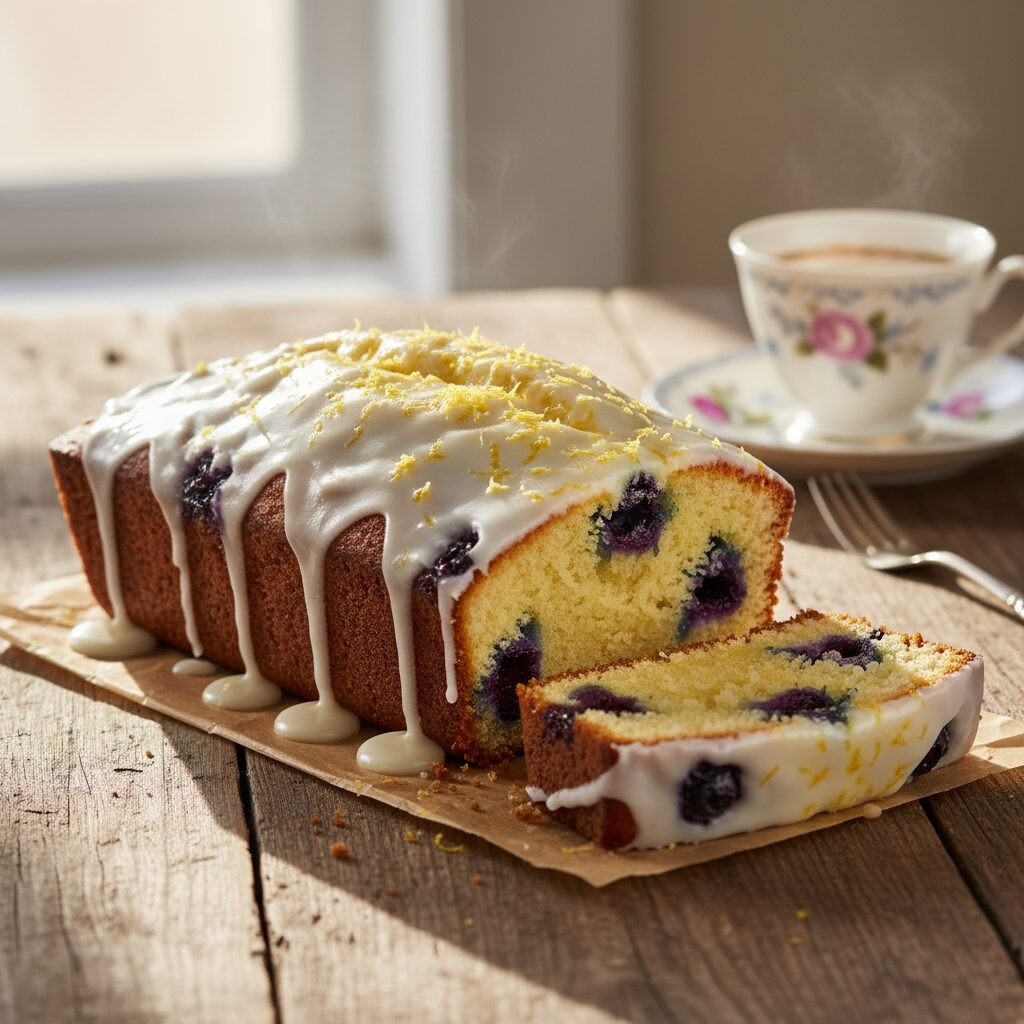
Is there anything more welcoming than the scent of fresh baking wafting through the house on a lazy morning? I don’t think so. Specifically, the marriage of bright, zesty lemon and sweet, juicy blueberries is a flavor combination that just screams happiness. If you have ever stood in line at a coffee shop, eyeing that thick slice of iced lemon loaf and wondering if you could make it better at home, I have good news for you: you absolutely can.
This Blueberry Lemon Loaf is not just a cake; it is an experience. We are talking about a crumb that is tender and incredibly moist (thanks to a few secret ingredients we will get to), pockets of jammy blueberries that burst in every bite, and a tart lemon glaze that creates the perfect sugary crust on top. It is the kind of recipe that tastes like summer but feels cozy enough for the depths of winter.
Whether you are a seasoned baker or someone who just bought a loaf pan yesterday, this guide is going to walk you through everything. We are ditching the dry, crumbly cakes of the past. Grab your apron and let’s get baking!
The Science of Moisture: Ingredients That Matter
Let’s be real for a second—nobody likes a dry cake. You know the kind I’m talking about; the one that requires a sip of coffee after every bite just to get it down. To ensure our Blueberry Lemon Loaf is melt-in-your-mouth tender, we have to be strategic about our ingredients. This isn’t just about throwing flour and sugar in a bowl; it is about chemistry.
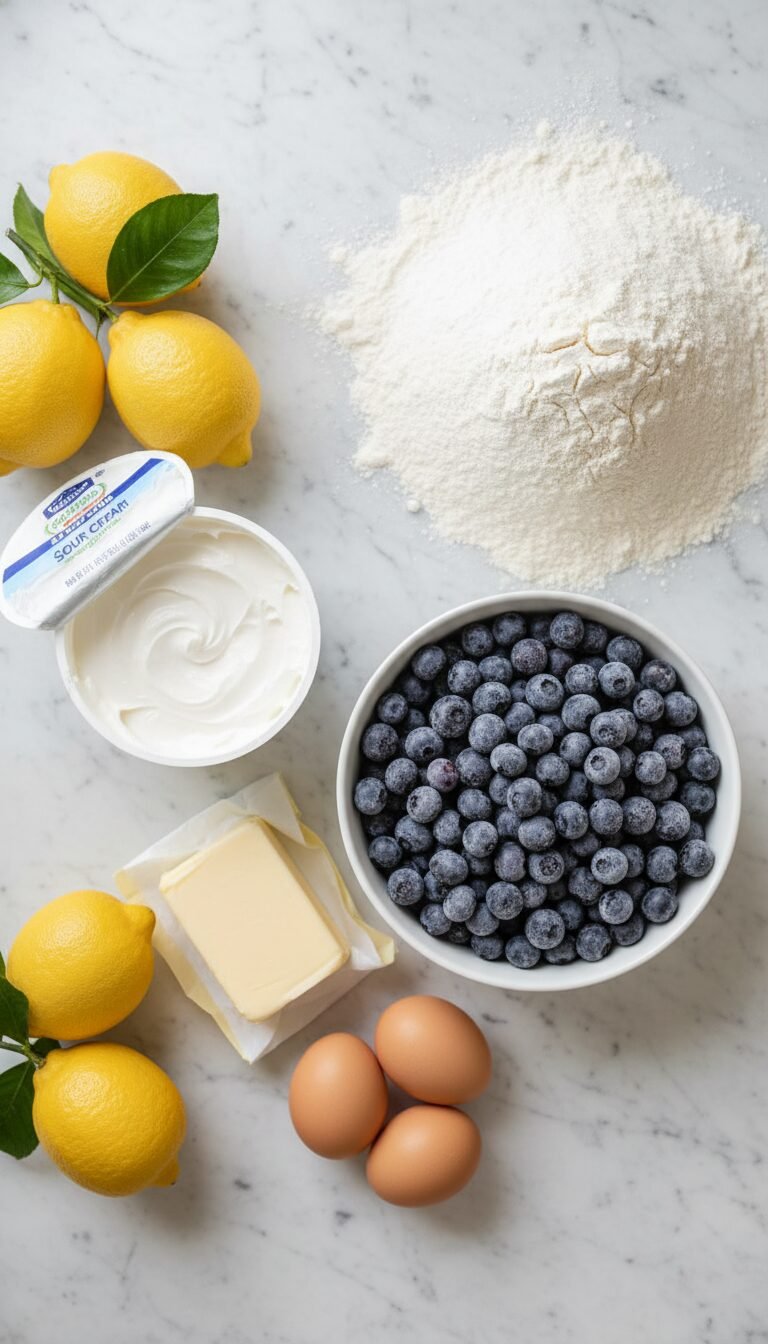
First up, Sour Cream or Greek Yogurt. This is the heavy lifter. While milk is fine, the acidity and fat content in sour cream or thick Greek yogurt tenderize the gluten strands in the flour. This results in that plush, velvety texture we all crave. If you want a loaf that stays moist for days, do not skip this.
Next, let’s talk about the Lemons. We aren’t just using the juice here. The real flavor bomb lies in the oils of the zest. Bottled lemon juice just won’t cut it for this recipe. You need fresh, bright yellow lemons. When you zest them, you are releasing essential oils that perfume the entire batter. We will talk about a special technique to maximize this flavor in the next section.
Finally, the Butter vs. Oil debate. For this loaf, we are using butter. Why? Because flavor is king. Butter provides that rich, creamy background note that oil simply cannot replicate. However, we cream it thoroughly with the sugar to aerate the batter, giving us lift and lightness.
The Zest Trick and Berry Prep
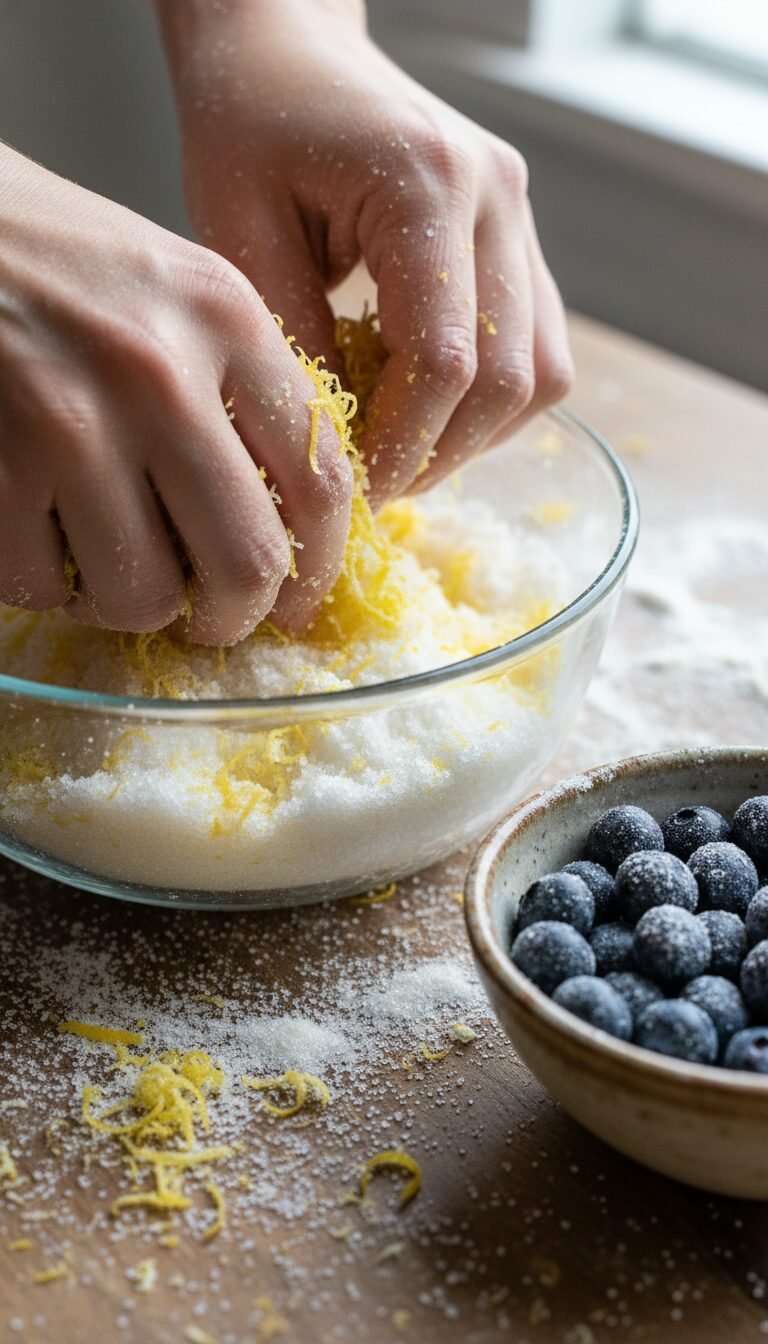
Here is a professional baker’s secret that will change your life: rub the lemon zest into the sugar. Most people just dump the zest into the batter, but that is a missed opportunity. Before you add any wet ingredients or butter, take your granulated sugar and your fresh lemon zest, put them in a bowl, and use your fingertips to rub them together. You want the sugar to look like wet sand and turn a pale yellow color. What you are doing is physically agitating the zest to release those fragrant oils directly into the sugar crystals. The smell will be intoxicating!
Now, let’s address the “sinking berry” syndrome. There is nothing sadder than cutting into a loaf and finding all the blueberries at the very bottom. To prevent this gravity-induced tragedy, we have a simple fix:
- Wash and dry your berries thoroughly: If they are wet, they will slide right through the batter.
- The Flour Coat: Toss your blueberries in about a tablespoon of flour before folding them into the batter. This creates a friction layer that helps them suspend in the cake while it bakes.
If you are using frozen berries, do not thaw them! Use them straight from the freezer. If you thaw them, they will bleed purple juice everywhere, turning your beautiful yellow loaf into a gray, muddy mess. Just rinse them quickly to remove ice crystals, toss in flour, and fold gently.
The Step-by-Step Mixing Method
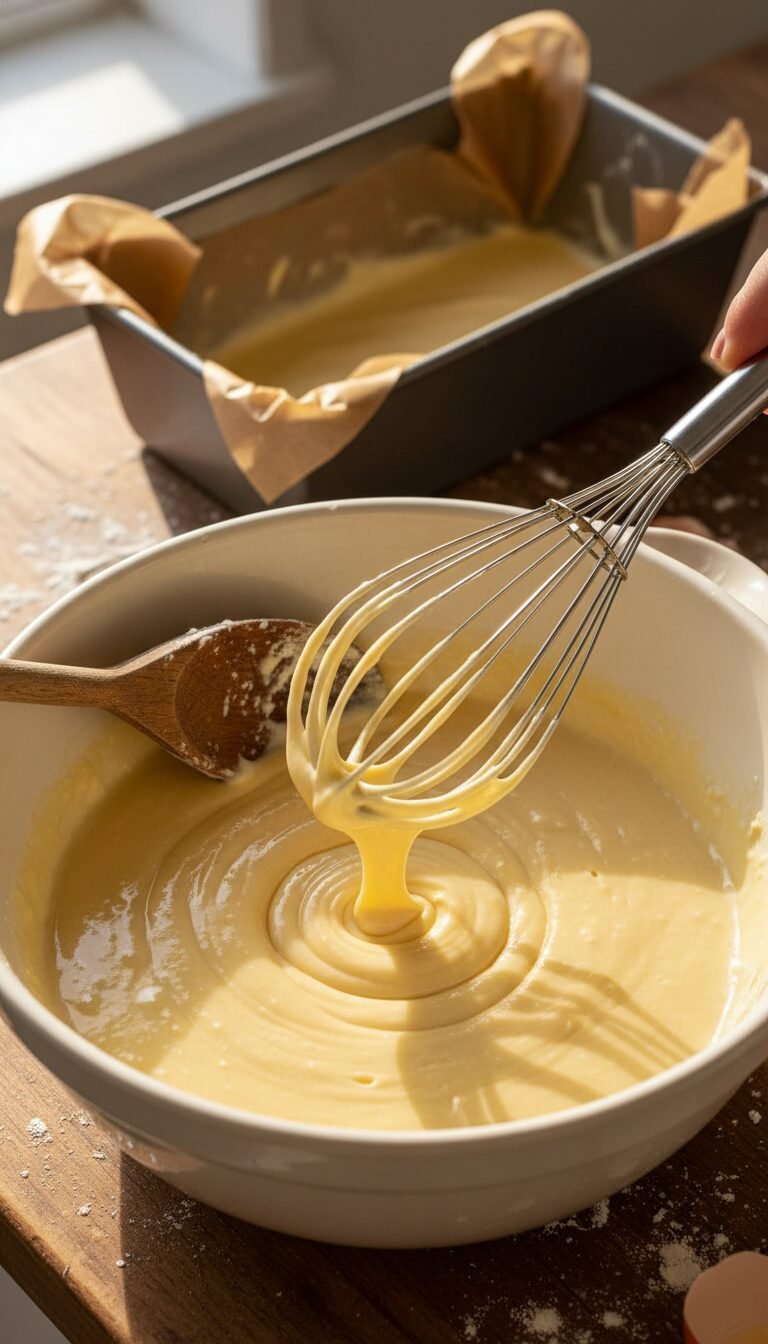
Okay, we have our ingredients prepped. Now, let’s mix. We are going to use the standard creaming method, but with a gentle hand. Over-mixing is the enemy of a tender loaf. If you beat the flour too much, you develop gluten, which leads to a tough, rubbery cake.
Start by beating your butter and that lemon-infused sugar together until it is pale and fluffy. This usually takes about 3 to 4 minutes on medium-high speed. Don’t rush this! This process incorporates air, which acts as a leavening agent alongside your baking powder.
Add your eggs one at a time. Pro tip: Make sure your eggs are at room temperature. Cold eggs hitting warm butter can cause the batter to curdle (look separated). If it does curdle, don’t panic; adding a bit of flour usually brings it back together, but room temp is best.
Now for the dry and wet ingredients. You want to alternate them. Add a third of the flour mixture, then half of the sour cream, then more flour, then the rest of the sour cream, ending with flour. Mix until just combined. Finally, grab a spatula and gently fold in those flour-coated blueberries. Do not use the electric mixer for this part, or you will crush the berries and streak the batter.
Pour the batter into a parchment-lined loaf pan. Smooth the top, and pop it into the oven. The anticipation begins!
The Perfect Tart Glaze
While the loaf is baking and your kitchen smells like a lemon orchard, it is time to prep the glaze. This isn’t just a garnish; it adds a punch of acidity that cuts through the sweetness of the cake.
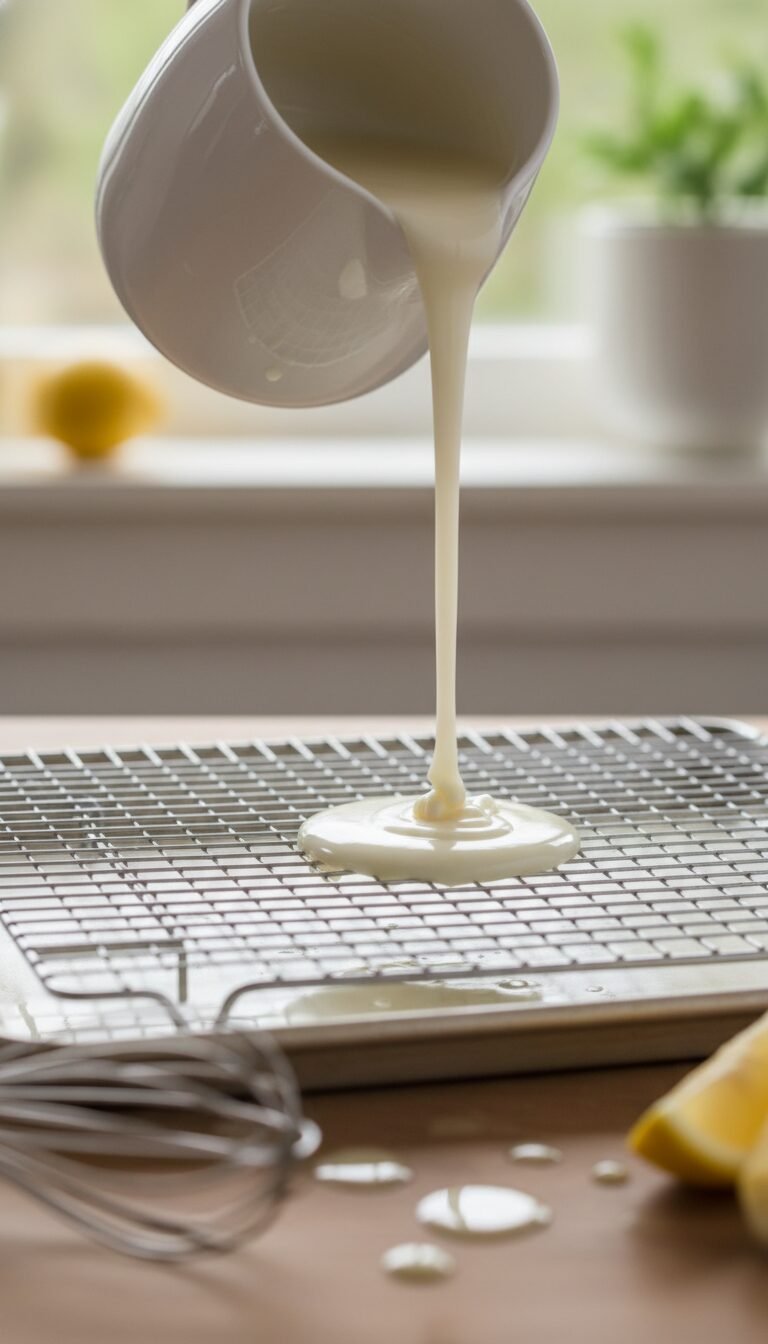
The glaze is deceptively simple, but consistency is key. You need powdered sugar (confectioners’ sugar) and fresh lemon juice. That’s it. Maybe a pinch of salt if you are feeling fancy. Start with about a cup of sugar and add the juice one tablespoon at a time.
The Consistency Test: You want the glaze to be thick enough to coat the back of a spoon but pourable enough to drip down the sides of the loaf. If it’s too runny, it will just soak into the cake and disappear. If it’s too thick, it won’t spread naturally.
When to glaze? This is controversial, but I like to do a double glaze. When the loaf is still warm (but not hot), brush a little bit of the lemon juice/sugar mixture over it. This soaks in and keeps the crust soft. Then, once the loaf is completely cool, pour the thick white glaze over the top. This ensures you get that beautiful, stark white icing cap that looks so professional.
Storage and Freezing Tips
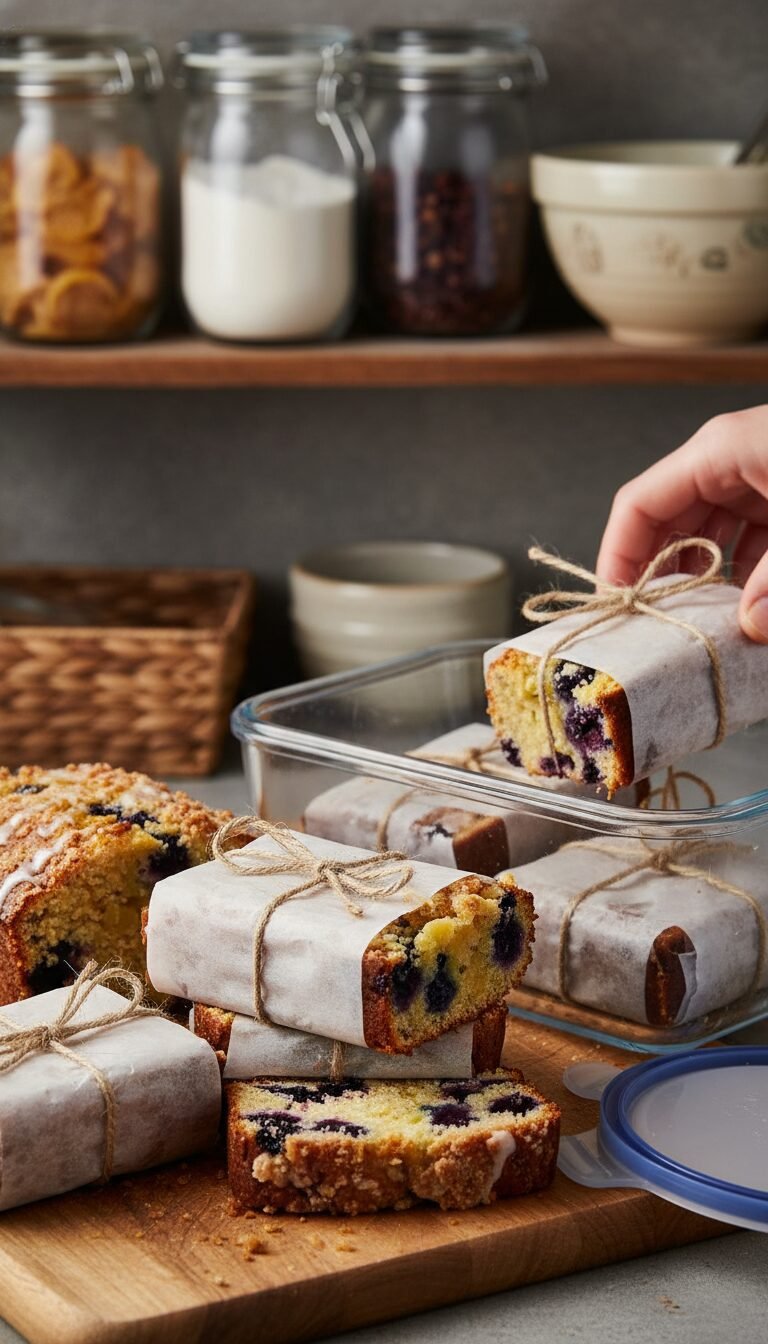
If, by some miracle, you do not eat the entire loaf in one sitting (no judgment here if you do), you need to know how to store it to keep that moisture locked in.
- Room Temperature: This loaf keeps beautifully on the counter for about 2 to 3 days. Just make sure it is in an airtight container or wrapped tightly in plastic wrap. The glaze might get a little sticky, but that just makes it delicious.
- Refrigerator: I actually prefer this loaf slightly chilled. It firms up the crumb and makes the lemon flavor pop. It will last up to a week in the fridge.
- Freezing: This recipe freezes like a dream. You can freeze the whole loaf (unglazed is best for this) or individual slices. Wrap each slice in plastic wrap and then foil. When you are craving a treat, just pull a slice out and let it come to room temperature—or zap it in the microwave for 10 seconds for that fresh-out-of-the-oven vibe.
Your New Favorite Weekend Bake
There you have it—the blueprint for the ultimate Blueberry Lemon Loaf. It is bright, it is buttery, and it is packed with fruit. This is one of those recipes that looks impressive enough for a brunch party but is easy enough to whip up on a Tuesday night when you just need a little pick-me-up.
Remember, baking is all about experimenting and having fun. Don’t stress if your glaze isn’t perfectly symmetrical or if a few berries sink. It is going to taste amazing regardless. So, grab those lemons, check your pantry for flour, and get mixing. I promise, once you try this homemade version, the coffee shop slice will be a thing of the past.
Happy Baking!