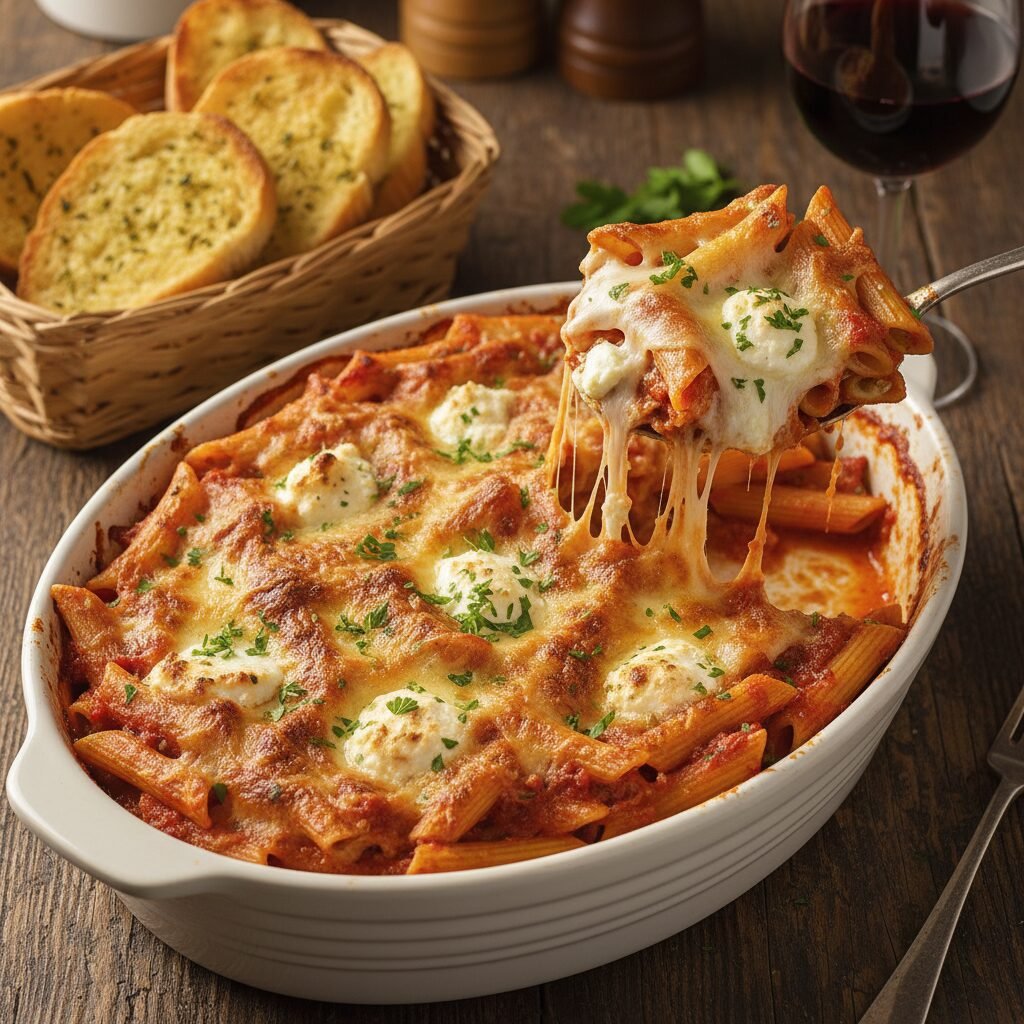
Baked Ziti With Ricotta
This classic Baked Ziti with Ricotta is the epitome of comfort food, featuring layers of pasta, zesty tomato sauce, and gooey cheese. It is a freezer-friendly crowd-pleaser that guarantees clean plates and happy smiles at the dinner table.
20 minutes
30 minutes
50 minutes
8 Servings
Main Course
Baking
Italian-American
Vegetarian
There are few dishes as universally beloved and comforting as a bubbling casserole dish of Baked Ziti with Ricotta. For busy mothers and home cooks, this dish represents the perfect intersection of convenience, affordability, and culinary satisfaction. It is the quintessential Italian-American pasta bake, a staple at Sunday family dinners, potlucks, and meal trains for new parents. Unlike the more labor-intensive lasagna, baked ziti requires no precise layering or fragile noodle handling, yet it delivers the same satisfying profile of rich tomato sauce, melted cheese, and hearty pasta.
The magic of this specific recipe lies in the cheese blend. While some versions simply toss pasta with cheese, we utilize a seasoned ricotta mixture bound with an egg, similar to a lasagna filling. This creates creamy pockets of texture amidst the chewy pasta and bright marinara. Whether you are prepping a meal for a busy weeknight or hosting a large gathering, this baked ziti promises to be a reliable and impressive centerpiece. It captures the essence of home cooking: warm, inviting, and made with love.
History & Origins
The origins of baked ziti can be traced back to Southern Italy, specifically the Campania region and Naples. The word "ziti" is actually derived from the word "zita," which means "bride" in a local Italian dialect. Historically, Ziti alla Genovese was a traditional dish served at weddings, symbolizing the union of families. As Italian immigrants moved to the United States in the late 19th and early 20th centuries, they brought these culinary traditions with them, adapting recipes based on available ingredients.
In America, the dish evolved into the baked casserole we know today. While traditional Italian preparations might feature a meat ragu and be served as a first course, the Italian-American version became a hearty main dish, often loaded with increased amounts of mozzarella and ricotta cheese—ingredients that were more affordable and accessible in the New World. Today, baked ziti stands as a pillar of Italian-American cuisine, distinct from its Italian ancestors but deeply rooted in the tradition of communal feasting.
Why This Recipe Works
Culinary success with baked ziti comes down to texture management and flavor balance. Technically, this dish works because of the specific shape of the ziti pasta. The smooth, tubular noodles provide ample surface area for the sauce to cling to, while the hollow centers trap the marinara and melted cheese, ensuring every bite is flavorful. By undercooking the pasta slightly before baking (cooking it just shy of al dente), the noodles are able to absorb the excess liquid from the sauce and the whey from the cheeses during the baking process without becoming mushy.
Furthermore, the inclusion of an egg in the ricotta mixture is a crucial chemical component. The egg proteins coagulate during baking, acting as a binder that prevents the ricotta from separating into a grainy, watery mess. This results in a stable, creamy curd that holds its shape when scooped. The combination of mozzarella (for the stretch and Maillard browning), parmesan (for savory umami depth), and ricotta (for sweet creaminess) creates a complex flavor profile that balances the acidity of the tomato sauce perfectly.
Why You’ll Love This Recipe
- ✓Freezer-friendly meal perfect for meal prepping
- ✓Uses a three-cheese blend for maximum creaminess
- ✓Ready in under an hour for busy weeknights
- ✓Easily customizable with meat or vegetables
- ✓Kid-friendly and approved by picky eaters
Equipment You’ll Need
- ✓Large stockpot for boiling pasta
- ✓9×13 inch baking dish (casserole dish)
- ✓Colander
- ✓Medium mixing bowl
- ✓Large mixing bowl
- ✓Cheese grater
Ingredients
- ✓1 lb (16 oz) Ziti pasta (smooth or rigid)
- ✓32 oz Marinara sauce (high-quality jarred or homemade)
- ✓15 oz Whole milk ricotta cheese
- ✓1 lb Mozzarella cheese, shredded (divided)
- ✓1/2 cup Parmesan cheese, grated
- ✓1 large Egg, lightly beaten
- ✓1 tbsp Fresh parsley, chopped
- ✓1 tbsp Fresh basil, chopped
- ✓1 tsp Garlic powder
- ✓1/2 tsp Salt
- ✓1/4 tsp Black pepper
Instructions
- Preheat and Prep: Preheat your oven to 375°F (190°C). Lightly grease a 9×13 inch baking dish with olive oil or cooking spray to prevent sticking.
- Boil the Pasta: Bring a large pot of salted water to a rolling boil. Add the ziti and cook for 2-3 minutes less than the package directions indicate for al dente. The pasta should still be slightly firm in the center. Drain well and set aside. Do not rinse the pasta.
- Prepare the Ricotta Mixture: While the pasta cooks, combine the ricotta cheese, beaten egg, 1 cup of the shredded mozzarella, the parmesan cheese, parsley, basil, garlic powder, salt, and pepper in a medium bowl. Mix until thoroughly combined and creamy.
- Combine Pasta and Sauce: In the large pot or a large mixing bowl, toss the drained pasta with approximately 24 oz of the marinara sauce. Reserve the remaining sauce for the top. Stir gently to coat every noodle.
- Layer the Casserole: Pour half of the sauced ziti into the prepared baking dish. Dollop spoonfuls of the ricotta mixture over the pasta layer and gently spread it out. Top with the remaining sauced pasta.
- Top and Bake: Pour the remaining marinara sauce over the top of the pasta to ensure it doesn’t dry out. Sprinkle the remaining mozzarella cheese generously over the entire dish.
- Bake: Cover the dish loosely with aluminum foil (tent it so the cheese doesn’t stick) and bake for 20 minutes. Remove the foil and bake for another 10-15 minutes, or until the cheese is bubbly and slightly browned.
- Rest and Serve: Remove from the oven and let the casserole rest for 10-15 minutes before serving. This allows the sauce to thicken and the cheese to set, making it easier to slice.
Expert Cooking Tips
- ✓Undercook the Pasta: This is the most critical tip. If you boil the pasta completely, it will become mushy after the second round of cooking in the oven.
- ✓Grate Your Own Cheese: Pre-shredded bagged cheese contains anti-caking agents (cellulose) that prevent it from melting smoothly. For the best cheese pull, buy a block of mozzarella and grate it yourself.
- ✓Room Temperature Ricotta: Let your ricotta and egg come to room temperature before mixing. This helps them blend more easily and prevents the cheese mixture from seizing.
- ✓Tent the Foil: When covering the dish, arch the foil slightly so it doesn’t touch the cheese. If the cheese touches the foil, it will pull off when you uncover the dish.
Substitutions and Variations
This recipe is incredibly versatile. If you cannot find ziti, penne or rigatoni are excellent substitutes as they have similar tube structures. For a meatier version, brown 1 lb of Italian sausage or ground beef and mix it into the marinara sauce before combining with the pasta. If you want to lighten the dish, you can substitute cottage cheese for ricotta, though blend it first to smooth out the curds. For a gluten-free option, simply use high-quality gluten-free brown rice or chickpea pasta, but be very careful not to overcook it during the boiling stage.
Common Mistakes to Avoid
The most common mistake is overcooking the pasta. Remember that the pasta cooks twice—once in the water and once in the oven. Another frequent error is rinsing the pasta after draining. Rinsing washes away the surface starch that helps the sauce cling to the noodles. Additionally, using a low-fat ricotta can lead to a watery casserole; whole milk ricotta is essential for that rich, creamy texture. Finally, failing to rest the dish results in a messy plate; patience allows the layers to solidify.
Serving Suggestions
Baked Ziti is a hearty dish that pairs beautifully with lighter sides to balance the richness. Serve this alongside a crisp Caesar salad or a simple green salad with balsamic vinaigrette. Garlic bread or crusty focaccia is almost mandatory for mopping up the extra sauce. For vegetables, roasted broccoli or sautéed spinach with lemon works well. If you are serving wine, a medium-bodied red like a Chianti or Sangiovese complements the tomato and cheese flavors perfectly.
Storage and Reheating Tips
Refrigerator: Store leftovers in an airtight container in the fridge for up to 3-4 days. Reheat individual portions in the microwave or the whole dish in the oven at 350°F covered with foil.
Freezer: This is an excellent freezer meal. You can freeze it unbaked or baked. To freeze unbaked, assemble the casserole in a disposable aluminum pan, let it cool completely, cover tightly with plastic wrap and then foil, and freeze for up to 3 months. Thaw in the fridge overnight before baking (add 10-15 minutes to cook time). to freeze baked, let it cool completely before wrapping and freezing.
Nutrition Facts (Estimated)
| Serving Size | 1 cup |
| Calories | 485 kcal |
| Fat | 22g |
| Saturated Fat | 12g |
| Unsaturated Fat | 8g |
| Trans Fat | 0g |
| Cholesterol | 65mg |
| Sodium | 720mg |
| Carbohydrates | 48g |
| Fiber | 4g |
| Sugar | 6g |
| Protein | 24g |
Frequently Asked Questions
Can I make this recipe ahead of time?
Yes, absolutely. You can assemble the entire dish, cover it tightly with foil, and refrigerate it for up to 24 hours before baking. You may need to add 5-10 minutes to the baking time since the ingredients will be cold from the fridge.
Why is my baked ziti dry?
Dry ziti usually happens if there isn’t enough sauce or if the pasta was overcooked and absorbed all the moisture. Ensure you reserve some sauce for the top layer and don’t skip covering the dish with foil for the first half of baking.
Do I have to use an egg in the ricotta mixture?
The egg acts as a binder to keep the ricotta creamy and prevent it from becoming watery. However, if you have an egg allergy, you can omit it. The cheese layer will just be slightly looser.
What is the difference between ziti and penne?
Ziti and penne are both tube-shaped pastas. The main difference is that penne is cut at an angle (diagonally) and often has ridges (rigate), while ziti is cut straight across and has smooth sides. They can be used interchangeably in this recipe.
Can I add vegetables to this dish?
Yes! Sautéed spinach, mushrooms, zucchini, or roasted red peppers are delicious additions. Mix them in with the sauce and pasta layer.
How do I reheat baked ziti without drying it out?
If reheating in the oven, cover the dish with foil and add a splash of water or extra marinara sauce to the dish before heating. This creates steam and keeps the pasta moist.
Can I use fresh mozzarella instead of low-moisture?
Fresh mozzarella has a high water content and can make the casserole watery. It is best to use low-moisture block mozzarella for the best melt and texture, though you can add a few slices of fresh mozzarella on top for garnish.
Is this recipe spicy?
No, this is a mild, family-friendly recipe. If you want to add heat, you can include red pepper flakes in the sauce or the cheese mixture.
Conclusion
Baked Ziti with Ricotta is more than just a recipe; it is a reliable companion for life’s busy moments and a centerpiece for family memories. Its forgiving nature and hearty flavors make it a favorite for novice cooks and seasoned pros alike. By following these simple steps and tips, you can create a restaurant-quality Italian dinner right in your own kitchen. Gather your family, break the bread, and enjoy the comforting, cheesy goodness of this timeless classic.