Spicy Tuna Crispy Rice
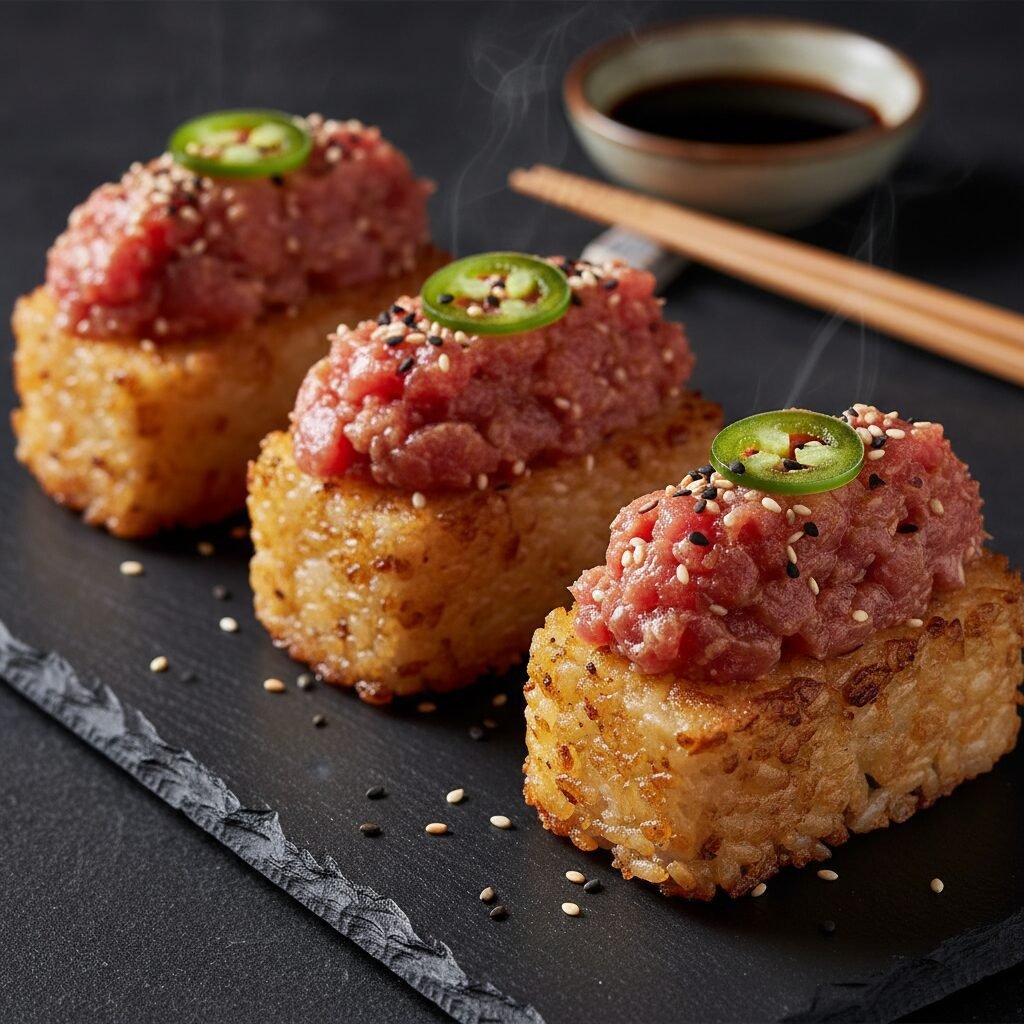
If you have been dreaming about that trendy, expensive appetizer from your favorite Japanese fusion spot, I have good news: you can make it in your own kitchen! These Spicy Tuna Crispy Rice cakes are the perfect marriage of texture and flavor—crunchy, chewy, creamy, and spicy all in one bite.
30 mins
20 mins
3 hours 50 mins (includes cooling time)
15-20 rice cakes
Appetizer
Pan Fry
Japanese Fusion
Pescatarian
Let’s be honest, ladies—we have all seen those gorgeous, golden nuggets of crispy rice topped with vibrant spicy tuna scrolling through our Pinterest and TikTok feeds. It is arguably one of the most aesthetic and delicious appetizers out there. But dropping $20 for four tiny pieces at a restaurant? That hurts the wallet a little bit!
That is why I am so excited to share this copycat recipe with you. It is surprisingly doable, and dare I say, it tastes even fresher than the restaurant version. The magic lies in the contrast: you have the hot, crunch-tastic exterior of the pan-fried rice, the chewy, sticky center, and the cool, creamy, spicy kick of the fresh tuna on top. It is an absolute texture bomb that will have your tastebuds dancing.
Whether you are planning a romantic date night in, hosting a fancy girls’ night, or just want to treat yourself because you deserve it, this recipe is a showstopper. Don’t be intimidated by the raw fish aspect; I’ll walk you through exactly how to pick the best ingredients so you can feel like a pro chef in your own home. Grab your apron, and let’s get frying!
History & Origins
While crispy rice feels like a modern trend taking over social media, its roots go back to the legendary Chef Nobu Matsuhisa. He is widely credited with popularizing this dish at his world-famous restaurant, Nobu, in Los Angeles. It is a brilliant example of Japanese-Peruvian fusion influence, taking traditional sushi elements and adding a textural twist that appeals specifically to Western palates.
Traditionally, sushi rice is served at body temperature and never fried. However, Chef Nobu’s innovation turned leftover sushi rice into a vehicle for texture, creating a sturdy, crunchy base that could hold up to rich toppings like spicy tuna. Over the years, it has morphed from a high-end menu item to a viral sensation, proving that good food really does travel fast!
Why This Recipe Works
This recipe hits the culinary jackpot because of textural contrast and temperature play. In the culinary world, we love pairing opposites. The rice cake is fried in oil, creating a barrier that keeps the inside moist and chewy (like a good mochi) while the outside becomes shattered-glass crispy.
Then, we have the temperature difference. The rice is served warm or room temp, while the tuna topping is chilled. This interplay keeps your palate engaged with every bite. Finally, the fat content. The richness of the frying oil and the creamy Kewpie mayo in the tuna mixture is cut through by the acidity of the lime juice and the heat of the Sriracha, creating a perfectly balanced bite that isn’t too heavy.
Why You’ll Love This Recipe
- ✓Restaurant-quality appetizer for a fraction of the price
- ✓Incredible texture: crispy outside, chewy inside, creamy topping
- ✓Fully customizable spice levels for the tuna
- ✓A stunning visual dish that is perfect for entertaining
- ✓Can be prepped ahead of time for stress-free cooking
Equipment You’ll Need
- ✓Fine mesh sieve (for washing rice)
- ✓Rice cooker or heavy-bottomed pot
- ✓8×8 inch square baking pan
- ✓Plastic wrap
- ✓Sharp chef’s knife
- ✓Large frying pan or cast iron skillet
- ✓Mixing bowls
Ingredients
- ✓For the Crispy Rice:
- ✓2 cups uncooked short-grain sushi rice
- ✓2 1/4 cups water
- ✓1/4 cup rice vinegar
- ✓1 tbsp granulated sugar
- ✓1 tsp salt
- ✓Neutral oil (vegetable, canola, or avocado) for frying
- ✓For the Spicy Tuna:
- ✓1/2 lb sushi-grade Ahi tuna (finely minced)
- ✓2 tbsp Kewpie mayonnaise (Japanese mayo)
- ✓1 tbsp Sriracha (add more for extra heat)
- ✓1 tsp sesame oil
- ✓1 tsp soy sauce or tamari
- ✓1 green onion, finely chopped
- ✓For Garnish:
- ✓1 jalapeño, thinly sliced into rounds
- ✓Toasted sesame seeds
- ✓Eel sauce (optional, for drizzling)
Instructions
- Step 1: Rinse and Cook the Rice. Place the sushi rice in a fine-mesh sieve and rinse under cold water until the water runs clear. This removes excess starch and is crucial for the right texture. Cook in a rice cooker or on the stove with the 2 1/4 cups of water according to package directions.
- Step 2: Season the Rice. While the rice is still hot, transfer it to a large bowl. Mix the rice vinegar, sugar, and salt together until dissolved, then gently fold it into the rice using a paddle. Be careful not to mash the grains.
- Step 3: Mold and Chill. Line an 8×8 inch square pan with plastic wrap. Press the seasoned rice firmly into the pan in an even layer. It should be about 3/4 to 1 inch thick. Cover the top with more plastic wrap and press down hard to compact it. Refrigerate for at least 3 hours or overnight. This step is non-negotiable; if the rice isn’t cold and set, it will fall apart when frying.
- Step 4: Cut the Rice. Once fully chilled, lift the rice block out of the pan using the plastic wrap. Dip a sharp knife in water (to prevent sticking) and slice the block into bite-sized rectangles (about 1×2 inches).
- Step 5: Make the Spicy Tuna. While your oil heats up, prepare the tuna. Finely mince your sushi-grade tuna into a tartare consistency. In a bowl, mix the tuna with Kewpie mayo, Sriracha, sesame oil, soy sauce, and green onions. Keep chilled until ready to assemble.
- Step 6: Fry the Rice. Heat about 1/2 inch of neutral oil in a frying pan over medium-high heat. Carefully place the rice rectangles into the hot oil. Fry for about 2-3 minutes per side until they are a deep golden brown and crispy. Transfer to a paper towel-lined plate or wire rack.
- Step 7: Assemble and Serve. Spoon a generous amount of the spicy tuna mixture onto each crispy rice cake. Top with a slice of jalapeño, a sprinkle of sesame seeds, and a drizzle of eel sauce if desired. Serve immediately while the rice is still warm and crunchy!
Expert Cooking Tips
- ✓Don’t skip the rinse: Washing the rice removes excess starch. If you don’t do this, the rice will be too gummy rather than pleasantly chewy.
- ✓Compact firmly: When putting the rice in the pan, really press it down. You want a solid block so it cuts cleanly.
- ✓Wet your knife: Sushi rice is incredibly sticky. Wiping your knife with a damp cloth between cuts ensures perfect rectangles.
- ✓Oil temperature matters: If the oil isn’t hot enough, the rice will absorb the oil and become greasy. If it’s too hot, it will burn before getting crispy. Aim for a shimmering oil.
- ✓Safety first: Ensure you buy ‘sushi-grade’ or ‘sashimi-grade’ fish from a reputable fishmonger. This usually means it has been flash-frozen to kill parasites.
Substitutions and Variations
Not a fan of raw tuna? No problem! You can easily swap the raw tuna for cooked shrimp (chopped finely), canned tuna (mix it with the spicy mayo sauce for a budget-friendly version), or even fresh salmon. If you are vegetarian, you can use avocado chunks mixed with the spicy mayo, or even crispy tofu. If you can’t find Kewpie mayo, regular mayonnaise with a pinch of sugar and a dash of rice vinegar is a decent substitute.
Common Mistakes to Avoid
The biggest mistake people make is not chilling the rice long enough. I know it’s hard to wait, but if the rice is warm or room temperature when you try to cut and fry it, it will disintegrate in the pan. Another mistake is overcrowding the pan. Fry in batches so the oil temperature stays high; otherwise, you’ll end up with soggy rice cakes.
Serving Suggestions
These are rich, so they work best as an appetizer or part of a larger spread. Serve them alongside a bowl of steamed edamame with sea salt, some miso soup, or a refreshing cucumber salad to cut the richness. For drinks, a cold glass of dry sake, a crisp Pinot Grigio, or even a bubbly sparkling water with lime pairs beautifully.
Storage and Reheating Tips
This dish is definitely best enjoyed fresh. The contrast of hot/crispy rice and cold tuna is fleeting! However, you can prep the components in advance. The rice block can be made up to 2 days ahead and kept in the fridge. The tuna mix should be made the day of serving. If you have leftovers, store the fried rice and tuna separately. Re-crisp the rice in an air fryer or toaster oven before eating.
Nutrition Facts (Estimated)
| Serving Size | 3 pieces |
| Calories | 320 kcal |
| Fat | 14g |
| Saturated Fat | 2g |
| Unsaturated Fat | 11g |
| Trans Fat | 0g |
| Cholesterol | 25mg |
| Sodium | 450mg |
| Carbohydrates | 35g |
| Fiber | 1g |
| Sugar | 4g |
| Protein | 16g |
Frequently Asked Questions
Can I use regular long-grain rice?
No, this recipe specifically requires short-grain sushi rice. Long-grain rice (like Jasmine or Basmati) does not have enough starch to stick together, and your cakes will fall apart.
Where can I find sushi-grade tuna?
Look for a local Japanese market, a high-end grocery store (like Whole Foods), or a dedicated fishmonger. Ask specifically for fish that is safe to eat raw.
Is this gluten-free?
It can be! Ensure you use a gluten-free Tamari instead of traditional soy sauce, and check your Sriracha and Mayo brands to be sure. The rice itself is naturally gluten-free.
Can I air fry the rice instead of pan-frying?
Yes! Spray the rice cakes generously with oil and air fry at 400°F for about 12-15 minutes, flipping halfway. They won’t be quite as evenly golden as pan-frying, but it works and uses less oil.
What is Kewpie mayonnaise?
It is a Japanese mayonnaise made with egg yolks (instead of whole eggs) and rice vinegar. It is richer, creamier, and more savory (umami) than American mayo. It’s the secret to that authentic sushi taste.
Can I make this spicy tuna mix ahead of time?
I recommend mixing it no more than 1-2 hours before serving. The acid in the lime or sauces can start to ‘cook’ the texture of the fish if left too long (like ceviche).
Why is my rice sticking to the pan?
Your oil might not be hot enough, or you might be flipping it too soon. Let a crust form before trying to move the rice. Also, using a non-stick or well-seasoned cast iron pan helps.
Is there a cooked version of the topping?
Absolutely. You can use canned tuna, cooked salmon, or even cooked crab meat (real or imitation) mixed with the spicy mayo sauce.
Conclusion
And there you have it—the ultimate guide to making Spicy Tuna Crispy Rice at home! It might seem like a lot of steps, but once you take that first bite of crunch and spice, you will know it was worth every second. It is such a fun recipe to master and a guaranteed way to impress anyone you cook for. So, skip the takeout tonight and bring the fancy restaurant vibes to your dining room table. You’ve got this!