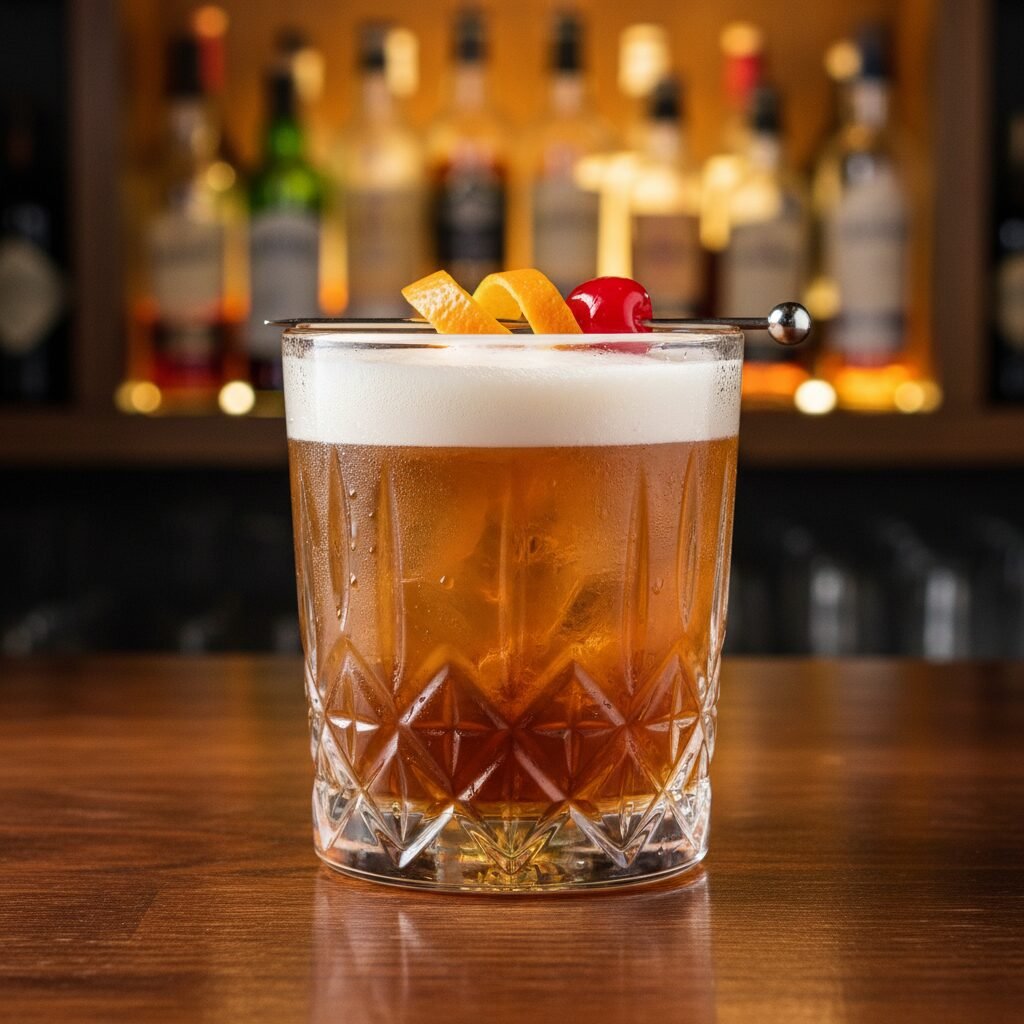
Let’s be honest for a second: the Amaretto Sour hasn’t always had the best reputation. If you ordered one in a dive bar in the 1980s or 90s, you probably received a neon-yellow glass of sugar syrup, sour mix from a gun, and a cheap maraschino cherry that tasted like plastic. It was the kind of drink that gave cocktails a bad name—cloyingly sweet and guaranteed to give you a headache the next morning.
But here is the good news: the real Amaretto Sour is an absolute masterpiece. When made with fresh ingredients and a little bit of technique, it transforms from a sugary mess into a sophisticated, balanced, and incredibly texture-rich cocktail. It is nutty, tart, refreshing, and topped with a silky cloud of foam that makes every sip feel luxurious.
In this guide, we are going to ditch the sour mix and go back to basics. We are talking fresh lemons, high-quality liqueur, and the secret techniques that top bartenders use to get that perfect frothy head. Whether you are hosting a dinner party or just winding down on a Friday night, mastering this recipe will instantly upgrade your home bartending game. Grab your shaker, and let’s get mixing!
Why the Amaretto Sour is Making a Huge Comeback
For a long time, the Amaretto Sour was relegated to the “guilty pleasure” category of drinking. It was the drink you ordered when you didn’t really like the taste of alcohol. But the craft cocktail renaissance changed everything. Bartenders started looking at old recipes and asking, “How can we make this actually taste good?”
The answer lay in quality control. The primary flavor profile of an Amaretto Sour is almond and apricot (from the apricot pits often used to make the liqueur) clashing with citrus. When you strip away the artificial sweeteners and preservatives found in pre-made mixes, you are left with a beautiful tug-of-war between the rich, dark sweetness of the amaretto and the sharp, acidic bite of fresh lemon juice.
Furthermore, the modern version of this drink often borrows a trick from the whiskey sour playbook: the addition of egg white. Now, before you get squeamish, hear me out. The egg white doesn’t make the drink taste like eggs. Instead, it acts as an emulsifier. It rounds off the sharp edges of the citrus and creates a velvety, creamy mouthfeel that you simply cannot achieve with ice alone. It is that meringue-like texture that has put the Amaretto Sour back on the menus of the world’s best bars.
The Holy Trinity of Ingredients (Plus a Secret Weapon)
You cannot build a house without a solid foundation, and you can’t make a world-class cocktail with subpar ingredients. Because this recipe is so simple, there is nowhere for bad ingredients to hide. Here is what you need to stock up on:
1. The Amaretto
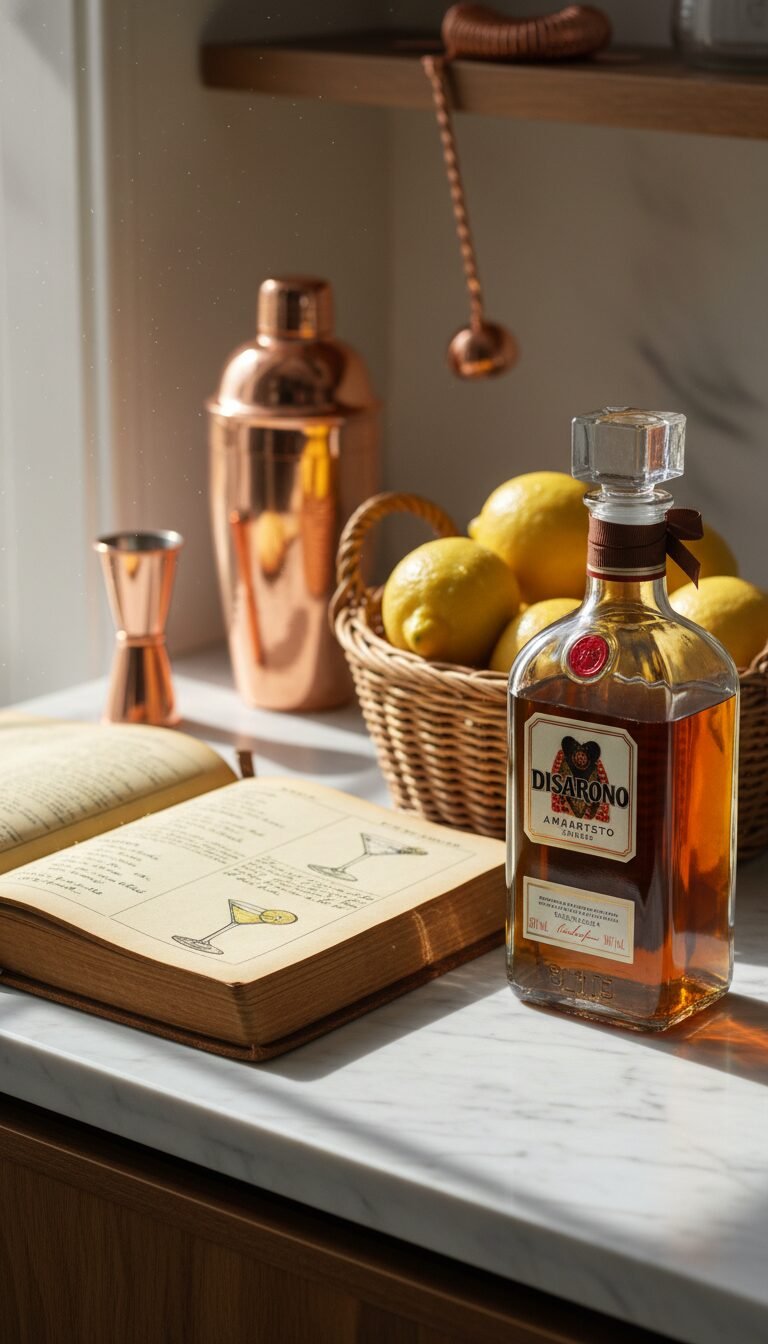
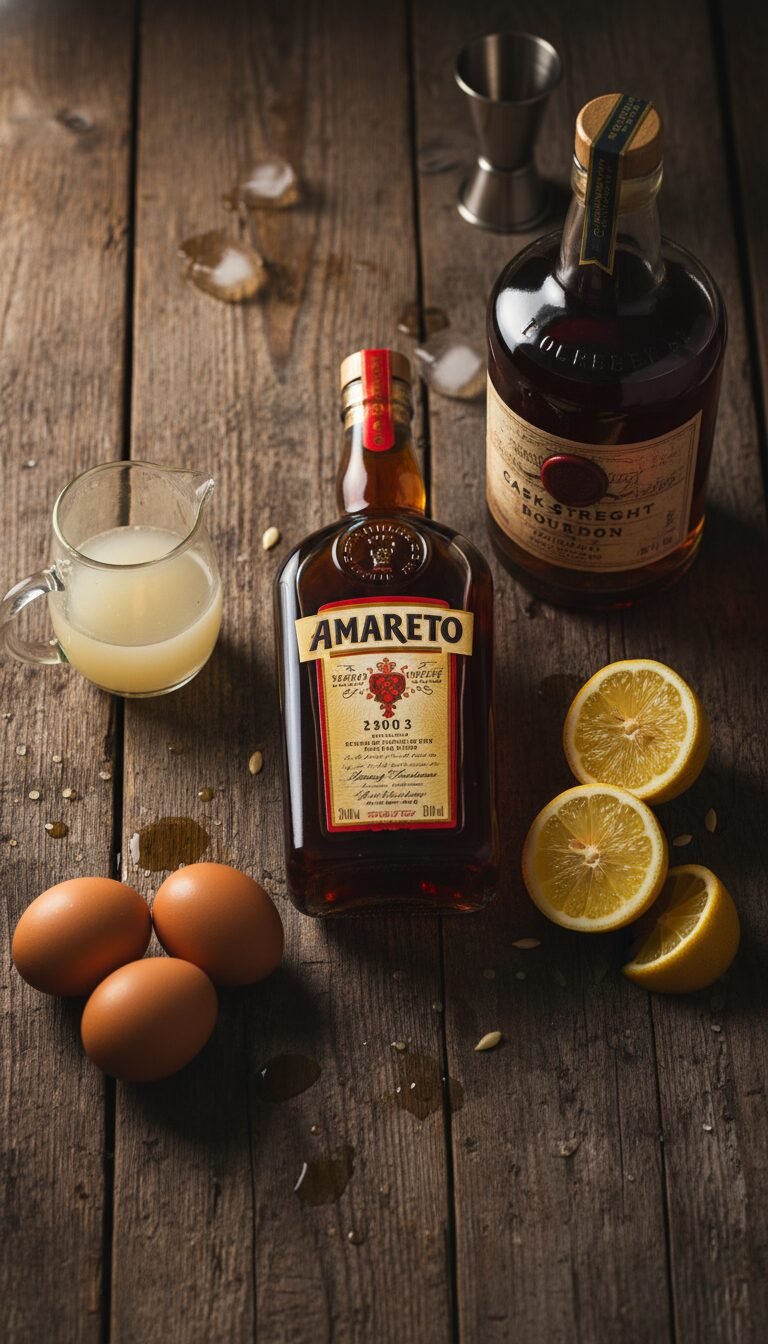
Amaretto is an Italian liqueur with a distinct almond flavor, though it is often made from apricot kernels, peach stones, or almonds. Disaronno is the most famous brand and is widely available, but brands like Lazzaroni (which actually uses an infusion of Amaretti cookies) offer a deeper, more complex flavor profile. Use whatever you have, but quality counts here.
2. Fresh Lemon Juice
This is non-negotiable. Put down the plastic lemon-shaped squeeze bottle. Those contain preservatives that alter the flavor and add a weird chemical aftertaste. You need the oils and the bright acidity of a lemon squeezed five minutes ago. Trust me, your tastebuds will thank you.
3. The Secret Weapon: Cask-Strength Bourbon
Wait, bourbon in an Amaretto Sour? Yes! This is a trick popularized by bartender Jeffrey Morgenthaler, and it is a total game-changer. Amaretto on its own is low proof and very sweet. By adding a splash of high-proof bourbon (or even a standard rye whiskey), you cut through the sugar and add a backbone of oak and vanilla. It doesn’t turn it into a Whiskey Sour; it just makes it a better Amaretto Sour.
The Science of the Shake: Dry Shake vs. Reverse Dry Shake
If you want that Instagram-worthy foam on top of your drink, you need to understand the physics of shaking. You are essentially trying to unfold the proteins in the egg white and trap air bubbles inside them. If you just throw everything in with ice and shake, the ice will dilute the drink and chill it too quickly before the foam has time to form properly.
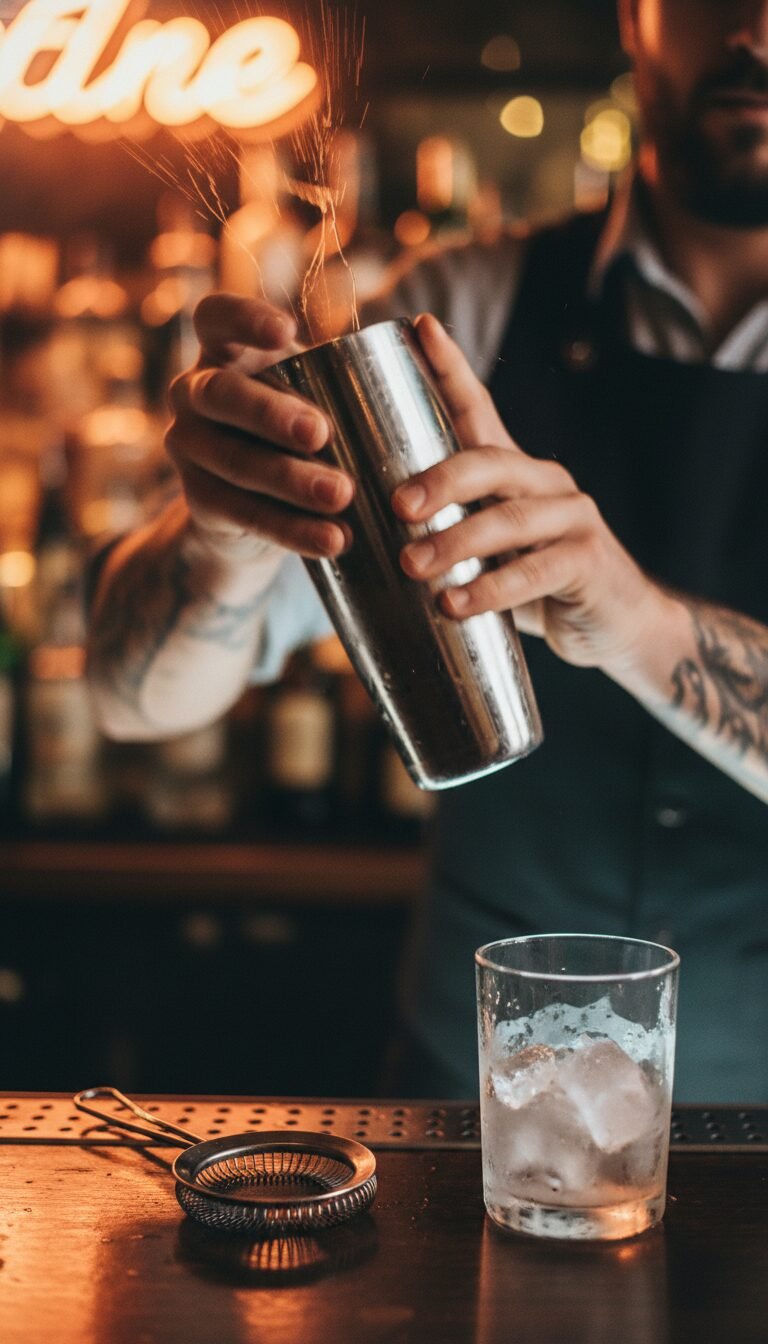
Enter the Dry Shake. This technique involves adding all your ingredients (including the egg white) into the shaker without ice first. You seal it up and shake it like you mean it for about 15 seconds. This emulsifies the egg at a higher temperature, creating a massive amount of foam. Then, you pop the shaker open, add your ice, and shake again to chill and dilute. This is the standard method.
However, some bartenders prefer the Reverse Dry Shake. In this method, you shake with ice first, strain the ice out, and then shake the liquid again without ice. This often results in an even thicker, more meringue-like foam, although it doesn’t chill the drink quite as aggressively. Try both and see which texture you prefer!
Step-by-Step: The Ultimate Amaretto Sour Recipe
Alright, enough theory. Let’s get to the fun part. Here is the recipe that will make you the most popular person at the party.
- 1.5 oz Amaretto Liqueur
- 0.75 oz Cask-Strength Bourbon (optional, but highly recommended)
- 1 oz Fresh Lemon Juice
- 1 tsp Rich Simple Syrup (2 parts sugar to 1 part water)
- 1 Egg White (or 1 oz Aquafaba for a vegan option)
- Garnish: Lemon twist and a Luxardo cherry
Instructions:
1. Combine Ingredients: Add the Amaretto, bourbon, lemon juice, simple syrup, and egg white into your cocktail shaker. Do not add ice yet.
2. The Dry Shake: Seal the shaker tight (egg whites expand, so hold on tight!) and shake vigorously for 15–20 seconds. You want to hear the liquid changing consistency.
3. The Wet Shake: Open the shaker, fill it three-quarters full with good ice (large cubes are best), and shake again. Shake until the outside of the tin is frosted over and too cold to hold comfortably.
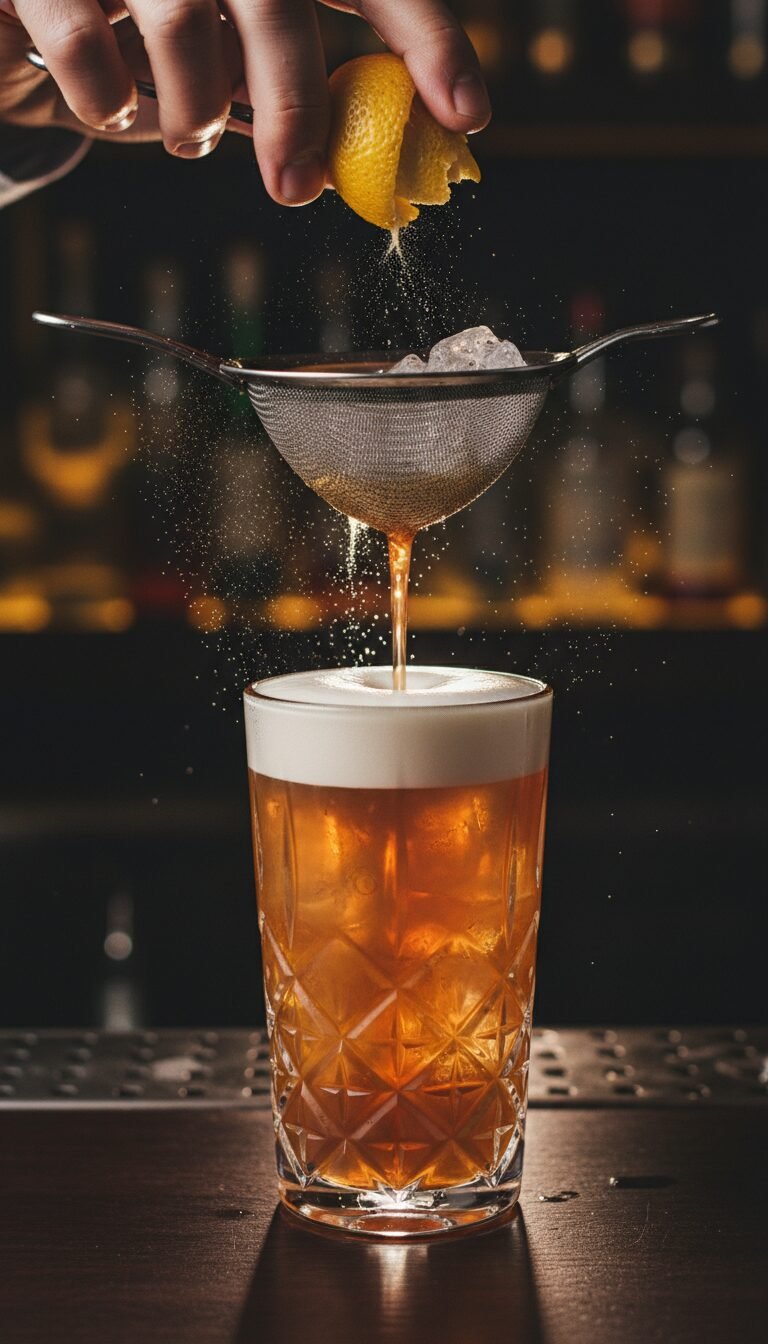
4. Strain and Serve: Strain the mixture through a Hawthorne strainer into a chilled rocks glass filled with fresh ice. If you want it extra smooth, use a fine mesh strainer to catch any ice shards.
5. Garnish: Express the oils from a lemon peel over the top of the foam, rub it on the rim, and drop it in. Add a high-quality cherry for that classic finish.
Variations, Vegan Options, and Serving Tips
Once you have mastered the classic, you can start to get creative. The Amaretto Sour is a surprisingly versatile canvas for other flavors.
Make it Vegan
If the idea of raw egg white freaks you out, or if you are vegan, you do not have to miss out on the foam. Aquafaba is the liquid found in a can of chickpeas. It sounds strange, but it mimics the protein structure of egg whites almost perfectly in cocktails. Use about one ounce of chickpea water in place of the egg white. It is flavorless and whips up into a beautiful foam.
The Stone Sour
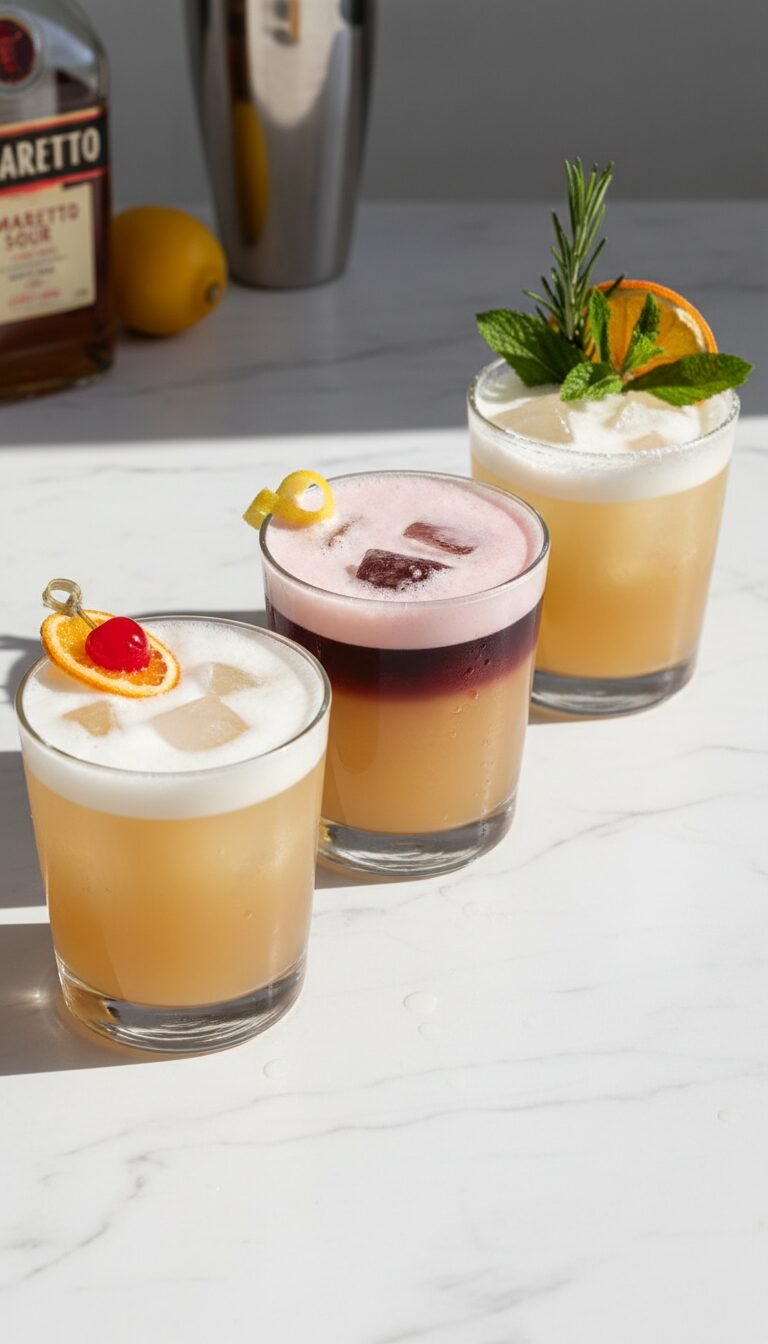
Want to make it a bit fruitier? Add an ounce of orange juice to the mix. This is often called a “Stone Sour.” It creates a softer, sunnier flavor profile that is perfect for brunch or day drinking.
Glassware and Ice
Presentation matters. While you can serve this in a coupe glass (served “up” without ice), the Amaretto Sour is traditionally served in a rocks glass (Old Fashioned glass) over fresh ice. The contrast between the cold ice, the amber liquid, and the white foam is visually stunning. If you really want to impress, use a single large ice cube. It melts slower, keeping your drink cold without watering it down, and it looks incredibly professional.
Cheers to Your New Favorite Cocktail
The Amaretto Sour is the perfect example of how a few small tweaks can transform a drink from a forgotten relic into a modern classic. By swapping out sour mix for fresh lemon, adding a touch of bourbon for complexity, and mastering the dry shake, you create a cocktail that hits every note: sweet, sour, strong, and creamy.
So, the next time you are staring at your liquor cabinet wondering what to make, reach for that bottle of Amaretto. It is not just for dessert anymore. With this recipe in your arsenal, you are ready to shake up something truly special. Cheers!