Chicken Fried Steak With Gravy
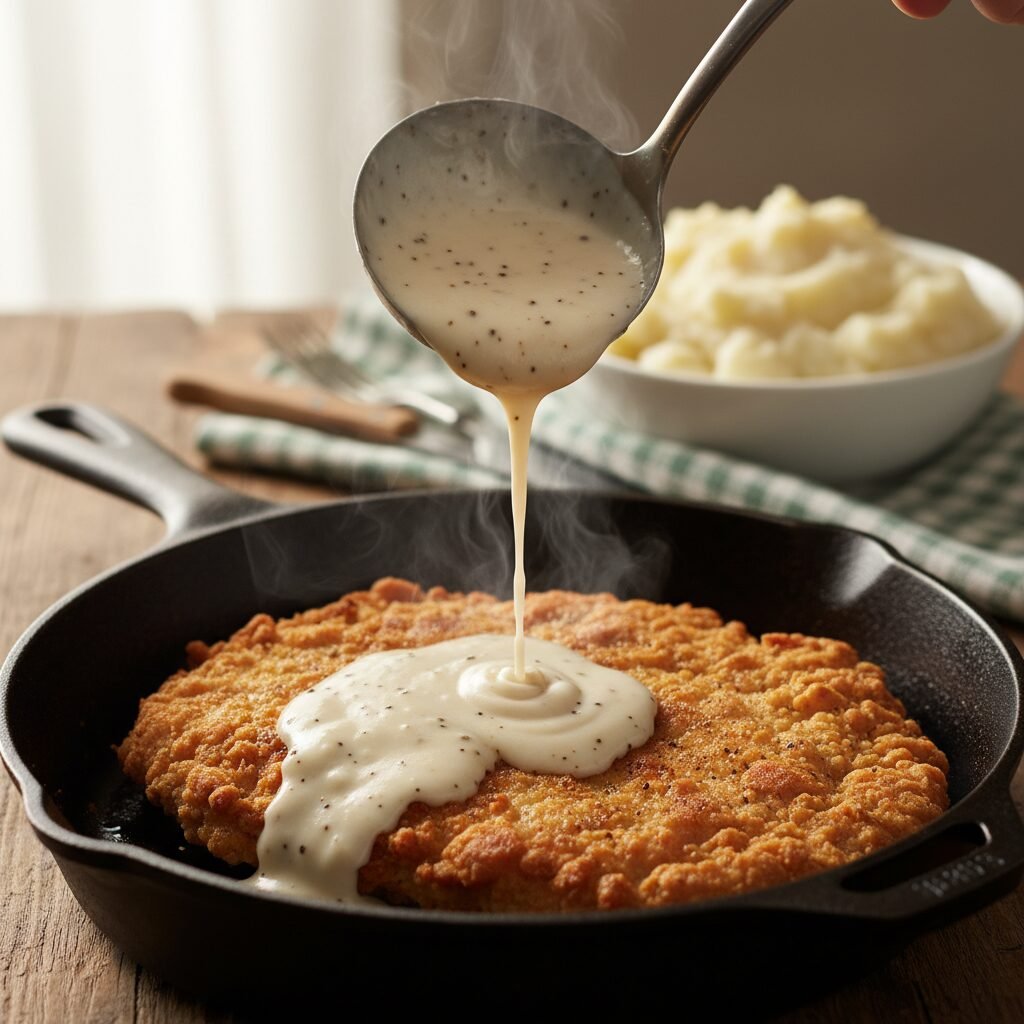
There are few dishes as synonymous with Southern comfort as Chicken Fried Steak. We take tenderized cube steak, coat it in a perfectly seasoned crispy batter, fry it to golden perfection, and serve it under a blanket of velvety white pepper gravy made right in the same cast-iron skillet.
20 minutes
20 minutes
40 minutes
4 Servings
Main Course
Pan Fry
Southern American
Omnivore
When it comes to quintessential American comfort food, Chicken Fried Steak stands tall as a culinary icon. It is a dish that evokes memories of Sunday suppers, bustling diners, and the warmth of a home-cooked meal. Despite its name, there is no chicken involved; rather, the name refers to the method of preparation. A high-quality piece of beef—typically top round or sirloin—is tenderized until it is yielding and soft, then treated exactly like fried chicken: dipped in an egg wash, dredged in seasoned flour, and fried until the exterior is shattering and crisp while the interior remains succulent.
The magic of this dish lies in the contrast of textures and the depth of flavor. The crust should be rugged and crunchy, seasoned generously with black pepper and paprika, providing a savory barrier that seals in the meat’s juices. However, a Chicken Fried Steak is only as good as its gravy. The accompanying white country gravy is not an afterthought; it is an essential component, crafted from the pan drippings (the fond) left behind after frying. This creates a seamless flavor profile where the peppery, creamy sauce perfectly complements the savory crunch of the steak.
For busy moms and home cooks looking to bring restaurant-quality comfort to the dinner table, this recipe is designed to be foolproof. We focus on technique—specifically how to ensure the breading adheres to the meat and how to achieve that perfect golden-brown hue without burning. Whether you are serving this for a hearty weekday dinner or a special weekend treat, this recipe promises to deliver a plate of pure nostalgia that will have your family asking for seconds.
History & Origins
The origins of Chicken Fried Steak are deeply rooted in the history of Texan cuisine, specifically influenced by German and Austrian immigrants who settled in Texas during the 19th century. These settlers brought with them their traditional recipes for Wiener Schnitzel, a dish consisting of breaded and fried veal cutlets. In the rugged landscape of Texas, veal was not readily available, but beef was abundant. Adapting their culinary heritage to local ingredients, they began using tough cuts of beef, tenderizing them mechanically to mimic the texture of veal, and frying them in pan fats.
Over the decades, the dish evolved from a distinctively Central European adaptation into a Southern staple. The term “Chicken Fried Steak” began appearing in restaurant advertisements and menus in the mid-20th century, distinguishing the preparation method—dredged in flour and egg like fried chicken—from “Country Fried Steak,” which is sometimes just dusted in flour and served with a brown gravy. Today, it is the official state dish of Oklahoma and a beloved classic across the American South, celebrated for its resourcefulness and hearty flavor profile.
Why This Recipe Works
This recipe succeeds because it addresses the two most common pitfalls of frying steak: tough meat and breading that falls off. First, we utilize cube steak or mechanically tenderized top round. The mechanical tenderization process breaks down the connective tissues in the beef, ensuring that the meat cooks quickly and remains tender enough to cut with a fork. If we were to use a standard steak without tenderizing, the short frying time would result in a chewy, unpalatable texture.
Secondly, the “double dredge” technique is crucial for that iconic crust. By coating the meat in seasoned flour, then an egg and buttermilk mixture, and finally back into the flour, we create a robust coating that crisps up beautifully. We also incorporate a critical resting period; letting the breaded steaks sit on a wire rack for 10 to 15 minutes before frying allows the gluten in the flour to hydrate and bond with the proteins in the egg wash. This prevents the coating from bubbling away or sliding off the meat when it hits the hot oil. Finally, the gravy works because it utilizes the fond—the browned bits of flour and meat stuck to the bottom of the pan—as the flavor base, emulsified with milk and fat to create a sauce that is rich, peppery, and deeply savory.
Why You’ll Love This Recipe
- ✓Uses tenderized cube steak for a melt-in-your-mouth texture.
- ✓Double-dredge method guarantees a super crispy, golden crust.
- ✓Includes a foolproof recipe for scratch-made white pepper gravy.
- ✓Cooks in a cast-iron skillet for authentic flavor distribution.
- ✓Ready in under 45 minutes, perfect for family dinners.
- ✓Budget-friendly beef cuts transformed into a gourmet meal.
Equipment You’ll Need
- ✓Large Cast Iron Skillet (12-inch recommended)
- ✓Meat Mallet (if not buying pre-tenderized steak)
- ✓Wire Cooling Rack
- ✓Baking Sheet
- ✓Whisk
- ✓Three Shallow Bowls or Pie Dishes
- ✓Tongs
- ✓Instant-read Thermometer
Ingredients
- ✓4 Cube Steaks (approx. 1/3 lb each, beef top round or sirloin)
- ✓2 cups All-Purpose Flour
- ✓1 teaspoon Baking Powder
- ✓1/2 teaspoon Baking Soda
- ✓1 teaspoon Garlic Powder
- ✓1 teaspoon Onion Powder
- ✓1/2 teaspoon Smoked Paprika
- ✓1/4 teaspoon Cayenne Pepper (optional)
- ✓2 large Eggs
- ✓1 cup Buttermilk (shaken well)
- ✓1 tablespoon Hot Sauce (e.g., Tabasco or Cholula)
- ✓Vegetable or Canola Oil (for frying)
- ✓Salt and Freshly Cracked Black Pepper
- ✓For the Gravy:
- ✓1/4 cup Pan Drippings (reserved frying oil + bits)
- ✓1/3 cup All-Purpose Flour
- ✓3 to 4 cups Whole Milk (warmed)
- ✓Salt and generous amounts of Black Pepper to taste
Instructions
- Prepare the Steaks: If your steaks are not pre-tenderized, place them between plastic wrap and pound them with the spiked side of a meat mallet until they are about 1/4 inch thick. Pat the steaks dry with paper towels and season both sides liberally with salt and black pepper.
- Set Up the Dredging Station: In the first shallow bowl, whisk together the 2 cups of flour, baking powder, baking soda, garlic powder, onion powder, smoked paprika, cayenne, 1 teaspoon of salt, and 1 teaspoon of black pepper. In a second bowl, whisk together the eggs, buttermilk, and hot sauce until smooth.
- The Double Dredge: Working one steak at a time, press the meat into the seasoned flour mixture to coat thoroughly. Shake off excess. Dip the floured steak into the egg/buttermilk mixture, ensuring it is fully submerged. Lift and let excess liquid drip off. Finally, press the steak back into the flour mixture, pressing down firmly with the heel of your hand to ensure the breading adheres. Shake off loose flour.
- Rest the Meat: Place the breaded steaks on a wire rack set over a baking sheet. Let them rest for at least 10 to 15 minutes. This step is crucial for keeping the breading attached during frying.
- Fry the Steaks: Fill a large cast-iron skillet with about 1/2 inch of vegetable oil. Heat over medium-high heat until the oil reaches 350°F (175°C). Carefully place two steaks in the hot oil (do not overcrowd). Fry for 3-4 minutes per side until the coating is a deep golden brown and the meat is cooked through. Transfer to a clean wire rack to drain. Repeat with remaining steaks.
- Make the Gravy: Pour off all but approximately 1/4 cup of the oil from the skillet, keeping the browned bits (fond) in the pan. Reduce heat to medium.
- Create the Roux: Sprinkle 1/3 cup of flour into the hot oil. Whisk constantly for 1-2 minutes until the flour is golden brown and smells nutty. This cooks out the raw flour taste.
- Add the Milk: Slowly pour in the warmed milk while whisking vigorously to prevent lumps. The mixture will thicken rapidly. Continue adding milk until you reach your desired consistency (usually about 3 to 3.5 cups).
- Simmer and Season: Let the gravy simmer gently for 2-3 minutes. Season generously with fresh cracked black pepper and salt to taste. Serve immediately over the hot steaks.
Expert Cooking Tips
- ✓Room Temperature Meat: Let your steaks sit out for 15 minutes before breading. Cold meat lowers the oil temperature too drastically.
- ✓Don’t Overcrowd: Frying too many steaks at once drops the oil temperature, leading to greasy, soggy breading. Fry in batches.
- ✓Warm Milk for Gravy: Using cold milk in a hot roux can cause the fat to seize and create lumps. Microwave your milk for 60 seconds before adding it to the pan.
- ✓Keep it Warm: Place fried steaks in a 200°F oven on a wire rack to keep them warm and crisp while you make the gravy.
- ✓Season at Every Step: Ensure your flour is well-salted. Bland flour leads to a bland crust, no matter how good the gravy is.
Substitutions and Variations
If you cannot find cube steak, buy top round or bottom round steaks and tenderize them aggressively with a mallet. For a dairy-free version, you can use almond milk for the wash and gravy, though the gravy will lack the traditional richness; substitute butter or oil for the roux fat. If you don’t have buttermilk, mix 1 cup of whole milk with 1 tablespoon of white vinegar or lemon juice and let it sit for 5 minutes. For a gluten-free option, use a high-quality 1:1 gluten-free flour blend, but be aware that browning may occur faster.
Common Mistakes to Avoid
The most common mistake is oil temperature management. If the oil is too cool, the breading acts like a sponge and absorbs the grease. If it’s too hot, the outside burns before the meat cooks. Use a thermometer to maintain 350°F. Another frequent error is skipping the resting period. If you fry immediately after dredging, the moisture in the egg wash expands rapidly and pushes the coating off the meat. Finally, burning the roux for the gravy will result in a bitter taste; if the flour turns dark brown or black, wipe the pan and start the gravy over.
Serving Suggestions
Chicken Fried Steak is traditionally served as the centerpiece of a heavy Southern supper. The most classic pairing is creamy mashed potatoes, which act as a second vessel for the gravy. Green beans sautéed with bacon, collard greens, or fried okra add necessary color and texture. A soft, buttery biscuit or a slice of Texas Toast is also highly recommended to mop up any remaining sauce. For a breakfast twist, serve the steak alongside fried eggs and hash browns.
Storage and Reheating Tips
Chicken Fried Steak is best enjoyed fresh, but leftovers can be stored in an airtight container in the refrigerator for up to 3 days. Store the gravy in a separate container, as it will congeal. To reheat the steak, do not use the microwave, as it will make the crust soggy. Instead, place the steak on a wire rack in a 350°F oven or use an air fryer at 375°F for 4-5 minutes until crisp. Reheat the gravy in a saucepan over low heat, adding a splash of milk or water to loosen it up as it warms.
Nutrition Facts (Estimated)
| Serving Size | 1 Steak with 1/4 cup Gravy |
| Calories | 780 kcal |
| Fat | 48g |
| Saturated Fat | 16g |
| Unsaturated Fat | 28g |
| Trans Fat | 1g |
| Cholesterol | 165mg |
| Sodium | 1150mg |
| Carbohydrates | 42g |
| Fiber | 2g |
| Sugar | 4g |
| Protein | 45g |
Frequently Asked Questions
Why is it called Chicken Fried Steak if there is no chicken?
The name refers to the cooking method, not the ingredients. The steak is prepared in the style of fried chicken: dipped in egg and flour and deep-fried or pan-fried, rather than grilled or broiled.
What is the best cut of meat for Chicken Fried Steak?
Cube steak is the standard. It is usually top round or top sirloin that has been mechanically tenderized by a butcher. If you can’t find it, buy round steak and pound it thin with a mallet.
Why does my breading fall off the steak?
This usually happens because the steak was too wet before dredging, or the breaded steak didn’t rest before frying. Pat the meat dry first, and let the breaded steak sit on a wire rack for 10-15 minutes to let the gluten bond.
Can I bake this instead of frying?
While you can bake it, it won’t be true Chicken Fried Steak. Frying provides the signature puff and crunch. If you must bake, spray the steaks with oil and bake at 400°F on a wire rack, flipping halfway, but expect a different texture.
My gravy is too thick, what do I do?
Country gravy thickens as it cools. Simply whisk in more milk or a little chicken/beef broth, one tablespoon at a time, over low heat until it reaches your desired consistency.
Can I use oil instead of drippings for the gravy?
Yes, but you will lose a lot of flavor. The ‘fond’ (brown bits) from frying the steak gives the gravy its signature savory taste. If you must use fresh oil or butter, consider adding beef bouillon for flavor.
Is this the same as Country Fried Steak?
They are very similar and often used interchangeably, but purists argue that Chicken Fried Steak has a crispier, egg-based coating and is served with white gravy, while Country Fried Steak has a simpler flour dusting and is served with brown gravy.
Can I freeze the breaded steaks before frying?
Yes. Flash freeze the breaded, uncooked steaks on a baking sheet for an hour, then transfer to a freezer bag. Thaw them in the refrigerator overnight before frying for the best results.
Conclusion
There is something undeniably special about placing a platter of Chicken Fried Steak on the table. It is a labor of love that rewards you with the satisfying crunch of the crust, the tenderness of the beef, and the warming richness of the pepper gravy. This recipe is more than just dinner; it is a way to slow down and appreciate the hearty, soulful flavors of the South. Whether you are a seasoned cook or trying this for the first time, follow these steps for a meal that is sure to become a requested favorite in your home. Gather your family, pass the biscuits, and enjoy every bite.