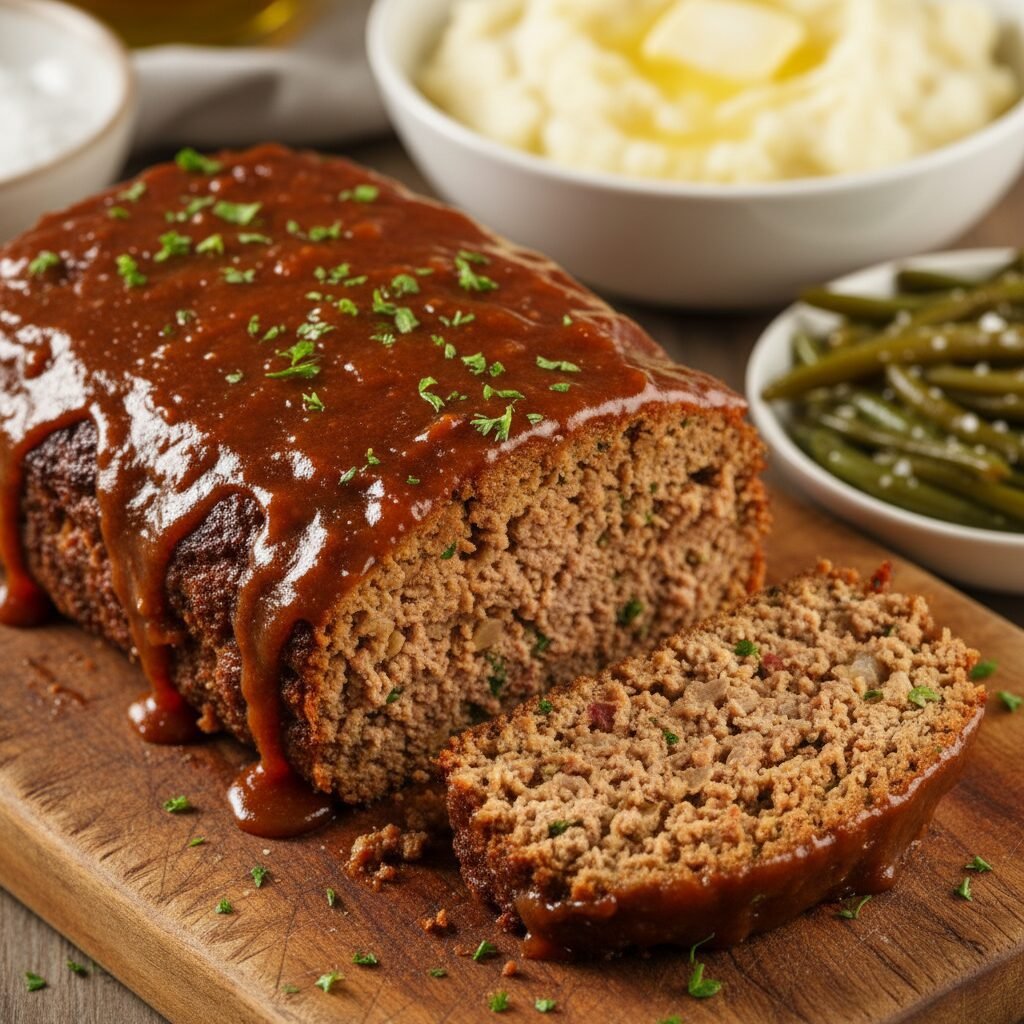
Meatloaf With Brown Sugar Glaze Dinner
Say goodbye to dry meatloaf forever! This recipe combines tender ground beef with a tangy, sweet brown sugar glaze that caramelizes perfectly in the oven. It is the weeknight dinner your family will beg for.
15 minutes
1 hour 15 minutes
1 hour 30 minutes
8 Servings
Dinner
Baking
American
Omnivore
Hey friends! Let’s have a heart-to-heart about meatloaf. I know, I know—meatloaf often gets a bad rap. For many of us, the word summons memories of gray, dry bricks served in school cafeterias or those well-intentioned but flavorless dinners from decades past. But I am here to tell you that meatloaf needs a rebranding, and this Brown Sugar Glazed Meatloaf is leading the charge!
There is a reason this dish has stood the test of time in American kitchens. When done right, it is the absolute epitome of comfort food. We are talking about savory, juicy beef seasoned to perfection, held together with just the right amount of binder to keep it tender, and slathered in a sauce that is so good you will want to lick the spoon. This isn’t just dinner; it is a warm hug on a plate.
As a busy mom, I am always on the hunt for meals that check three boxes: budget-friendly, kid-approved, and easy to prep. This recipe checks all of them with a permanent marker. The secret weapon here is the glaze. While traditional ketchup toppings are fine, taking an extra thirty seconds to whisk together brown sugar, tangy vinegar, and ketchup creates a sticky, caramelized layer that transforms the humble meatloaf into something gourmet. My kids actually fight over the end pieces just to get more of that sauce!
Whether you are serving a Sunday family dinner or need a hearty meal to get you through a chaotic Wednesday night, this recipe delivers. So, grab your mixing bowls and let’s make a meatloaf that will actually have your family asking for seconds.
History & Origins
Meatloaf is often thought of as a quintessential American invention, specifically tied to the mid-20th century, but its roots actually dig much deeper into culinary history. Believe it or not, the concept of mixing minced meat with binders and spices dates all the way back to Rome in the 5th century! The Roman cookbook Apicius features recipes for meat patties that look suspiciously like our modern ancestors of the loaf.
However, the meatloaf we know and love today really found its footing during the Great Depression in the United States. During times of economic hardship, home cooks had to be incredibly resourceful. Meat was expensive, so stretching a pound of ground beef with inexpensive fillers like breadcrumbs, crackers, or oats was a brilliant way to feed a hungry family without breaking the bank. It was survival cooking at its finest.
By the 1950s, meatloaf had evolved from a survival dish to a suburban staple. With the advent of modern appliances and the standardization of recipes in magazines, it became the centerpiece of the American dinner table. Over the decades, we have moved away from the bland versions of the past and started embracing bolder flavors, like the sweet and tangy brown sugar glaze featured in this recipe, proving that classics can always be improved upon.
Why This Recipe Works
If you have ever suffered through a dry, crumbly meatloaf, you might be wondering what makes this one different. The science behind a perfect meatloaf comes down to moisture retention and the balance of flavors. First, we use a technique involving a panade. This is a fancy culinary term for a paste made of milk and breadcrumbs (or crackers). When you mix the starch with the liquid before adding it to the meat, the starch granules swell and gel. This prevents the proteins in the meat from tightening up too much during baking, which is the main culprit behind tough meatloaf.
Secondly, we choose the right fat content. Using 80/20 or 85/15 ground beef is crucial. Leaner meats, like 90/10 beef or plain turkey breast, lack the fat necessary to baste the meat from the inside out as it cooks. That rendered fat equals flavor and juiciness.
Finally, the glaze does double duty. Flavor-wise, the brown sugar and vinegar provide a gastrique-like effect—a sweet and sour balance that cuts through the richness of the beef. Texture-wise, the sugar in the glaze caramelizes under the heat of the oven, creating a slightly crisp, sticky exterior that contrasts beautifully with the soft, tender interior. It is a perfect chemical marriage of textures and tastes.
Why You’ll Love This Recipe
- ✓Incredibly juicy interior that never dries out
- ✓Sticky, sweet, and tangy brown sugar glaze
- ✓Budget-friendly meal using pantry staples
- ✓Freezes beautifully for meal prep
- ✓Kid-friendly flavor profile (no weird chunks!)
- ✓Perfect for leftover meatloaf sandwiches
Equipment You’ll Need
- ✓Large mixing bowl
- ✓Small mixing bowl (for glaze)
- ✓9×5 inch Loaf Pan or Baking Sheet
- ✓Aluminum foil or Parchment paper
- ✓Meat thermometer
- ✓Measuring cups and spoons
Ingredients
- ✓For the Meatloaf:
- ✓2 lbs Ground Beef (85/15 or 80/20 recommended)
- ✓1 cup Panko breadcrumbs (or crushed saltine crackers)
- ✓3/4 cup Whole milk
- ✓2 large Eggs, lightly beaten
- ✓1 small Yellow onion, finely grated or minced
- ✓2 cloves Garlic, minced
- ✓1 tbsp Worcestershire sauce
- ✓1 tsp Dried thyme
- ✓1 tsp Dried parsley
- ✓1 tsp Salt
- ✓1/2 tsp Black pepper
- ✓For the Brown Sugar Glaze:
- ✓3/4 cup Ketchup
- ✓1/3 cup Light brown sugar, packed
- ✓1 tbsp Apple cider vinegar (or white vinegar)
- ✓1 tsp Dijon mustard (optional)
- ✓1/2 tsp Garlic powder
Instructions
- Preheat and Prep: Preheat your oven to 375°F (190°C). Line a 9×5 inch loaf pan with parchment paper or aluminum foil (sprayed with non-stick spray) for easy cleanup. Alternatively, you can line a baking sheet with foil if you prefer a free-form loaf.
- Make the Panade: In a large mixing bowl, combine the Panko breadcrumbs and the milk. Stir them together and let the mixture sit for about 5 minutes. The breadcrumbs will absorb the milk and become soggy. This is the secret to a moist meatloaf!
- Add Aromatics and Binders: To the soaked breadcrumbs, add the beaten eggs, grated onion, minced garlic, Worcestershire sauce, dried thyme, parsley, salt, and pepper. Whisk this mixture together until well combined.
- Mix the Meat: Add the ground beef to the bowl. Using your hands, gently mix the beef with the breadcrumb mixture. Stop mixing as soon as everything is combined. Overworking the meat will make it tough.
- Shape the Loaf: Transfer the meat mixture to your prepared loaf pan and gently pat it down to fill the corners. If using a baking sheet, shape the meat into a loaf approximately 9×5 inches in the center of the sheet.
- Make the Glaze: In a small bowl, whisk together the ketchup, brown sugar, apple cider vinegar, Dijon mustard, and garlic powder until smooth.
- Glaze and Bake: Spread about half of the glaze over the top of the raw meatloaf. Place in the oven and bake for 45 minutes.
- Add More Glaze: Remove the meatloaf from the oven and carefully spread the remaining glaze over the top. Return to the oven and bake for another 15-20 minutes, or until the internal temperature reaches 160°F (71°C) on a meat thermometer.
- Rest: This is the most important step! Remove the meatloaf from the oven and let it rest for at least 10-15 minutes before slicing. This allows the juices to redistribute so they don’t run out when you cut it.
- Serve: Lift the meatloaf out using the foil/parchment liner, slice into thick pieces, and serve warm.
Expert Cooking Tips
- ✓Grate the Onion: Instead of chopping the onion, grate it using a cheese grater. This ensures you don’t have crunchy chunks of raw onion in your soft meatloaf, and the onion juice adds extra moisture!
- ✓Don’t Overmix: Treat the meat like you would a delicate cake batter. Mix just until the ingredients are incorporated. Overmixing compresses the proteins and leads to a dense, rubbery texture.
- ✓Use a Thermometer: Cooking times can vary based on your oven and the shape of your loaf. The only way to guarantee safety and juiciness is to pull it at exactly 160°F.
- ✓Let it Rest: If you cut into the meatloaf immediately out of the oven, all the juices will leak out onto the cutting board, leaving you with dry meat. Patience pays off!
Substitutions and Variations
Cooking is all about flexibility, so here are some swaps you can make if you are missing ingredients. If you are watching your red meat intake, you can swap half of the ground beef for ground turkey or ground pork. A 50/50 mix of beef and pork is actually very traditional and delicious! If you are gluten-free, simply swap the Panko breadcrumbs for your favorite gluten-free crumbs or even crushed gluten-free oats. No milk? You can use beef broth or a non-dairy milk substitute (unsweetened) for the panade. If you don’t have apple cider vinegar for the glaze, white vinegar or lemon juice works in a pinch to provide that necessary acidity.
Common Mistakes to Avoid
The biggest mistake people make is using super lean meat. While 90% or 95% lean beef is great for tacos, it is terrible for meatloaf because it dries out instantly. Stick to 80% or 85% lean. Another common error is skipping the resting period. I know it smells amazing and you are hungry, but cutting it too soon will cause the loaf to crumble apart on the plate. Lastly, don’t pack the meat into the loaf pan too tightly; just gently press it into shape to keep the texture light.
Serving Suggestions
This meatloaf screams for classic sides! My absolute favorite pairing is creamy mashed potatoes—the gravy or extra glaze goes perfectly with them. Roasted green beans or glazed carrots add a nice pop of color and veggie nutrition. For a true diner-style meal, add a side of buttered corn or peas. And don’t forget the dinner rolls to sop up any extra sauce! If you have leftovers (lucky you!), slice the cold meatloaf thick and make a sandwich on white bread with a little mayo and lettuce. It is arguably better than the dinner itself!
Storage and Reheating Tips
Leftover meatloaf stores incredibly well. Wrap it tightly in foil or place it in an airtight container in the refrigerator for 3 to 4 days. To reheat, place slices on a baking sheet and warm in a 350°F oven until heated through, or microwave gently. You can also freeze meatloaf! You can freeze the cooked loaf (whole or sliced) for up to 3 months. Thaw overnight in the fridge before reheating. You can even freeze the raw meatloaf mixture in the pan; just thaw it completely in the fridge for 24 hours before baking as directed.
Nutrition Facts (Estimated)
| Serving Size | 1 Slice |
| Calories | 385 kcal |
| Fat | 19g |
| Saturated Fat | 7g |
| Unsaturated Fat | 10g |
| Trans Fat | 1g |
| Cholesterol | 110mg |
| Sodium | 580mg |
| Carbohydrates | 24g |
| Fiber | 1g |
| Sugar | 14g |
| Protein | 26g |
Frequently Asked Questions
Why does my meatloaf fall apart when I slice it?
This usually happens for two reasons: either the meatloaf didn’t rest long enough after baking, or there weren’t enough binding agents (eggs and breadcrumbs) to hold it together. Make sure to wait at least 15 minutes before cutting!
Can I make this ahead of time?
Yes! You can mix and shape the meatloaf in the morning, cover it tightly with plastic wrap, and refrigerate it until dinner time. Then just glaze and bake. You may need to add 5-10 minutes to the cooking time if baking a cold loaf.
Do I have to use a loaf pan?
Nope! Many chefs prefer baking meatloaf free-form on a baking sheet. This allows the heat to circulate around the entire loaf, creating more of that delicious caramelized crust. If you do this, just shape it into a loaf shape by hand.
Can I use ground turkey instead of beef?
You can, but turkey is much leaner than beef. If you use turkey, I recommend adding a tablespoon of olive oil to the mix or using 93% lean turkey (not 99% fat-free) to ensure it stays moist.
What happens if I don’t have milk?
The milk is used to soak the breadcrumbs. If you are out of milk, you can use water, beef broth, or even tomato juice. The goal is just to hydrate the crumbs.
Why is there liquid in the bottom of my pan?
This is rendered fat and juices from the meat. It is totally normal! Just lift the meatloaf out of the grease before serving. Using a higher fat content beef produces more liquid, but also more flavor.
Can I cook this in a slow cooker?
Yes. Line your slow cooker with foil, shape the loaf to fit, and cook on Low for 6-7 hours or High for 3-4 hours. However, you won’t get the same caramelized crust on the glaze.
Is the glaze too sweet?
It is definitely a sweet glaze, similar to BBQ sauce. If you prefer it less sweet, you can reduce the brown sugar to 1/4 cup or increase the vinegar and mustard for more tang.
Conclusion
There you have it—the blueprint for the best meatloaf of your life! This Brown Sugar Glazed Meatloaf truly transforms a humble pantry meal into a dinner that feels special and satisfying. It is the kind of recipe that gets passed down from generation to generation because it just works. I hope this becomes a regular in your meal rotation just like it is in mine. If you make this, please snap a photo and tag me on social media or leave a comment below; I love seeing your creations! Happy cooking!