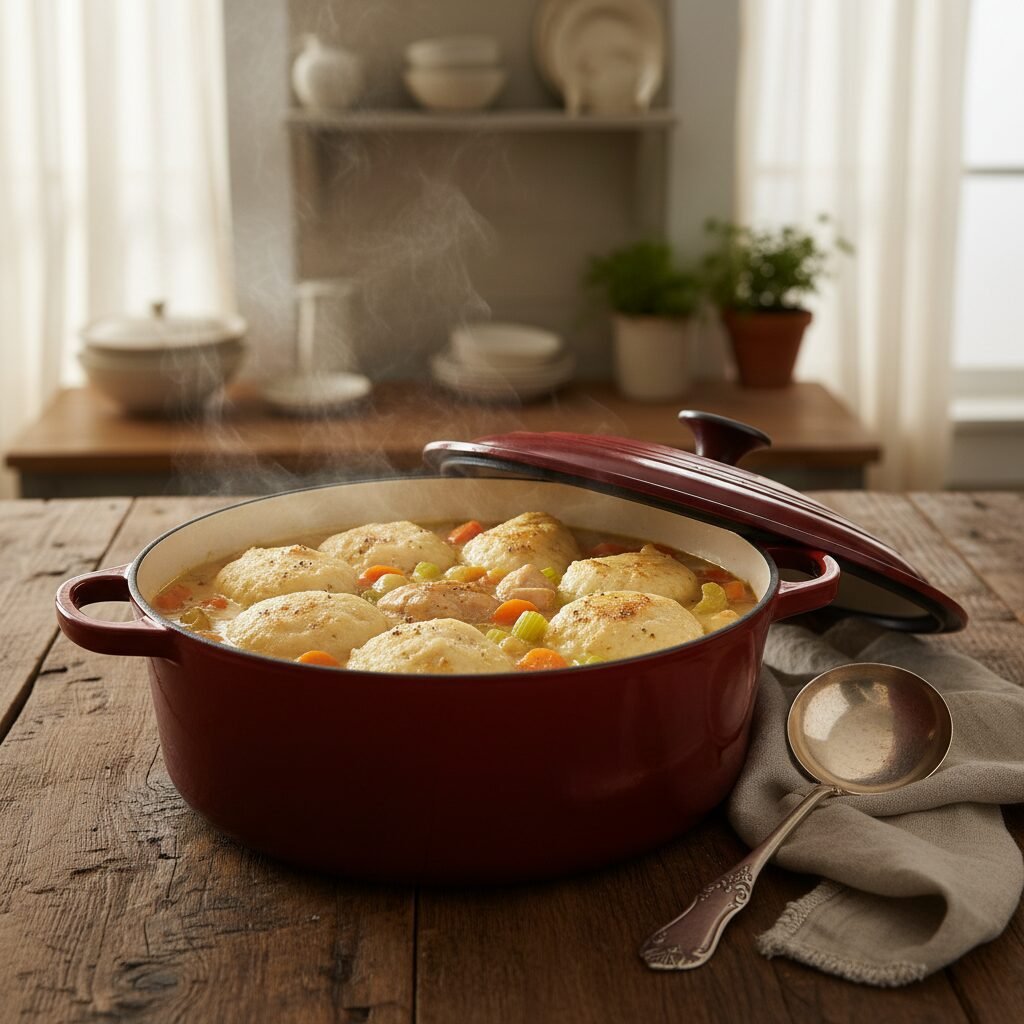
Chicken And Dumplings Dinner
This recipe defines comfort food with its rich, creamy broth and pillowy, tender dumplings. It is a wholesome, one-pot wonder that brings the whole family together around the dinner table.
20 minutes
50 minutes
1 hour 10 minutes
6 servings
Dinner
Stovetop / Dutch Oven
American / Southern
Omnivore
There are few dishes that evoke the feeling of home quite like a steaming bowl of Chicken and Dumplings. It is the culinary equivalent of a warm hug—a rustic, hearty meal that promises to soothe the soul and fill the stomach. For many of us, this dish brings back memories of grandmother’s kitchen, where the aroma of simmering thyme, onions, and chicken would waft through the air, signaling that a delicious dinner was on the way.
This particular recipe is designed for the modern home cook who craves that authentic, old-fashioned taste but needs a reliable, foolproof method. We utilize a rich, velouté-style broth base, loaded with tender chunks of chicken and vibrant vegetables, topped with homemade dumplings that are light, fluffy, and never doughy. Unlike quick-fix versions that use canned biscuits, our scratch-made dumpling dough takes only minutes to prepare and makes a world of difference in texture and flavor.
Perfect for Sunday suppers or busy weeknights when you need a meal that satisfies everyone, this Chicken and Dumplings dinner is a celebration of simple ingredients coming together to create something truly magical. Whether you are feeding a hungry family or meal-prepping for the week, this dish stands the test of time as a beloved staple in American comfort cooking.
History & Origins
The history of Chicken and Dumplings is deeply rooted in the resourcefulness of American home cooking, particularly during the Great Depression and in the Southern United States. While the concept of boiling dough in broth dates back to early European cuisine—specifically the dumplings found in Central and Eastern Europe—the American iteration evolved as a way to stretch a meager amount of meat to feed a large family.
In the 17th and 18th centuries, boiling a whole chicken was a common method of preparation, as it ensured that even older, tougher birds became tender. The addition of flour-based dumplings was an economical way to add bulk and calories to the meal. Over time, two distinct styles emerged: the flat, noodle-like dumplings often associated with the American South and the Midwest, and the fluffy, biscuit-style drop dumplings that rise to the top of the pot. This recipe honors the latter tradition, creating soft, cloud-like mounds of dough that soak up the savory essence of the stew, a style that became a quintessential part of American culinary heritage in the 20th century.
Why This Recipe Works
This recipe succeeds because it carefully balances texture and flavor through classic culinary techniques. First, we build a deep flavor foundation by searing the chicken and sautéing the mirepoix (onions, carrots, and celery) in the rendered fat and butter. This step, known as the Maillard reaction, is crucial for a savory, complex broth.
The consistency of the stew is achieved through a two-step thickening process. We start with a roux—cooking flour with fat—to create a velvety base that prevents the dairy from curdling later. However, the real magic happens when the dumplings are added. As the dumplings steam on top of the simmering stew, they release a small amount of starch into the liquid, naturally thickening it further into a rich gravy. Furthermore, the use of baking powder and buttermilk in the dumpling dough ensures a chemical reaction that creates carbon dioxide bubbles, resulting in dumplings that are light and airy rather than dense and leaden. Steaming them with the lid on traps the heat, allowing them to puff up perfectly while the bottom absorbs the savory chicken broth.
Why You’ll Love This Recipe
- ✓One-pot meal for easy cleanup
- ✓Homemade buttermilk dumplings from scratch
- ✓Rich and creamy vegetable-packed broth
- ✓Budget-friendly family dinner
- ✓Freezer-friendly for meal prep
- ✓Ready in just over an hour
Equipment You’ll Need
- ✓Large Dutch Oven or Heavy-Bottomed Pot (6-quart)
- ✓Chef’s Knife
- ✓Cutting Board
- ✓Medium Mixing Bowl
- ✓Whisk
- ✓Wooden Spoon
- ✓Measuring Cups and Spoons
- ✓Cookie Scoop or Large Spoon
Ingredients
- ✓For the Stew:
- ✓2 lbs boneless, skinless chicken thighs (or breasts), cut into 1-inch chunks
- ✓1 teaspoon kosher salt, plus more to taste
- ✓1/2 teaspoon freshly cracked black pepper
- ✓4 tablespoons unsalted butter, divided
- ✓1 cup yellow onion, diced
- ✓1 cup carrots, peeled and sliced into rounds
- ✓1 cup celery, diced
- ✓3 cloves garlic, minced
- ✓1/2 teaspoon dried thyme (or 1 tbsp fresh)
- ✓1/4 cup all-purpose flour
- ✓4 cups chicken stock (low sodium preferred)
- ✓1/2 cup heavy cream or whole milk
- ✓1 cup frozen peas (optional)
- ✓2 tablespoons fresh parsley, chopped
- ✓For the Dumplings:
- ✓2 cups all-purpose flour
- ✓1 tablespoon baking powder
- ✓1 teaspoon salt
- ✓1 teaspoon sugar (optional, for browning)
- ✓1/4 teaspoon black pepper
- ✓4 tablespoons unsalted butter, melted and slightly cooled
- ✓3/4 cup buttermilk (shake well before pouring)
Instructions
- Season and Sear the Chicken: Pat the chicken chunks dry with paper towels. Season generously with salt and pepper. In a large Dutch oven, melt 2 tablespoons of butter over medium-high heat. Add the chicken in a single layer (work in batches if necessary) and sear until golden brown, about 3-4 minutes per side. The chicken does not need to be fully cooked through at this stage. Remove chicken to a plate and set aside.
- Sauté the Vegetables: Reduce heat to medium. Add the remaining 2 tablespoons of butter to the pot. Add the onions, carrots, and celery. Sauté for 5-7 minutes until the onions are translucent and the vegetables begin to soften. Stir in the minced garlic and dried thyme, cooking for another minute until fragrant.
- Build the Roux: Sprinkle the 1/4 cup of flour over the vegetables. Stir constantly with a wooden spoon for 1-2 minutes to cook out the raw flour taste. The mixture will look pasty and golden.
- Simmer the Soup: Slowly pour in the chicken stock while whisking or stirring vigorously to prevent lumps. Scrape the bottom of the pot to release any browned bits (fond). Bring the mixture to a simmer. Return the seared chicken and any accumulated juices to the pot. Reduce heat to low, cover, and simmer for 15 minutes.
- Prepare the Dumpling Dough: While the soup simmers, whisk together the flour, baking powder, salt, sugar, and pepper in a medium bowl. In a separate small bowl or measuring cup, mix the melted butter and buttermilk. Pour the wet ingredients into the dry ingredients. Stir gently with a fork or spatula just until a shaggy dough forms. Do not overmix.
- Cook the Dumplings: Stir the heavy cream and frozen peas into the stew. Taste and adjust seasoning with salt and pepper. Using a cookie scoop or two spoons, drop golf-ball-sized portions of the dumpling dough directly onto the simmering stew. Leave a little space between them as they will expand.
- Steam to Finish: Reduce the heat to the lowest setting to maintain a very gentle simmer. Cover the pot with a tight-fitting lid. Cook undisturbed for 15-20 minutes. Do not lift the lid during this time, as the steam is essential for cooking the dumplings through.
- Serve: Remove from heat. Gently check a dumpling with a toothpick to ensure it comes out clean. Garnish with fresh chopped parsley and serve warm.
Expert Cooking Tips
- ✓Cold Ingredients for Dough: While we use melted butter here for ease, ensuring your buttermilk is cold helps create little pockets of steam for fluffier dumplings.
- ✓Don’t Peek! When steaming the dumplings, resisting the urge to lift the lid is critical. Lifting the lid releases the steam and lowers the temperature, which can result in heavy, undercooked dumplings.
- ✓Thighs vs. Breasts: Chicken thighs are recommended because they remain tender and juicy during the simmering process. Chicken breasts are leaner but can dry out if overcooked.
- ✓Crowding the Pot: Try not to overlap the dumplings too much when dropping them in. They need room to expand outwards and upwards.
Substitutions and Variations
This recipe is highly adaptable to suit your pantry or dietary needs. If you do not have buttermilk, you can make a quick substitute by adding 1 tablespoon of lemon juice or white vinegar to a cup of regular milk and letting it sit for 5 minutes. For a dairy-free version, use olive oil or plant-based butter for sautéing, and substitute the cream and buttermilk with full-fat oat milk or almond milk (unsweetened). If you are short on time, you can use a rotisserie chicken; simply shred the meat and add it to the pot when you add the stock, skipping the searing step. For the vegetables, feel free to add parsnips, sweet potatoes, or corn depending on what is in season.
Common Mistakes to Avoid
The most common mistake when making Chicken and Dumplings is overworking the dough. When mixing the wet and dry ingredients for the dumplings, stop as soon as the flour is incorporated. Overmixing develops gluten, turning what should be fluffy clouds into tough, chewy rubber balls. Another pitfall is boiling the stew too vigorously once the dumplings are added. A rolling boil can cause the delicate dumplings to disintegrate into the broth. Maintain a gentle simmer to keep them intact. Finally, ensure your baking powder is fresh; expired leavening agents will prevent the dumplings from rising properly.
Serving Suggestions
Chicken and Dumplings is a hearty meal on its own, but it pairs beautifully with light, acidic sides to cut through the richness. A crisp green salad with a lemon vinaigrette or apple cider vinegar dressing is an excellent accompaniment. For a Southern feast, serve it alongside sautéed green beans with bacon or a slice of crusty cornbread to soak up every last drop of the creamy gravy. A glass of chilled Chardonnay or a light iced tea complements the savory flavors perfectly.
Storage and Reheating Tips
Store leftovers in an airtight container in the refrigerator for up to 3-4 days. The dumplings will absorb more liquid as they sit, so the stew may be thicker the next day. To reheat, place the desired portion in a saucepan over medium-low heat. You may need to add a splash of chicken broth or water to loosen the consistency. This dish also freezes well; however, the texture of the dumplings may change slightly. Freeze in airtight containers for up to 3 months. Thaw overnight in the refrigerator before reheating gently on the stove.
Nutrition Facts (Estimated)
| Serving Size | 1 bowl (approx 1.5 cups) |
| Calories | 480 kcal |
| Fat | 22g |
| Saturated Fat | 10g |
| Unsaturated Fat | 9g |
| Trans Fat | 0g |
| Cholesterol | 85mg |
| Sodium | 850mg |
| Carbohydrates | 42g |
| Fiber | 3g |
| Sugar | 4g |
| Protein | 28g |
Frequently Asked Questions
Can I use Bisquick or canned biscuits instead of homemade dough?
Yes, you can. While homemade is recommended for the best texture, you can use canned biscuit dough (cut into quarters) or a Bisquick mix. Adjust the cooking time according to the package directions, usually simmering for about 10-15 minutes.
Why did my dumplings dissolve?
This usually happens if the broth is boiling too violently. The agitation breaks the dough apart before it sets. Ensure the heat is turned down to a low simmer before dropping the dough in.
Can I make this in a slow cooker?
Absolutely. Cook the chicken and vegetable base on High for 3-4 hours or Low for 6-7 hours. Add the cream and peas in the last hour, then drop the dumpling dough on top and cook on High for an additional 45-60 minutes until fluffy.
How do I know when the dumplings are done?
The dumplings should look puffed and dry on top. Insert a toothpick into the center of a dumpling; it should come out clean or with moist crumbs, not wet batter. They should also feel firm to the touch.
Can I add potatoes to this recipe?
Yes, potatoes are a delicious addition. Add cubed Yukon Gold or Russet potatoes along with the carrots and celery. Keep in mind that the starch from the potatoes will thicken the soup even more.
My broth is too thin, how can I thicken it?
If the broth is too thin after the dumplings have cooked, remove the dumplings carefully. Mix 1 tablespoon of cornstarch with 1 tablespoon of cold water (slurry) and stir it into the boiling stew. Cook for 2-3 minutes until thickened, then return the dumplings.
Is it better to use water or stock?
Always use chicken stock or broth for the most flavor. Water will result in a bland dish. If you must use water, ensure you are using high-quality chicken bouillon paste or cubes to compensate.
Can I use gluten-free flour?
Yes, you can use a high-quality 1:1 gluten-free all-purpose flour blend for both the roux and the dumplings. The texture may vary slightly, but it works well. Ensure your baking powder is also gluten-free.
Conclusion
There is a timeless quality to a pot of Chicken and Dumplings bubbling on the stove. It is more than just a recipe; it is a ritual of care and nourishment. By following this guide, you are not just making dinner; you are creating a memory of comfort that your family will cherish. Whether it is a rainy Tuesday or a festive family gathering, this dish delivers warmth and satisfaction in every spoonful. Gather your ingredients, trust the process, and enjoy the rich, savory rewards of this classic American dinner.