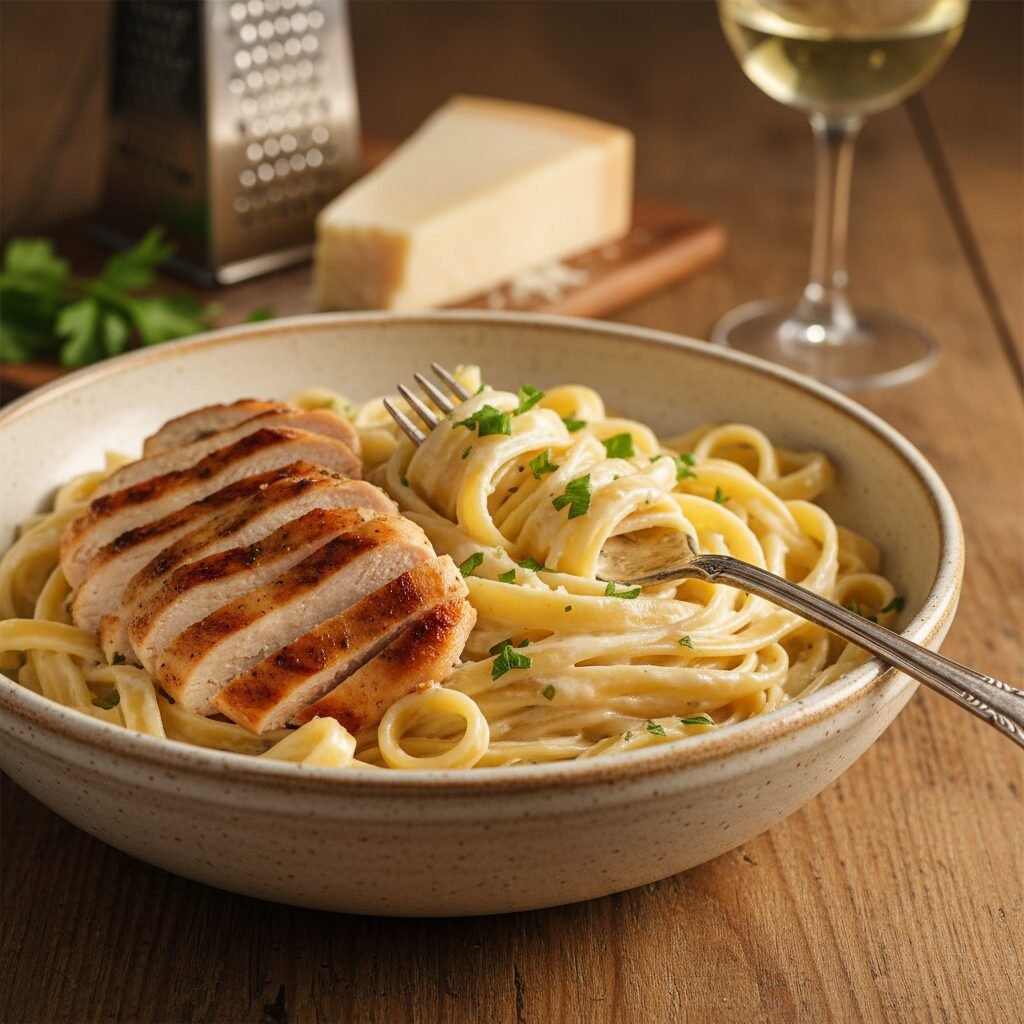
Chicken Alfredo Pasta
Forget the jarred sauce; this homemade version is ready in just 30 minutes and tastes infinitely better. It is the perfect blend of comfort and elegance that your whole family will love, transforming a weeknight dinner into a special occasion.
10 minutes
20 minutes
30 minutes
4 Servings
Main Course
Stovetop
Italian-American
Non-Vegetarian
There are few dishes that evoke a sense of comfort and indulgence quite like a perfectly executed Chicken Alfredo Pasta. For many busy mothers and home cooks, the allure of the jarred sauce is understandable—it is quick, convenient, and predictable. However, once you experience the velvety texture and rich depth of flavor found in a scratch-made Alfredo sauce, there is simply no turning back. This dish is a staple in the repertoire of any home chef who values wholesome ingredients and robust flavors without spending hours in the kitchen.
This recipe is designed specifically for those who want to provide a restaurant-quality meal for their families without the restaurant price tag or the preservatives found in processed alternatives. We start with high-quality chicken breasts, seared to golden perfection to lock in juices, and pair them with fettuccine noodles enveloped in a sauce made from heavy cream, butter, and authentic Parmigiano-Reggiano cheese. The result is a dinner that feels luxurious but is surprisingly simple to pull together on a hectic Tuesday evening.
Whether you are feeding picky toddlers or hosting a dinner party for friends, this Chicken Alfredo strikes the perfect balance. It is mild enough for children yet sophisticated enough for adults, especially when paired with a crisp white wine. In this guide, we will walk through the specific techniques to ensure your sauce never breaks, your chicken remains tender, and your pasta is cooked to the perfect al dente bite.
History & Origins
While Chicken Alfredo is a staple of Italian-American cuisine, its origins are rooted in Rome, though the dish has evolved significantly. The original Fettuccine Alfredo was created by Alfredo di Lelio in Rome in the early 20th century. His version was a simple, yet masterful, emulsion of fettuccine, butter, and fresh Parmesan cheese. As the cheese melted into the hot pasta water and butter, it created a rich, creamy coating without the addition of any cream.
When the dish migrated to the United States, American cooks began adapting the recipe to suit local tastes and ingredient availability. The addition of heavy cream became standard to ensure a stable, thick sauce that coated the pasta heavily. Furthermore, the addition of proteins like grilled chicken or shrimp transformed the dish from a primo (first course) pasta dish into a hearty main entrée. Today, the version we know and love—rich with cream, garlic, and chicken—is distinctly Italian-American, representing a delicious cultural fusion that has become a beloved comfort food worldwide.
Why This Recipe Works
The success of this recipe lies in the chemistry of emulsification and the layering of flavors. Unlike jarred sauces which often use thickeners like cornstarch, this recipe relies on the reduction of heavy cream and the melting properties of hard cheese to create viscosity. When heavy cream is simmered, water evaporates, concentrating the milk fats and creating a naturally thick consistency.
Furthermore, we utilize the Maillard reaction by searing the chicken in the same pan used for the sauce (if large enough) or by ensuring the chicken is heavily seasoned and browned. This develops a savory depth that contrasts beautifully with the sweet richness of the cream. The addition of starchy pasta water is the final culinary secret; the starch helps bind the fat and liquid together, preventing the sauce from separating and ensuring it clings to every strand of fettuccine. Finally, using freshly grated Parmesan rather than pre-shredded cheese eliminates anti-caking agents, ensuring a completely smooth melt.
Why You’ll Love This Recipe
- ✓Ready in under 30 minutes for quick weeknight meals.
- ✓Uses simple, whole ingredients found in any supermarket.
- ✓Features a scratch-made sauce that is smoother than store-bought.
- ✓High-protein meal that keeps the family full.
- ✓Easily customizable with vegetables or different proteins.
- ✓Kid-friendly and approved by picky eaters.
Equipment You’ll Need
- ✓Large Pot (for boiling pasta)
- ✓Large Skillet or Sauté Pan (deep sides)
- ✓Chef’s Knife
- ✓Cutting Board
- ✓Tongs
- ✓Whisk
- ✓Microplane or Cheese Grater
- ✓Measuring Cups and Spoons
Ingredients
- ✓1 lb (450g) Boneless, skinless chicken breasts
- ✓1 lb (450g) Fettuccine pasta (dried or fresh)
- ✓2 cups Heavy whipping cream (approx 480ml)
- ✓6 oz (170g) Parmigiano-Reggiano cheese, freshly grated
- ✓1/2 cup Unsalted butter
- ✓3 cloves Garlic, minced
- ✓2 tbsp Olive oil
- ✓1/2 tsp Salt (plus more for pasta water)
- ✓1/2 tsp Black pepper, freshly cracked
- ✓1/4 tsp Nutmeg (optional, for warmth)
- ✓2 tbsp Fresh parsley, chopped (for garnish)
Instructions
- Step 1: Prepare the Chicken. Pat the chicken breasts dry with paper towels. If they are very thick, slice them horizontally into cutlets to ensure even cooking. Season both sides generously with salt and black pepper.
- Step 2: Boil the Water. Fill a large pot with water and bring it to a rolling boil. Add a generous handful of salt (it should taste like the ocean). This is crucial for flavoring the pasta itself.
- Step 3: Sear the Chicken. While the water heats, add olive oil to your large skillet over medium-high heat. Once shimmering, add the chicken breasts. Cook for 5-7 minutes per side until golden brown and the internal temperature reaches 165°F (74°C). Remove chicken to a plate and cover with foil to rest.
- Step 4: Cook the Pasta. Add the fettuccine to the boiling water. Cook according to package directions for al dente (usually 1-2 minutes less than the recommended soft time). Before draining, reserve 1 cup of the starchy pasta cooking water.
- Step 5: Start the Sauce Base. In the same skillet used for the chicken (do not wipe it out), reduce heat to medium. Add the butter. Once melted, add the minced garlic and sauté for 30-60 seconds until fragrant, being careful not to burn it.
- Step 6: Simmer the Cream. Pour the heavy whipping cream into the skillet with the butter and garlic. Whisk gently to combine, scraping up any browned bits from the chicken (the fond). Let this simmer gently for 3-5 minutes until it reduces slightly and thickens.
- Step 7: Melt the Cheese. Reduce the heat to low. Gradually whisk in the freshly grated Parmesan cheese. Stir constantly until the cheese is completely melted and the sauce is smooth. Stir in the nutmeg if using.
- Step 8: Combine. Add the drained pasta directly to the skillet with the sauce. Toss vigorously with tongs to coat every strand. If the sauce is too thick, add the reserved pasta water a splash at a time until the desired consistency is reached.
- Step 9: Assemble and Serve. Slice the rested chicken into strips. Place the chicken on top of the pasta in the skillet or plate individually. Garnish with fresh chopped parsley and extra cracked black pepper. Serve immediately.
Expert Cooking Tips
- ✓Grate Your Own Cheese: Never use pre-shredded cheese in bags. They contain cellulose (sawdust) to prevent clumping, which results in a grainy sauce that won’t melt properly.
- ✓Room Temperature Cream: Try to take your heavy cream out of the fridge 20 minutes before cooking. Adding cold cream to a hot pan can sometimes shock the dairy and cause separation.
- ✓Don’t Overcook the Garlic: Garlic burns very quickly and turns bitter. As soon as you can smell it intensely, it is time to add the cream.
- ✓Salt Management: Parmesan is naturally salty. Taste your sauce before adding extra salt at the end to avoid over-salting the dish.
- ✓Rest the Chicken: Letting the chicken rest for 5-10 minutes before slicing allows the juices to redistribute, ensuring the meat is moist rather than dry.
Substitutions and Variations
Cooking is about adaptation, and this recipe is flexible. If you do not have heavy cream, you can use half-and-half, though the sauce will be thinner; you may need to make a roux (equal parts butter and flour) first to thicken it. For a gluten-free version, simply swap standard fettuccine for a high-quality gluten-free brown rice or corn pasta. If you prefer seafood, shrimp is an excellent substitute for chicken—sauté them for just 2-3 minutes per side. For a slightly sharper flavor, substitute half of the Parmesan for Pecorino Romano or Asiago cheese.
Common Mistakes to Avoid
The most common mistake home cooks make is overheating the sauce once the cheese is added. High heat causes the proteins in the cheese to seize and separate from the fat, leading to a greasy, clumpy mess. Always add cheese on low heat or off the heat entirely. Another error is rinsing the pasta after draining. Never rinse your pasta for this dish; the surface starch is essential for helping the creamy sauce adhere to the noodles. Finally, do not overcook the pasta in the boiling water; it will continue to cook slightly when tossed in the hot sauce.
Serving Suggestions
Because Chicken Alfredo is a rich and heavy dish, it pairs best with sides that offer acidity or crunch to cut through the creaminess. A crisp Caesar salad with lemon vinaigrette is a classic companion. Roasted broccoli, asparagus, or green beans with a squeeze of lemon juice also work wonderfully to balance the plate. For bread, a crusty garlic baguette is essential for mopping up any leftover sauce. Beverage-wise, serve this with a dry white wine such as Pinot Grigio, Sauvignon Blanc, or an unoaked Chardonnay.
Storage and Reheating Tips
Alfredo sauce is best enjoyed immediately, as the emulsion can break upon reheating. However, leftovers can be stored in an airtight container in the refrigerator for up to 3 days. To reheat, place the pasta in a saucepan over low heat and add a splash of milk or water to loosen the sauce. Stir gently until warmed through. Do not use the microwave if possible, as the high heat will cause the butter to separate from the cream. This dish does not freeze well, as the cream sauce will curdle and the texture will become grainy upon thawing.
Nutrition Facts (Estimated)
| Serving Size | 1 bowl (approx 350g) |
| Calories | 850 kcal |
| Fat | 52g |
| Saturated Fat | 28g |
| Unsaturated Fat | 18g |
| Trans Fat | 1g |
| Cholesterol | 185mg |
| Sodium | 980mg |
| Carbohydrates | 55g |
| Fiber | 3g |
| Sugar | 3g |
| Protein | 42g |
Frequently Asked Questions
Why did my Alfredo sauce turn out grainy?
Grainy sauce is usually caused by two things: using pre-shredded cheese with anti-caking agents, or adding the cheese when the heat is too high. Always grate your own cheese and add it slowly over low heat.
Can I use milk instead of heavy cream?
You can, but you will need to make a roux (butter and flour) to thicken it, as milk lacks the fat content to thicken on its own. The taste will be less rich than the traditional version.
Is this recipe gluten-free?
The sauce itself is gluten-free (as long as you don’t use flour for thickening). To make the full meal gluten-free, simply use certified gluten-free pasta.
Can I make this ahead of time?
It is not recommended. Alfredo sauce relies on an emulsion that is most stable when fresh. If you must prep, you can cook the chicken and grate the cheese in advance, but make the sauce and boil pasta just before serving.
What is the best pasta shape to use?
Fettuccine is traditional because its broad, flat surface holds the heavy cream sauce well. However, Linguine, Pappardelle, or tubular shapes like Penne or Rigatoni also work well.
Can I add vegetables to this dish?
Absolutely. Broccoli, peas, spinach, and sun-dried tomatoes are popular additions. You can sauté them with the garlic or blanch them in the pasta water.
How do I know when the sauce is thick enough?
The sauce should coat the back of a spoon. Run your finger through the sauce on the spoon; if the line holds its shape and doesn’t immediately run back together, it is ready.
Why do you add nutmeg?
Nutmeg is a classic addition to white cream sauces (Béchamel) and Alfredo. It adds a subtle warmth and nuttiness that enhances the flavor of the dairy without being overpowering.
Conclusion
Mastering a homemade Chicken Alfredo Pasta is a culinary milestone that yields delicious rewards. By stepping away from processed jars and embracing fresh cream, butter, and real Parmesan, you elevate a simple weeknight dinner into a gourmet experience. This recipe promises not just a meal, but a moment of connection with your family over a bowl of comforting, warm pasta. We hope this becomes a regular in your dinner rotation. If you try this recipe, please leave a comment below and let us know how it turned out!