Lemon Lavender Cupcakes
Imagine taking a bite out of a sunny spring garden—that is exactly what these cupcakes taste like! We are balancing bright, zesty lemon with a gentle whisper of lavender to create a treat that is sophisticated yet totally kid-approved.
25 minutes
18 minutes
1 hour 15 minutes
12 cupcakes
Dessert
Baking
American / French Inspired
Vegetarian
There is something undeniably magical about the combination of lemon and lavender. It brings to mind strolling through French gardens, afternoon high tea, and the first warm days of spring. If you have ever been hesitant to bake with lavender for fear of your dessert tasting like a bar of fancy soap, I am here to hold your hand! The secret lies in how we introduce the flavor. Rather than tossing in raw dried buds that can be overpowering and texturally unpleasant, we are going to use a gentle infusion method.
These cupcakes are incredibly fluffy, moist, and bursting with sunshine. By rubbing fresh lemon zest directly into the sugar, we release those essential citrus oils, ensuring every crumb is packed with flavor. The lavender is introduced by steeping it in warm milk, creating a ‘lavender tea’ that gets mixed into the batter. This results in a background floral note that compliments the tart lemon rather than competing with it.
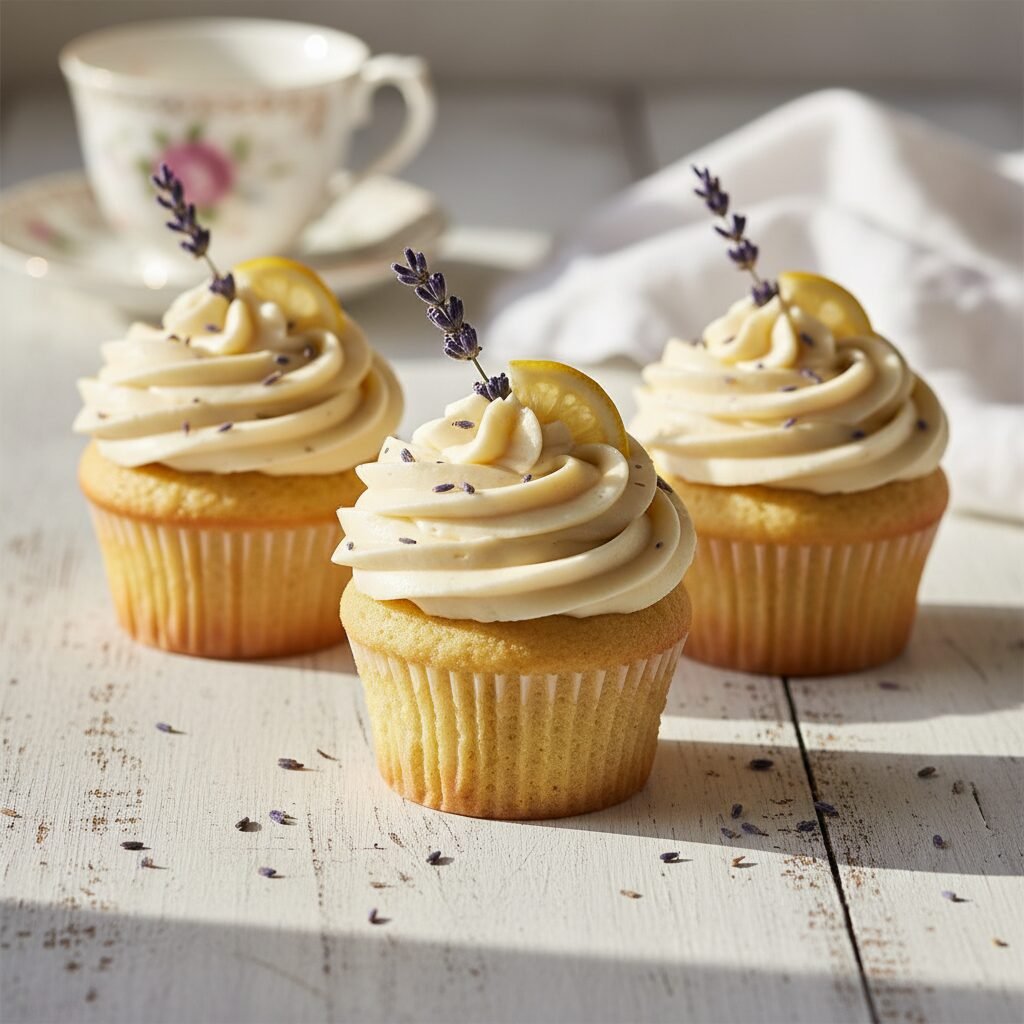
Top it all off with a silky, whipped honey buttercream, and you have a dessert that looks like it came straight from a boutique bakery. Whether you are hosting a bridal shower, looking for a unique Mother’s Day gift, or just want to feel fancy in your yoga pants on a Tuesday (no judgment here!), these cupcakes are the answer.
History & Origins
While cupcakes are a distinctly American invention—first mentioned in Amelia Simmons’ 1796 cookbook American Cookery as ‘a light cake to bake in small cups’—the flavor profile of lemon and lavender has much older, European roots. Lavender has been a culinary staple in the Mediterranean, particularly in the Provence region of France, for centuries. It is a key component of the famous Herbes de Provence spice blend.
In the Victorian era, lavender was a beloved ingredient in English kitchens, often used in jellies, teas, and shortbreads. The pairing with lemon became popular because the acidity of the citrus cuts through the sweet, heavy floral aroma of the lavender, creating a refreshing balance. Bringing these old-world flavors into the modern American cupcake creates a fusion that feels both nostalgic and contemporary.
Why This Recipe Works
This recipe succeeds because of the infusion technique. Lavender contains potent essential oils (linalool and linalyl acetate). If you put whole dried buds into the batter, you get concentrated bursts of flavor that can be overwhelming and bitter. By heating the milk and steeping the lavender, we extract the flavor gently and strain out the solids, ensuring a smooth texture and subtle taste.
Additionally, we use the reverse creaming method logic for the lemon flavor. By rubbing the lemon zest into the granulated sugar with your fingertips before adding the butter, the abrasive sugar crystals tear open the zest’s oil cells. This permeates the sugar with lemon oil, distributing the flavor far more effectively than just stirring the zest into the wet ingredients. Finally, the interaction between the acidic lemon juice and the milk (and baking powder) creates a tenderizing effect on the gluten, resulting in a soft, plush crumb.
Why You’ll Love This Recipe
- ✓Infused milk technique ensures no ‘soapy’ taste
- ✓Rubbing zest into sugar maximizes citrus flavor
- ✓Soft, bakery-style crumb texture
- ✓Perfect for bridal showers, baby showers, and tea parties
- ✓Honey buttercream adds a natural sweetness
- ✓Uses simple pantry staples plus culinary lavender
Equipment You’ll Need
- ✓12-cup muffin tin
- ✓Cupcake liners
- ✓Stand mixer or electric hand mixer
- ✓Small saucepan (for infusion)
- ✓Fine mesh sieve
- ✓Microplane or zester
- ✓Mixing bowls
- ✓Wire cooling rack
- ✓Piping bag and star tip (optional)
Ingredients
- ✓For the Lavender Milk:
- ✓1/2 cup whole milk
- ✓1 tablespoon dried culinary lavender
- ✓For the Cupcakes:
- ✓1 1/2 cups all-purpose flour
- ✓1 1/2 teaspoons baking powder
- ✓1/4 teaspoon salt
- ✓1/2 cup unsalted butter, softened to room temperature
- ✓1 cup granulated sugar
- ✓Zest of 2 large lemons
- ✓2 large eggs, room temperature
- ✓1 teaspoon pure vanilla extract
- ✓2 tablespoons fresh lemon juice
- ✓For the Honey Buttercream:
- ✓1 cup unsalted butter, slightly softened
- ✓3 cups powdered sugar, sifted
- ✓2 tablespoons honey
- ✓1-2 tablespoons heavy cream
- ✓Pinch of salt
- ✓Optional: Dried lavender sprigs or lemon slices for garnish
Instructions
- Step 1: Infuse the Milk. In a small saucepan, heat the 1/2 cup of milk over medium heat until it just begins to steam (do not boil). Remove from heat, stir in the 1 tablespoon of dried lavender, cover, and let it steep for 15-20 minutes. After steeping, strain the milk through a fine-mesh sieve into a cup to remove the buds. You may need to top it up with a splash of fresh milk to get back to exactly 1/2 cup if the buds absorbed some liquid. Set aside to cool.
- Step 2: Prep. Preheat your oven to 350°F (175°C). Line a 12-cup muffin tin with cupcake liners.
- Step 3: Lemon Sugar. In the bowl of your stand mixer (or a large bowl), combine the granulated sugar and lemon zest. Use your clean fingertips to rub the zest into the sugar for about 2 minutes until the sugar looks like wet sand and is incredibly fragrant. This is the secret to the best lemon flavor!
- Step 4: Cream Butter and Sugar. Add the softened butter to the lemon sugar. Beat on medium-high speed for 3-4 minutes until the mixture is pale, light, and fluffy. Scrape down the sides of the bowl.
- Step 5: Add Wet Ingredients. Add the eggs one at a time, beating well after each addition. Mix in the vanilla extract and the fresh lemon juice. (Note: The mixture might look slightly curdled due to the lemon juice; don’t panic, it will come together with the flour).
- Step 6: Dry Ingredients. In a separate medium bowl, whisk together the flour, baking powder, and salt.
- Step 7: Combine. Turn the mixer to low speed. Add half of the dry ingredients to the butter mixture, followed by the cooled lavender-infused milk, and then the remaining dry ingredients. Mix only until just combined and no streaks of flour remain. Do not overmix!
- Step 8: Bake. Divide the batter evenly among the 12 cupcake liners (they should be about 2/3 full). Bake for 16-19 minutes, or until a toothpick inserted into the center comes out clean or with just a few moist crumbs. The tops should spring back when lightly touched.
- Step 9: Cool. Let the cupcakes cool in the pan for 5 minutes, then transfer them to a wire rack to cool completely before frosting.
- Step 10: Make the Frosting. While cupcakes cool, beat the butter for the frosting on high speed for 5 minutes until it is almost white. Lower speed and gradually add powdered sugar. Once incorporated, add the honey, salt, and 1 tablespoon of heavy cream. Whip on high for another 3 minutes until light and airy. Add more cream if needed for consistency.
- Step 11: Decorate. Pipe the frosting onto the cooled cupcakes. Garnish with a small sprig of lavender or a tiny lemon wedge.
Expert Cooking Tips
- ✓Use Culinary Lavender: Ensure you buy ‘culinary’ grade lavender. Lavender sold for potpourri or crafts often has been treated with chemicals or perfumes that are not safe to eat.
- ✓Room Temperature Ingredients: Make sure your butter, eggs, and infused milk are at room temperature. This creates an emulsion that traps air, resulting in a fluffier cupcake.
- ✓Don’t Over-Bake: Lemon cake can dry out quickly. Check them at the 16-minute mark. They are done when they are pale gold and springy.
- ✓Straining is Key: Don’t skip straining the milk. Biting into a dried lavender bud is gritty and bitter.
- ✓Cool Completely: If you frost the cupcakes while they are even slightly warm, the butter in the frosting will melt and slide right off.
Substitutions and Variations
Gluten-Free: You can easily swap the all-purpose flour for a high-quality 1:1 Gluten-Free Baking Flour blend (like King Arthur or Bob’s Red Mill). Weigh it carefully!
Dairy-Free: Use unsweetened almond milk or oat milk for the infusion. Swap the butter in the cake and frosting for a high-quality vegan butter block (not tub margarine).
No Lavender? If you decide you just want lemon cupcakes, simply skip the steeping step and use plain milk. They will still be delicious!
Common Mistakes to Avoid
The biggest mistake people make with floral baking is heavy-handedness. It is easy to think ‘more is better,’ but with lavender, more is soapy. Stick to the infusion ratios. Another common error is overmixing the batter once the flour is added. This develops gluten and turns your delicate cupcakes into tough muffins. Mix on low speed and stop as soon as the flour disappears.
Serving Suggestions
These are the ultimate ‘ladies who lunch’ dessert. Serve them on a tiered cake stand with a pot of Earl Grey tea or a glass of chilled Prosecco. They are stunning for Easter brunch, Mother’s Day, or a baby shower. If you want to get really fancy, garnish with edible violas or candied lemon peel.
Storage and Reheating Tips
Store these cupcakes in an airtight container at room temperature for up to 2 days. Because of the butter in the frosting, they are best eaten fresh. If you need to keep them longer, refrigerate them for up to 4 days, but always let them come to room temperature before eating so the frosting softens up. You can freeze unfrosted cupcakes for up to 3 months.
Nutrition Facts (Estimated)
| Serving Size | 1 Cupcake |
| Calories | 340 |
| Fat | 16g |
| Saturated Fat | 10g |
| Unsaturated Fat | 5g |
| Trans Fat | 0g |
| Cholesterol | 65mg |
| Sodium | 180mg |
| Carbohydrates | 42g |
| Fiber | 1g |
| Sugar | 28g |
| Protein | 3g |
Frequently Asked Questions
Where can I buy culinary lavender?
You can usually find it in the spice aisle of high-end grocery stores (like Whole Foods), at spice specialty shops, or easily online on Amazon. Make sure the package specifically says ‘Culinary’ or ‘Food Grade’.
Why do my cupcakes taste like soap?
This happens if you use too much lavender or if you use an aromatic variety meant for perfumes rather than cooking. English Lavender (Lavandula angustifolia) is the best variety for baking because it is sweeter and less camphor-heavy.
Can I use fresh lavender instead of dried?
Yes! Fresh lavender is milder than dried. If using fresh buds from your garden (ensure they haven’t been sprayed with pesticides!), use 2 to 3 tablespoons for the infusion instead of 1 tablespoon of dried.
Can I make this as a cake instead?
Absolutely. This batter fits perfectly into an 8-inch round cake pan or a loaf pan. You will need to increase the baking time to about 30-40 minutes. Keep an eye on it and use the toothpick test.
Do I have to use the honey in the frosting?
No, you can stick to a classic vanilla buttercream or a lemon buttercream, but the honey adds a lovely floral sweetness that bridges the gap between the lemon and the lavender perfectly.
Can I make the batter ahead of time?
Baking powder activates as soon as it hits the wet ingredients, so you should bake the batter immediately after mixing. However, you can bake the cupcakes a day ahead and frost them the next day.
My milk evaporated while heating, what do I do?
This is normal! The buds absorb liquid and some evaporates. Just pour the strained milk into a measuring cup and add enough fresh cold milk to bring the total volume back up to 1/2 cup.
How do I get the frosting so fluffy?
The secret is whipping the butter alone for a long time (5 minutes) before adding sugar. This aerates the fat and removes the yellow tint, giving you a cloud-like texture.
Conclusion
I hope you give these Lemon Lavender Cupcakes a try! They truly are a celebration of spring flavors and a testament to how simple ingredients can come together to make something elegant. Whether you are a seasoned baker or just starting out, this recipe is forgiving and fun. Put on your favorite apron, pour yourself a cup of tea, and fill your kitchen with the smell of sweet lemon and calming lavender. Don’t forget to tag me on Pinterest if you make them—I love seeing your creations!